


The Suit That’s Making the Blazer Dress Look Tired
The blazer dress had a long run. For the better part of three years, it served as the default answer to that particular fashion problem: professional enough for the office, shaped enough for dinner, minimal enough to feel considered. But Saint Laurent’s recent collections have been making a quiet, insistent case for something different – sharp, structured suiting that treats the blazer dress not as competition, but as a lesser version of the idea it was always reaching for.
What Anthony Vaccarello has been building at Saint Laurent is a specific kind of power dressing that doesn’t soften itself for accessibility. The silhouettes are aggressive in the best sense: high armholes, suppressed waists, trousers with a precision cut that reads as almost architectural. This is not suiting designed to put people at ease. It’s designed to make the person wearing it feel entirely in control.
Why the Blazer Dress Became a Default – and Why That’s the Problem
The blazer dress made sense as a concept because it collapsed two garments into one, offering ease of dressing with the visual shorthand of tailoring. Wear one piece, look put-together. That logic appealed to a moment when wardrobes were shrinking and the idea of a “capsule” dominated the conversation. Brands at every price point ran with the format, and for a while, it felt like a smart edit rather than a shortcut.
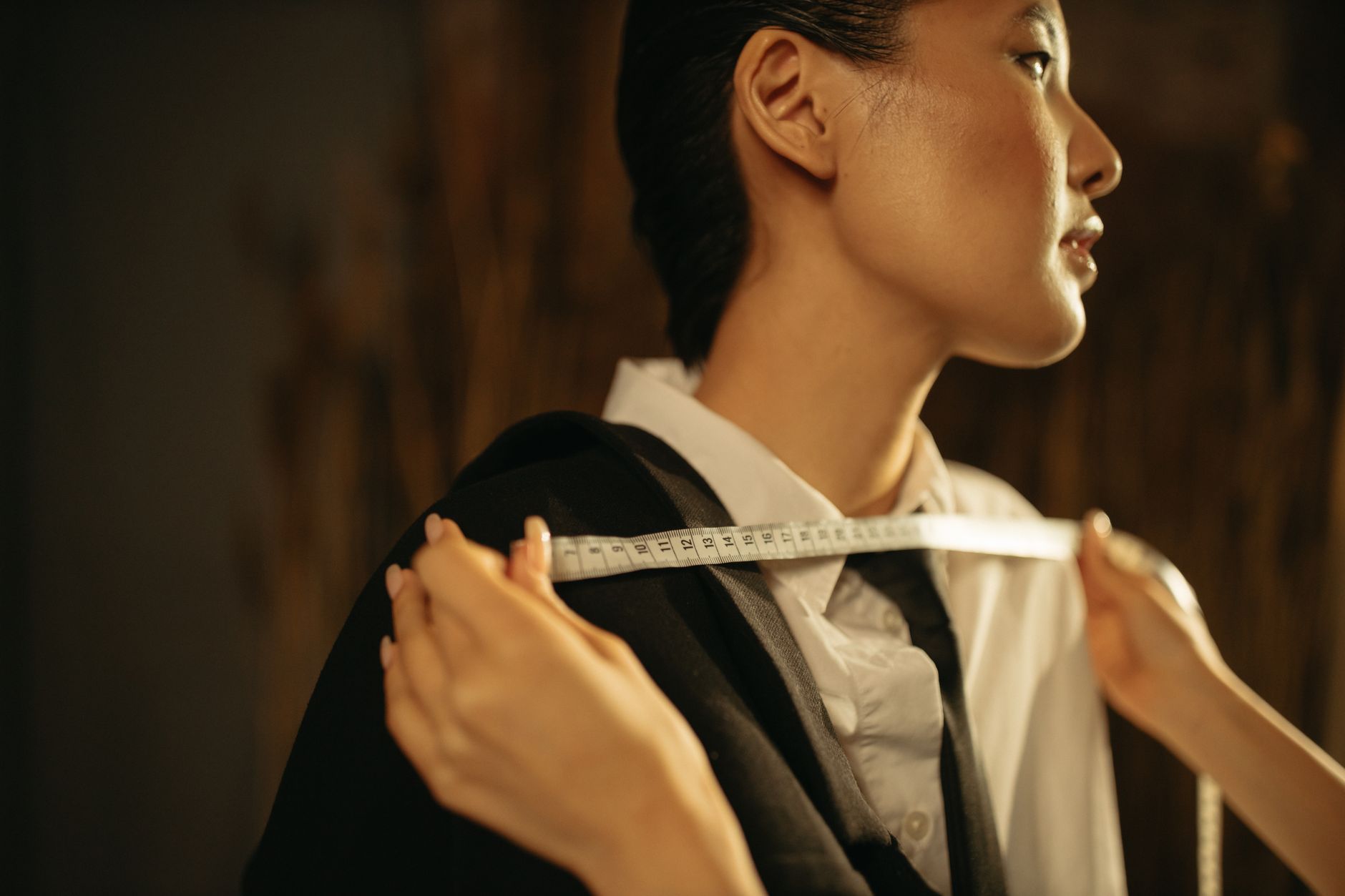
But collapsing two garments into one also collapsed their individual power. A well-cut blazer communicates differently than a blazer dress, because the trouser – or the skirt – beneath it is doing its own work. Proportion becomes a conversation between pieces rather than a single monolithic statement. Saint Laurent’s suiting reinstates that conversation loudly. The suits arriving on the runway and now circulating through celebrity wardrobes are built around tension: between sharp shoulders and a narrow trouser, between an oversized lapel and a waist that pulls in, between masculine reference and a wholly feminine result.
How Celebrities Are Wearing It
The suits are appearing in the kinds of contexts that used to belong to the blazer dress: press events, industry dinners, award season pre-shows. The styling tends toward minimal. A white shirt, sometimes unbuttoned lower than expected. A silk camisole that surfaces from a jacket left deliberately unfastened. No visible accessories beyond a watch or a single elongated earring. The effect is studied nonchalance, which is a very different register from the blazer dress, which always read as slightly too finished.
There’s also a color story at play. While blazer dresses gravitated toward safe neutrals – camel, ivory, black – the Saint Laurent suiting cycle is introducing ink navy, chalk white, and a recurring strong red that doesn’t read as a statement so much as a certainty. These are colors that don’t hedge. They commit, and they expect the wearer to do the same.
Trouser length is doing specific work here too. The cut tends to hit at the ankle or just above, which avoids the formal rigidity of a full break while keeping the silhouette clean. Paired with a pointed-toe pump or a flat mule, it creates a line that’s more interesting than what a single garment can produce on its own. The suit makes you look deliberate from the hem up.
The jacket proportions shift depending on how the look is being styled. Cropped versions worn with wide-leg trousers create a different geometry than longline blazers over slim, cigarette-cut pants. That range of proportion is part of what makes the format compelling as a category – it has more to say than the blazer dress ever did, because it has more variables to work with.
The Tailoring Shift Happening Beyond Saint Laurent
Saint Laurent isn’t operating in isolation. A growing number of houses are returning to strict tailoring as a core language rather than a seasonal footnote. The interest in The Row’s quiet grip on celebrity off-duty dressing speaks to the same appetite: a desire for clothes that have structural intention, that don’t rely on a single gimmick or trend reference to justify their existence. Suiting satisfies that in a way that hybrids like the blazer dress simply can’t replicate.
What’s notable about this moment is that it doesn’t come packaged as a “return to the office” story or a revival of power dressing nostalgia. The suiting that’s gaining traction right now has no particular cultural anxiety attached to it. It’s not making a point about women reclaiming the boardroom. It’s just clothes – extremely good clothes, cut with precision and worn without explanation.
What Gets Left Behind
The blazer dress isn’t disappearing from stores overnight. It has too much infrastructure behind it: too many brands, too many price points, too much buy-in from buyers who built entire floor sets around it. But at the level where fashion actually moves – on red carpets, in editorial shoots, on the social feeds of stylists who shape what gets adopted next – it’s losing ground. The looks that are circulating now are full suits, and the contrast with the blazer dress format is stark once you start noticing it.
There’s a ruthlessness to how fast this kind of displacement can happen. A format that felt modern two years ago starts reading as a workaround. The blazer dress solved a problem, but Saint Laurent’s suiting suggests the problem was never worth solving that way to begin with. Two pieces have more to say than one. The math is simple; the execution, as Vaccarello keeps demonstrating, is the hard part.
Stylists working at the sharper end of celebrity dressing are already making the switch visible. When a client has both options available and consistently reaches for the suit, it’s not a coincidence. The blazer dress is still being packed into rolling racks and carried up to hotel suites. It’s just not the one coming out of the garment bag first.