

The pointed-toe mule had a long run. Effortless, architectural, easy to style – it became the default off-duty shoe for anyone who wanted to look put-together without trying too hard. But something quieter is taking its place on sidewalks, street style accounts, and fashion week front rows: the mesh ballet flat, sheer and structured at once, and increasingly impossible to ignore.
Why the Mesh Flat Is Having This Moment Now
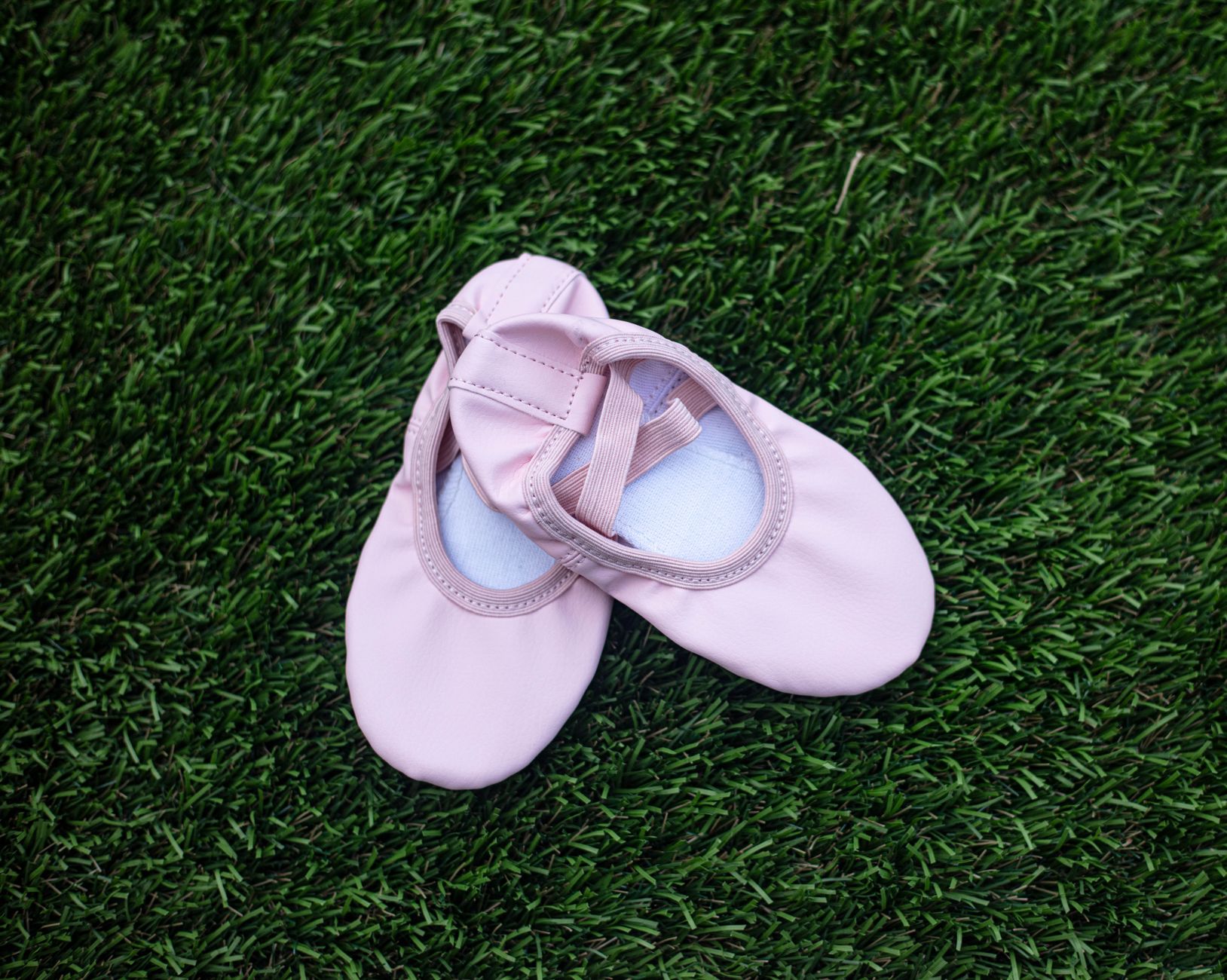
The appeal of the mesh ballet flat is not accidental. It sits at the intersection of two impulses that have been building in fashion for a few seasons – a pull toward softness and femininity, and an equal pull toward restraint. The mesh material delivers both simultaneously. It reads delicate without being precious, and the flat silhouette keeps it grounded rather than costume-y. That balance is hard to manufacture, and when a shoe achieves it, it spreads fast.
There is also a texture conversation happening in footwear right now. Smooth leather and suede dominated for years, but shoppers and stylists alike are gravitating toward materials that have some visual complexity – something the eye can actually travel across. Mesh offers that without adding bulk. It catches light differently depending on the time of day, and the semi-transparency creates a layered effect with whatever sock, stocking, or bare foot sits beneath it. That optical dimension is something a mule simply cannot compete with.
The silhouette itself is doing a lot of work. Ballet flats have cycled in and out of relevance for decades, but the current iteration is more structured than its predecessors. The toe boxes are slightly more defined, the soles are often slightly more substantial, and the overall construction feels considered rather than casual. This version of the ballet flat is not a throwback – it is a refinement. The mesh fabrication is what separates it from every flat that came before it, giving an otherwise familiar shape a reason to feel new.
The pointed-toe mule is not disappearing entirely. It remains a strong choice for office dressing and for anyone who wants that slight lift and elongation without committing to a heel. But its dominance as the go-to transitional shoe – the piece that bridges a summer dress into fall, or denim into evening – is being challenged. The mesh flat can do those same jobs with less visual weight, and right now, less visual weight is winning.
How to Style a Mesh Ballet Flat Without Looking Underdressed
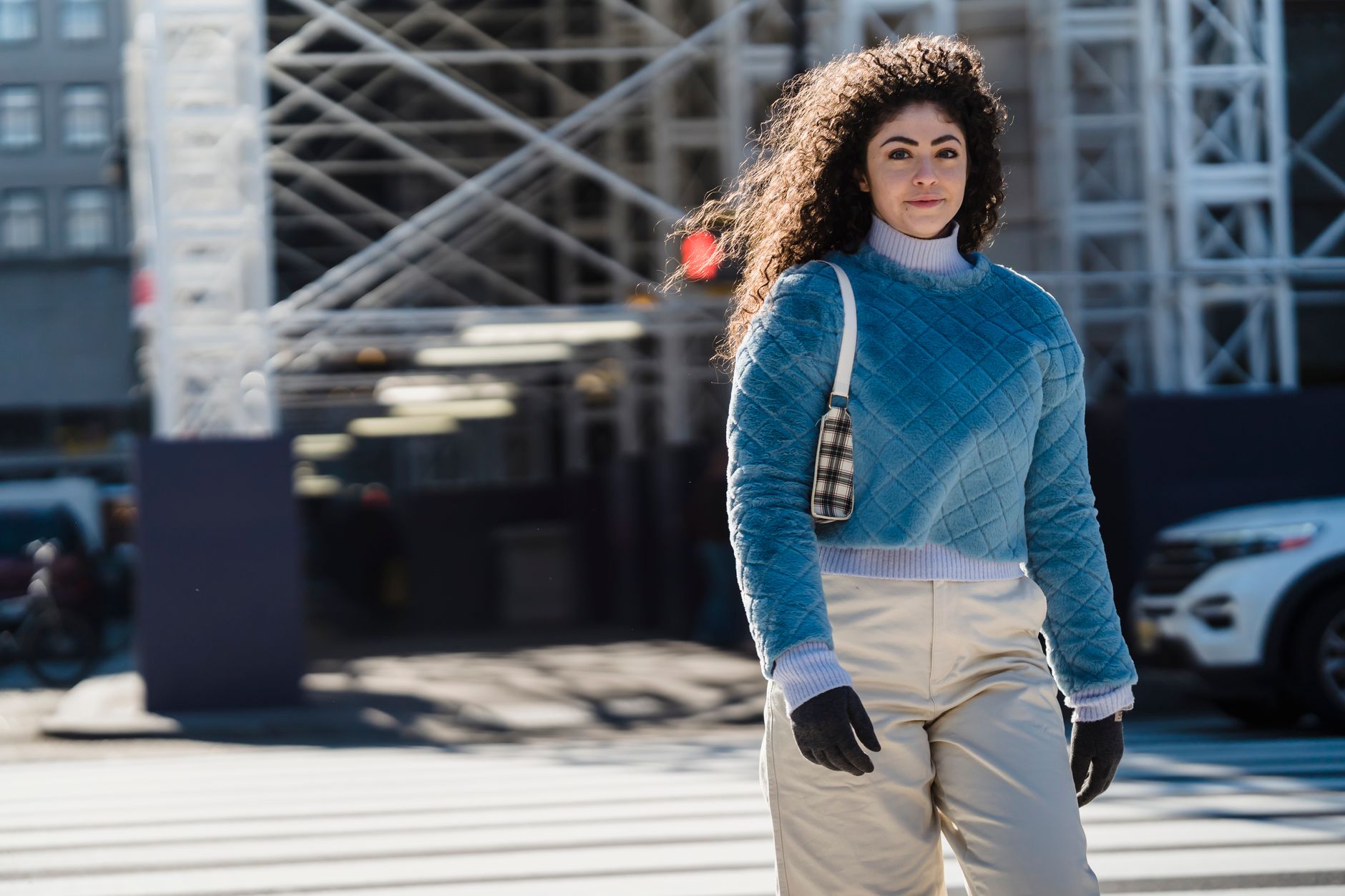
The biggest hesitation around ballet flats in general – and mesh ones in particular – is that they can make an outfit feel unfinished. That concern is worth addressing directly, because it is also exactly why they work so well when styled with intention. The key is pairing the delicacy of the mesh against something with structure or substance above the ankle. A wide-leg trouser in a heavy fabric, a tailored blazer, or a midi skirt with some stiffness to it all give the flat something to anchor to.
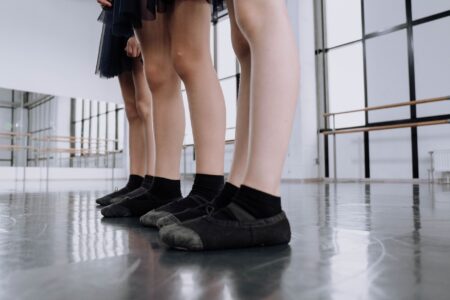
Sock styling has become central to the mesh flat conversation. A sheer ankle sock, a lace-edged short sock, or even a fine-knit sock in a contrasting color can dramatically change how a mesh flat reads. Because the upper is partially see-through, whatever sits underneath becomes part of the shoe’s visual story. Some wearers are using this as an opportunity for color play – a pale pink sock under a black mesh flat, for instance, creates a subtle two-tone effect that reads as deliberate rather than practical.
The mesh flat also navigates the bare-leg question better than almost any other shoe. In warmer months, worn without socks, the sheer material creates a barely-there effect that flatters rather than truncates the foot. Where a mule often draws a hard horizontal line across the foot that can visually cut the leg, the mesh flat’s transparency softens that boundary. Stylists working with editorial clients have quietly started reaching for mesh flats in exactly those situations – when they need footwear that does not fight with the line of the leg.
Color range matters here too. The most wearable versions of the mesh flat are arriving in neutrals – black, bone, tobacco, and pale gold – that function as wardrobe staples rather than statement pieces. Some brands are experimenting with colored mesh, which skews more directional, but the neutral versions are the ones selling through consistently. They work with everything from slouchy linen to sharp suiting, which means they earn their space in a wardrobe faster than a more seasonal shoe would.
For anyone still attached to the mule category, it is worth noting that the styling logic for mesh flats shares some DNA with how the better kitten mules are being worn – anchored by structure above, kept minimal below. The difference is that the flat allows for longer, more continuous wearing throughout the day without the slide-and-shuffle friction that even the best backless shoe eventually produces.
The Longer Shift This Represents in Shoe Culture
What the mesh ballet flat signals is a preference for shoes that do something visually interesting without relying on heel height or silhouette drama to do it. Material and transparency are becoming the new tools of distinction in footwear, the way hardware details and block colors were a few seasons ago. The question a shoe has to answer now is not just what shape it is, but what it does with light, texture, and the body beneath it.
If the mule’s appeal was always about ease and a certain nonchalance, the mesh flat is asking for slightly more attention in the wearing – more thought about what goes under it, more consideration of proportion. That additional layer of intention is, paradoxically, exactly what makes it feel current. Fashion right now rewards the specific over the generic, and a well-chosen mesh flat is nothing if not specific.