


The penny loafer has had a remarkable run. For decades, it served as the default smart-casual shoe – equally at home in a prep school hallway or a Sunday afternoon gallery visit, requiring almost no thought to style and even less effort to justify. But something has been shifting on the floors of boutiques and in the street style feeds that precede every major seasonal trend cycle. The woven leather loafer is claiming that same versatile territory, and it’s doing so with a textural confidence that the penny loafer simply cannot match.
This isn’t a loud takeover. Nobody announced the end of the coin slot. Instead, the woven style has been quietly accumulating momentum – showing up on runway closing looks, slipping into capsule wardrobe edits, and appearing on the feet of people who treat their shoe choices as considered statements rather than afterthoughts. The shift is subtle enough that you might not clock it immediately, but once you do, it’s hard to unsee.
What the Woven Loafer Actually Offers
The case for the woven leather loafer starts with texture. Footwear that reads as flat and monolithic – like a smooth-vamp penny loafer – depends almost entirely on its silhouette for visual interest. The woven version brings its own surface complexity, which means it can carry a simpler outfit without becoming a style crutch. A pair of wide-leg trousers and a plain tucked shirt becomes a finished look when the shoe has something happening at the foot level.
There’s also a craft element that resonates with how people are thinking about what they buy. The interlacing of leather strips requires more skilled production than a single-piece vamp, and that’s visible to anyone who looks closely. Shoppers who have grown skeptical of fast-fashion shortcuts tend to respond to that kind of visible construction. The woven loafer isn’t just a shoe – it’s a small argument for quality that you can wear.

How Styling Has Evolved Around It
For a long time, the loafer in general was anchored to a fairly specific wardrobe context: tailored trousers, perhaps a blazer, definitely not denim unless the denim was dark and pressed. The woven version has quietly dismantled that rulebook. It works with linen shorts in summer, with relaxed suiting in autumn, with straight-leg jeans without any of the old-fashioned logic that said loafers need to dress up to earn their place.
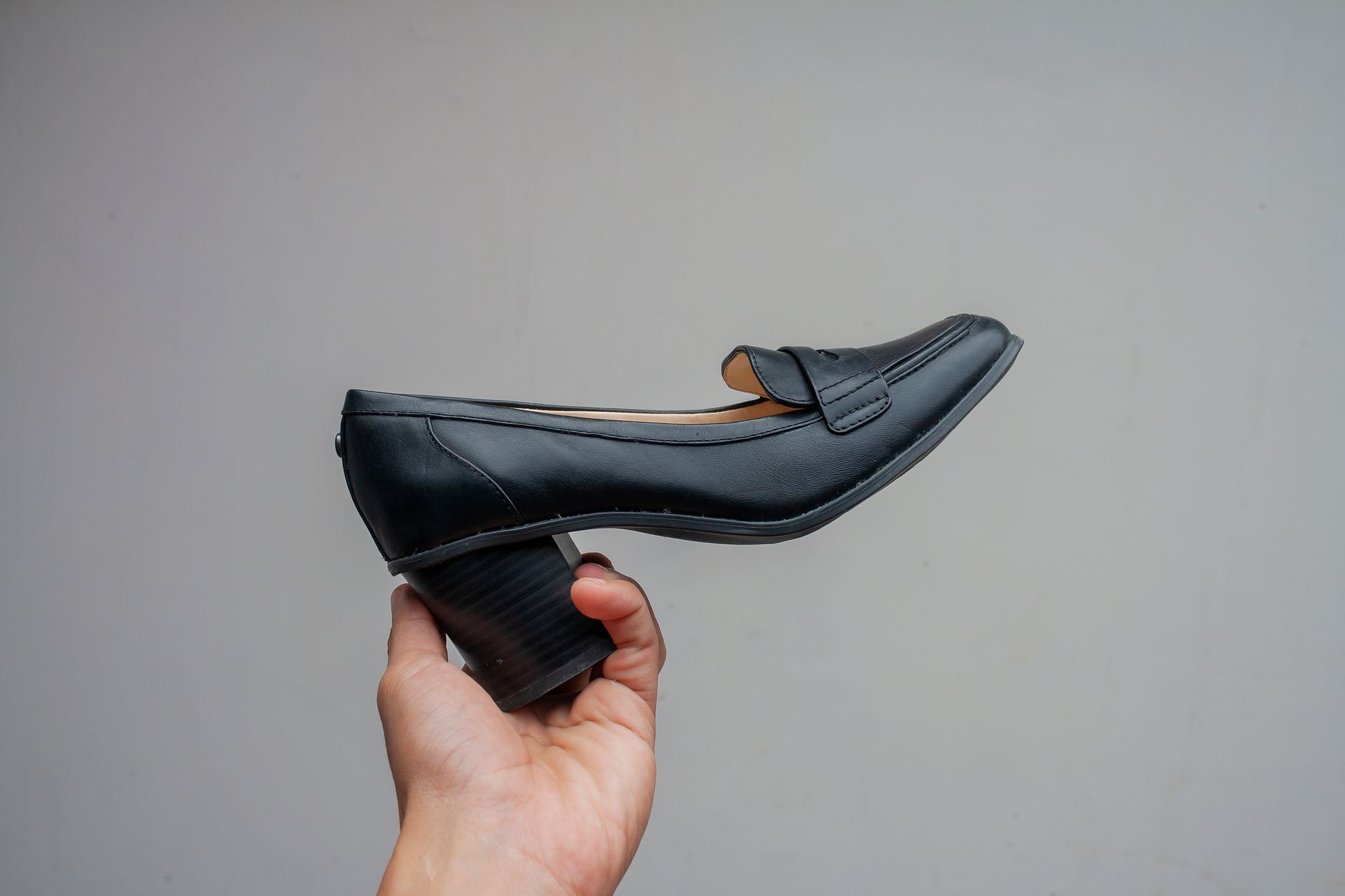
The sole profile matters here too. Many of the woven styles arriving at retail right now are built on slightly chunkier soles than the traditional penny silhouette – not platform-level, but enough to modernize the overall proportions. That small engineering decision makes the shoe friendlier to contemporary relaxed dressing, where the foot needs some visual weight to balance voluminous trousers or oversized knitwear above.
Color choices in the woven category are also running wider than the heritage navy, tan, and black that dominate the penny loafer shelf. Burgundy, forest green, cognac, and even bone-white woven loafers have been showing up in boutique windows, giving stylists and everyday wearers more specific tools to work with. A deep burgundy woven loafer with camel-toned trousers is a combination that the standard penny offering struggles to compete with.
It’s also worth noting how the woven loafer has fared with women’s fashion specifically. While the mesh loafer has carved out its own lane in warm-weather dressing, the woven leather version occupies a slightly more structured position – appropriate for occasions where mesh reads as too casual, but where the penny loafer would feel slightly too stiff. That middle ground is valuable real estate in modern dressing.
Where the Penny Loafer Still Holds Ground
None of this means the penny loafer is disappearing. It has institutional loyalty built into it – boarding school aesthetics, Ivy League associations, the visual shorthand of old-money American style that has been cycling back through fashion for several seasons now. For anyone building a deliberately classic wardrobe, the penny loafer still makes sense. It also remains the safer choice for formal business contexts where novelty can read as insufficiently serious.
The penny loafer’s real vulnerability is its predictability. Once a shoe becomes so familiar that choosing it requires no decision, it loses something. Fashion at every level tends to move away from the automatic and toward the intentional. The woven loafer forces a small choice – you’re not just wearing loafers, you’re wearing these loafers – and that specificity is increasingly what people want from a wardrobe.
Where the Category Is Heading
Brands across price points have been expanding their woven offerings rather than contracting them, which suggests this isn’t a single-season experiment. Entry-level options in the woven category have become more widely available, moving the style out of the strictly premium tier and into reach for shoppers who buy two or three pairs of shoes a year rather than ten. That kind of broadening tends to indicate a style moving from early adoption into genuine staying power.
The craftsmanship angle is also getting more attention. Some shoemakers are starting to experiment with mixed-material weaving – combining smooth leather with suede strips, or incorporating contrast stitching between the interlaced sections. These variations keep the category from going stale, which is exactly the problem the penny loafer ran into: it reached a point of total codification where there was almost nothing left to do with it.
The real question isn’t whether the woven loafer will continue to grow – the retail signals are fairly clear on that. The more interesting pressure point is whether it can maintain its textural identity as production scales up, or whether cheaper versions will start to flatten the weave, reducing it to a printed pattern rather than actual construction. The difference between a woven loafer and a loafer that merely looks woven is something you can feel the moment you pick one up.