


The linen trouser has long held a near-sacred place in warm-weather dressing – breezy, tailored, and reliable enough to carry someone from a brunch terrace to an evening aperitivo. But something is shifting on the racks, on the runways, and in the street-style shots flooding fashion feeds: the Bermuda short is taking up that space, and it is not asking permission.

A Silhouette With Staying Power
The Bermuda short – cut to land anywhere from just above the knee to mid-thigh, depending on the brand – has historically been dismissed as resort-wear or country club casual. The association stuck for decades, keeping the style in a narrow social lane that most fashion-forward dressers were happy to avoid. What changed is not the silhouette itself, but the way designers and wearers are treating it.
Tailored versions in wool crepe, suiting fabric, and even structured cotton twill have arrived in collections that would previously have stopped at the trouser. When a Bermuda short shares a fabrication with a blazer – or is cut to the same clean, pressed standard – it stops reading as casual and starts reading as intentional. That shift in fabric and finish is doing most of the heavy lifting in this trend’s rise.
Linen trousers, by contrast, have a softness problem. Their appeal is also their limitation: the relaxed drape, the gentle wrinkle, the anti-structure aesthetic. For years that read as elegance. Now, against a fashion backdrop that increasingly prizes sharp tailoring and deliberate proportion-play, the linen trouser can look a little shapeless – a little unresolved.
The Bermuda short offers a cleaner leg line, a more defined hem, and a silhouette that creates contrast rather than continuity. Paired with a longer jacket, a structured shirt, or even a blazer that grazes the hip, it generates a proportion dynamic that linen trousers simply cannot. Length and structure are the argument the Bermuda is winning.

Why the Bermuda Short Works Harder Now
Styling is where the Bermuda short has made its strongest case. A wide-leg linen trouser asks to be styled softly – loose shirt, sandal, minimal accessories. The Bermuda short accepts a much wider range of partners. It works with a tight knit and a pointed-toe loafer. It works with an oversized blazer and a low heel. It works with a crisp button-down and a chunky sneaker. That versatility is not a small thing in a wardrobe built around fewer, harder-working pieces.
Color and pattern have also expanded. Early iterations that made it onto trend radars leaned neutral – camel, ivory, navy. But the current wave includes bold checks, chalk stripes, and even textured brocades. That willingness to carry a statement print without overwhelming the body – because the shorter hemline keeps the eye moving – makes it useful in a way a busy linen trouser never quite manages. A wide-leg print trouser can swallow an outfit; a printed Bermuda short anchors it.
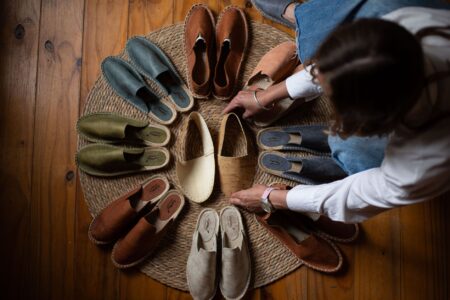
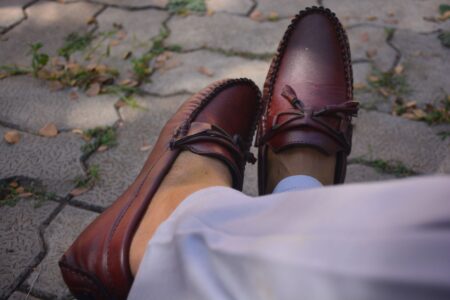
The footwear conversation is part of this story too. The moment the pointed-toe loafer started displacing the penny loafer as the polish move of the season, the Bermuda short found a natural companion. That long, lean toe and the defined hem of a Bermuda create a vertical pull that flatters the leg and reads sharper than anything a sandal and linen trouser pairing can achieve. Shoe trends and trouser trends have always been linked; the Bermuda short benefited from landing at the right moment.
There is also the question of temperature. Linen trousers are sold as the solution to summer heat, and they are – but Bermuda shorts in lighter fabrications handle warmth more honestly. The linen trouser compromise is coverage with breathability. The Bermuda short does not pretend: it is a short, it keeps you cool, and the tailored cut ensures it remains appropriate in contexts that cut-off denim never could. That directness appeals to dressers who are tired of splitting the difference.
Some brands are experimenting with matching sets – Bermuda short and blazer in the same fabric, sold as a suit alternative. This is the format making the most noise in editorial coverage right now, and it is easy to understand why. A short suit reads as confident, slightly subversive, and polished all at once. The linen trouser suit exists too, but it lacks the same visual tension. The Bermuda short version says something; the linen trouser version says something quieter.

What This Means for the Linen Trouser
None of this means linen trousers are disappearing from summer wardrobes or from well-edited closets. They solve real problems, and they do it in a way that requires almost no effort from the wearer. But they are losing their status as the default sophisticated warm-weather bottom – and that default status was always their most valuable attribute. Once a piece stops being the obvious answer, it becomes a choice, and choices require justification.
The Bermuda short does not have that problem right now. It is still making its argument, still proving itself in new contexts, still arriving in fabrics that challenge the old resort associations. A Bermuda short in wool suiting worn in October is a statement. The same move in a linen trouser is just a trouser. That asymmetry – one still working to expand its meaning, the other coasting on established meaning – is exactly why the Bermuda is gaining ground rather than holding it.