


The Fabric Shift Nobody Announced
Linen has had a long run as the default warm-weather fabric, the reliable choice that managed to feel both casual and intentional. But something is happening in shop windows and street-style photography this season that suggests its dominance, particularly in midi skirt form, is being quietly challenged. Broderie anglaise – the embroidered cotton fabric defined by its cutwork patterns and eyelet detailing – is turning up everywhere from high street rails to resort collections, and it is not playing a supporting role anymore.
The shift is not happening loudly. There is no single viral moment or red carpet declaration driving it. Instead, broderie anglaise is doing what the most durable fashion trends always do: it is accumulating presence slowly, showing up in enough places that suddenly you notice you have been seeing it constantly. The linen midi is not disappearing, but it is no longer the automatic answer when someone reaches for warm-weather dressing with a sense of occasion.

Why Broderie Anglaise Works Right Now
The appeal is partly textural. Linen has a certain studied casualness to it – the slight wrinkle, the raw edge, the earthy palette that signals effortlessness. Broderie anglaise offers something different without abandoning comfort. The cotton base is lightweight and breathable, which means it carries none of the stiffness sometimes associated with more formal embroidery, but the eyelet detailing gives it a visual complexity that plain linen simply cannot match.
There is also the question of what these fabrics communicate. Linen signals a kind of pared-back practicality that suited the mood of recent seasons very well – an anti-fashion statement dressed up as wardrobe investment. Broderie anglaise reads differently. It carries a romantic femininity that connects it to summer dresses from decades past, to coastal holidays and garden parties, without ever tipping into costume. That balance between nostalgia and wearability is exactly where fashion appetite sits right now.
The construction of broderie anglaise skirts also allows for more interesting silhouettes than linen typically permits. The fabric gathers and tiers more softly, which means designers are using it to build volume at the hem without bulk at the hip. A tiered broderie midi in white or cream moves differently than its linen equivalent – it has a lightness that photographs beautifully and wears even better on a warm evening.

Where Linen Still Holds
It would be a mistake to write linen off entirely. In tailored cuts – the wide-leg trouser, the boxy blazer, the A-line skirt with structured hem – linen retains an authority that broderie anglaise cannot replicate. The fabrics are not competing on identical ground. Broderie anglaise thrives in relaxed, feminine, summer-holiday territory; linen still owns the category of smart-casual dressing that wants to look put-together without trying too hard.
The real displacement is happening specifically in the midi skirt format, the silhouette that became a near-uniform over the past three years. That particular combination of linen and midi length was everywhere long enough that it has started to feel like a default rather than a choice – and when something becomes a default, fashion instinctively starts looking for the alternative.
How the Broderie Midi Is Being Styled
The most interesting styling around broderie anglaise skirts this season involves a deliberate tension between the fabric’s inherent sweetness and harder or more minimal elements worn above the waist. A fitted black tank tucked into a white tiered broderie midi creates contrast that stops the look from reading as overly precious. Equally, a simple ribbed long-sleeve in a neutral – grey, stone, pale navy – grounds the skirt without competing with its detailing.
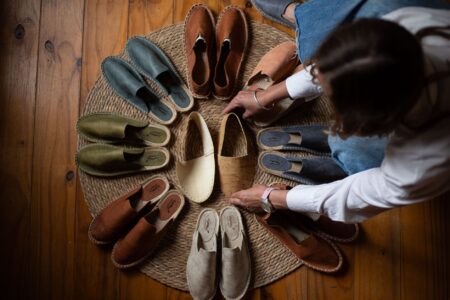
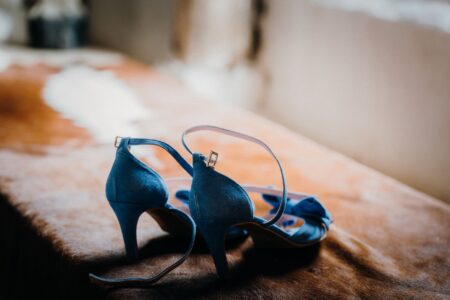
Footwear choices are doing significant work in these outfits. Flat leather sandals and simple mules keep things anchored in summer practicality, while pointed-toe kitten heels or block-heeled loafers push the look toward something more deliberate. The skirt itself is versatile enough to hold both directions, which is one reason it is building a wardrobe argument that linen had already made but is now facing competition for.
Accessories matter too. Because broderie anglaise carries visual texture at the fabric level, the instinct to pile on accessories needs checking. A single well-chosen piece – a slim belt threading through a waistband to define the silhouette, or a structured leather bag in a contrasting color – tends to outperform more layered approaches. The embroidery is the detail; everything else should work around it rather than alongside it.

Color is worth addressing specifically because broderie anglaise has a strong association with white and off-white that can make it feel narrow as a category. But the skirts appearing this season are pushing past that. Soft butter yellow, pale sage, dusty rose – the eyelet pattern reads just as clearly in these tones, and the effect is warmer and more contemporary than the traditional white-on-white. That color expansion is part of what is broadening the fabric’s appeal beyond its usual customer and positioning it as a genuine rival to linen’s seasonal dominance. Whether the midi format remains the primary expression of that rivalry, or whether the fabric moves aggressively into other silhouettes, will determine how far this particular shift actually travels.