


Quiet luxury had a good run. The muted palette, the logo-free restraint, the deliberate blankness that read as old money confidence – it worked, until it became a uniform. When every brand from high street to haute couture started selling “understated,” the statement disappeared. Now, something warmer and considerably more alive is taking its place, and it’s coming from a house that spent years in identity limbo before finding its footing again.
Chemena Kamali’s Chloé is doing what few designers manage after a long stretch of directional uncertainty: it’s making the brand feel genuinely desirable again, not through nostalgia alone, but through a specific emotional register that quiet luxury never quite reached. Where quiet luxury asked you to disappear into your wardrobe, Kamali’s Chloé asks you to inhabit it.
What Quiet Luxury Got Wrong
The appeal of quiet luxury was always partly about withdrawal – from branding, from trend cycles, from the exhausting visibility of fast fashion. A cashmere crewneck in oatmeal communicated that you didn’t need to try. The problem is that “not trying” is still a performance, and once enough people perform it simultaneously, the effect collapses. The aesthetic became as legible as a logo, just with more plausible deniability.
Quiet luxury also had a coldness problem. The palette, the silhouettes, the studied neutrality – they produced clothes that photographed beautifully in architectural interiors and felt somewhat inert on actual bodies. There’s a reason the aesthetic found its most comfortable home in finance-adjacent social media circles: it rewarded restraint as a personality, which is a narrow and not especially joyful thing to reward.
What Kamali is offering is not maximalism in response – it’s warmth. Her Chloé collections are built on the same foundations of quality fabric and clean construction that quiet luxury claims, but they arrive with texture, with fringe, with a kind of sensory generosity that quiet luxury deliberately stripped out. The clothes feel like something you’d want to touch before you’d want to photograph them.
The Kamali Effect
Kamali returned to Chloé – a house where she’d previously worked as a studio director under Phoebe Philo and Clare Waight Keller – with what seemed like a clear brief: reconnect the brand to its Bohemian Parisian DNA without making it feel like a heritage exercise. Her first collections leaned into the 1970s Chloé archive without being archival. The sheer blouses, the wide-leg trousers with a slight sway, the leather pieces that suggest craft over construction – they quote the past without quoting it directly.
The result has been a kind of slow-building momentum that tends to be more durable than a viral moment. Kamali’s Chloé doesn’t peak at a runway show and then deflate by the time the pieces hit stores. The collections have a consistency of feeling that makes each season feel additive rather than reactive – which is partly why the brand is winning back customers who had quietly drifted toward the more anonymous luxury that minimalist houses had been offering.
Why This Approach Is Working Now
There’s a specific cultural appetite right now for clothes that communicate personhood rather than category. The luxury market spent several years rewarding anonymity – the Bottega Veneta bag with no exterior logo, the Toteme coat in bone white, the Row everything – and those brands still perform well. But a noticeable number of luxury shoppers are moving toward pieces that have a point of view beyond “I know how to spend money quietly.”
Kamali’s Chloé lands in that gap. Her pieces are not ostentatious – there are no large logos, no irony, no statement-making for its own sake. But they have a discernible femininity that isn’t apologetic about itself, which puts them in a different category than the gender-neutral blankness that much of quiet luxury was selling. A Chloé top from the current era has a softness and a slight romanticism that says something specific about the person wearing it, and specificity is what quiet luxury structurally avoids.
The brand is also benefiting from a broader re-evaluation of what “effortless” means in fashion. For several years, effortless was coded as minimal – the fewer decisions you seemed to make, the more effortless you appeared. Kamali’s Chloé proposes that effortless can also mean comfortable in your own pleasure, wearing something because it’s beautiful rather than because it proves a point. The fringe on a suede jacket isn’t trying to be cool. It’s just trying to be itself.
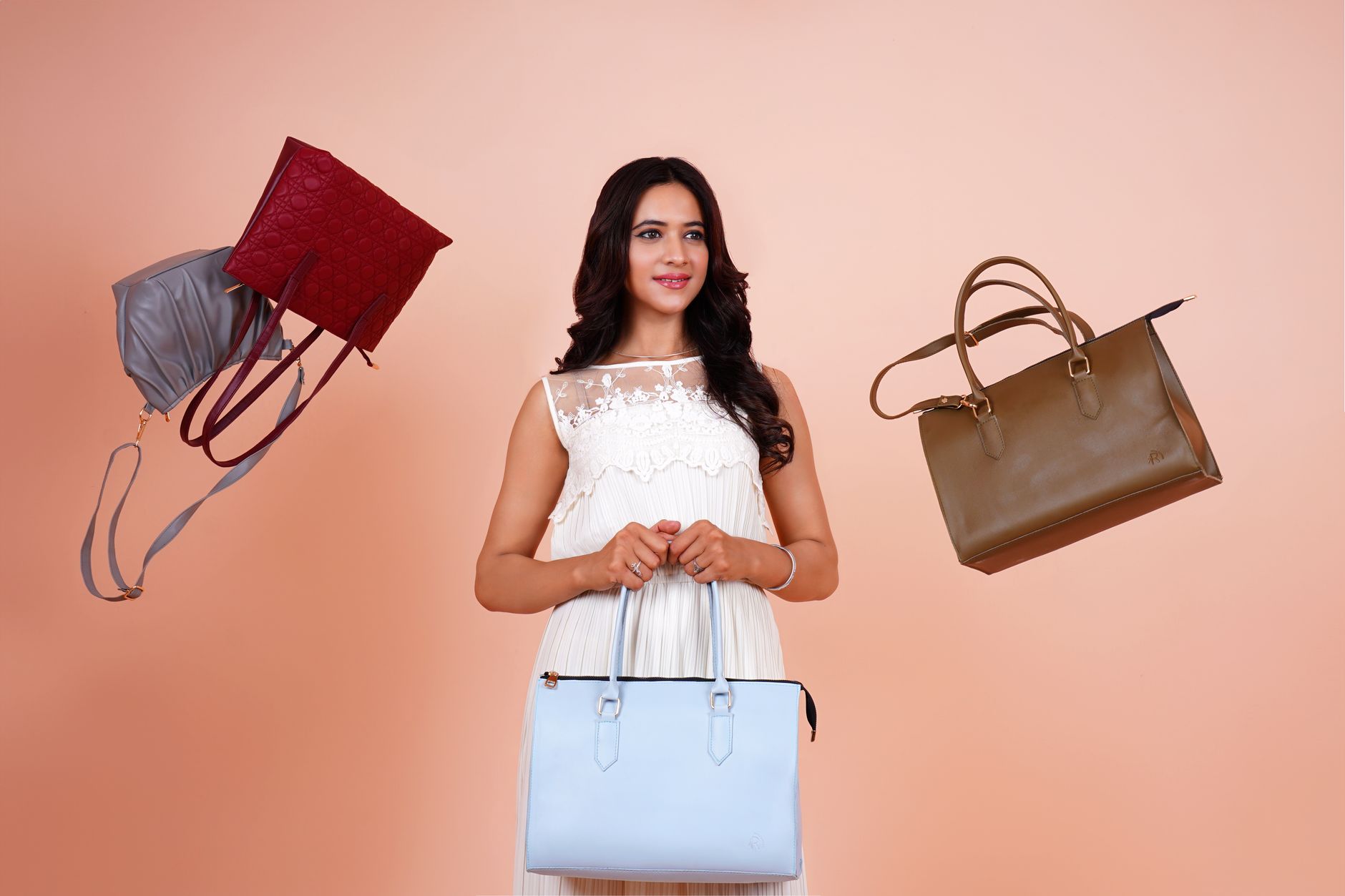
The commercial signals are worth reading carefully. Chloé’s handbag category – historically the real revenue test for any French house – has seen renewed attention under Kamali, with styles that feel distinct from the current bag landscape without being aggressively directional. The Penelope, the Kani, the quieter iterations of the brand’s saddle-adjacent silhouettes have developed followings that don’t depend on influencer saturation. They move because customers want them, which is a different kind of momentum than a paid campaign generates.
What makes Kamali’s position genuinely interesting is that she’s operating in a market where the safe choice would have been to stay in quiet luxury’s lane and compete on fabrication alone. She didn’t. Her collections carry a warmth and a slight wildness that feel like a considered risk – and right now, that risk is looking like the shrewder calculation. When every brand is whispering, sometimes the most effective move is to simply speak in a full voice.