

The mule had its moment. For the better part of a decade, the backless slip-on defined off-duty luxury dressing – easy, elevated, endlessly photographed. But something is shifting on the fashion radar, and Bottega Veneta is the house leading the charge away from it. The brand’s stretch heels, with their body-conforming knit construction and architectural silhouette, are showing up with increasing frequency on the kind of women who, two seasons ago, wouldn’t have considered anything more structured than a Kitten mule.
Bottega Veneta’s stretch heel is not a new idea – the house has been refining sock-boot and stretch-pump constructions for several seasons under creative director Matthieu Blazy. But the current iteration feels different in reach. What started as a runway statement has moved into the styling vocabulary of buyers, editors, and the wider fashion-forward consumer, not just the front row. The silhouette pairs with tailoring the way a pointed-toe pump once did, but carries a modern tension that the mule, however chic, simply cannot replicate.
The mule is easy. The stretch heel demands something from the wearer.
Why the Stretch Heel Works Where the Mule Stalls
The case against the mule was never about aesthetics – it was always about proportion. A backless shoe, by nature, creates a visual break at the heel that can cut the line of the leg. Stylists have worked around this for years with careful trouser length and skirt hemlines, but the workaround reveals the limitation. Bottega Veneta’s stretch heel eliminates the problem entirely. The shoe extends up and over the foot in one continuous line, creating the kind of clean vertical that photographers and fashion editors chase. It reads as modern without reading as difficult, which is a hard balance to strike in footwear.
The knit or stretch material itself does a specific kind of work that leather and suede cannot. It moves with the foot, conforms to the ankle, and photographs as a second skin rather than a separate object. This is precisely why the silhouette has been so at home in Blazy’s vision for Bottega – the house has long been interested in craft that disappears into the body rather than announcing itself from across the room. The stretch heel is the shoe equivalent of the Intrecciato weave: immediately recognizable once you know it, but not trying to shout. And as Bottega’s knitted boots began edging out the Chelsea boot, the same knit logic has now migrated down to the heel category with equal force.
There is also the question of occasion. The mule reads as relaxed, which was its appeal during a period when fashion was consciously leaning casual. That period is losing ground to something more intentional. Dressing is becoming more deliberate again, and the stretch heel fits a mood where effort is visible but not stiff. It is structured enough for a dinner or a presentation, fluid enough not to feel like armor. The mule, by contrast, now risks reading as an afterthought – something grabbed on the way out the door rather than chosen.
The Market Is Noticing
Resale platforms and luxury retail sites have both seen the stretch-format heel climb in search ranking over the past two seasons, with Bottega Veneta’s versions consistently appearing in “most-viewed” and “most-saved” categories on major platforms. The demand pattern follows a familiar Bottega trajectory: slow build, editorial saturation, then a moment where the piece goes from insider knowledge to broader aspiration. The Andiamo bag followed the same arc before it began eclipsing other shapes in the house’s lineup – a pattern worth watching as the stretch heel enters that same phase of recognition.
Retailers are responding by pulling forward their orders on stretch and sock-construction heels across multiple brands, not just Bottega. Pointed-toe sock pumps from other European houses are seeing increased floor placement, suggesting that buyers see this as a category trend rather than a single-brand moment. Bottega is the anchor, but the appetite is broader. This is how silhouette trends work at the luxury tier: one house validates the direction, and the market opens.
The mule has not disappeared from shelves, and it will not. There are houses for whom the backless shoe is a signature, and those customers are loyal. But the floor space and the editorial attention are tilting. When stylists start building looks around the shoe first – choosing the stretch heel before deciding on the bag or the coat – it signals a change in what the industry considers the current shoe. That moment appears to be now.
What This Means for Your Wardrobe
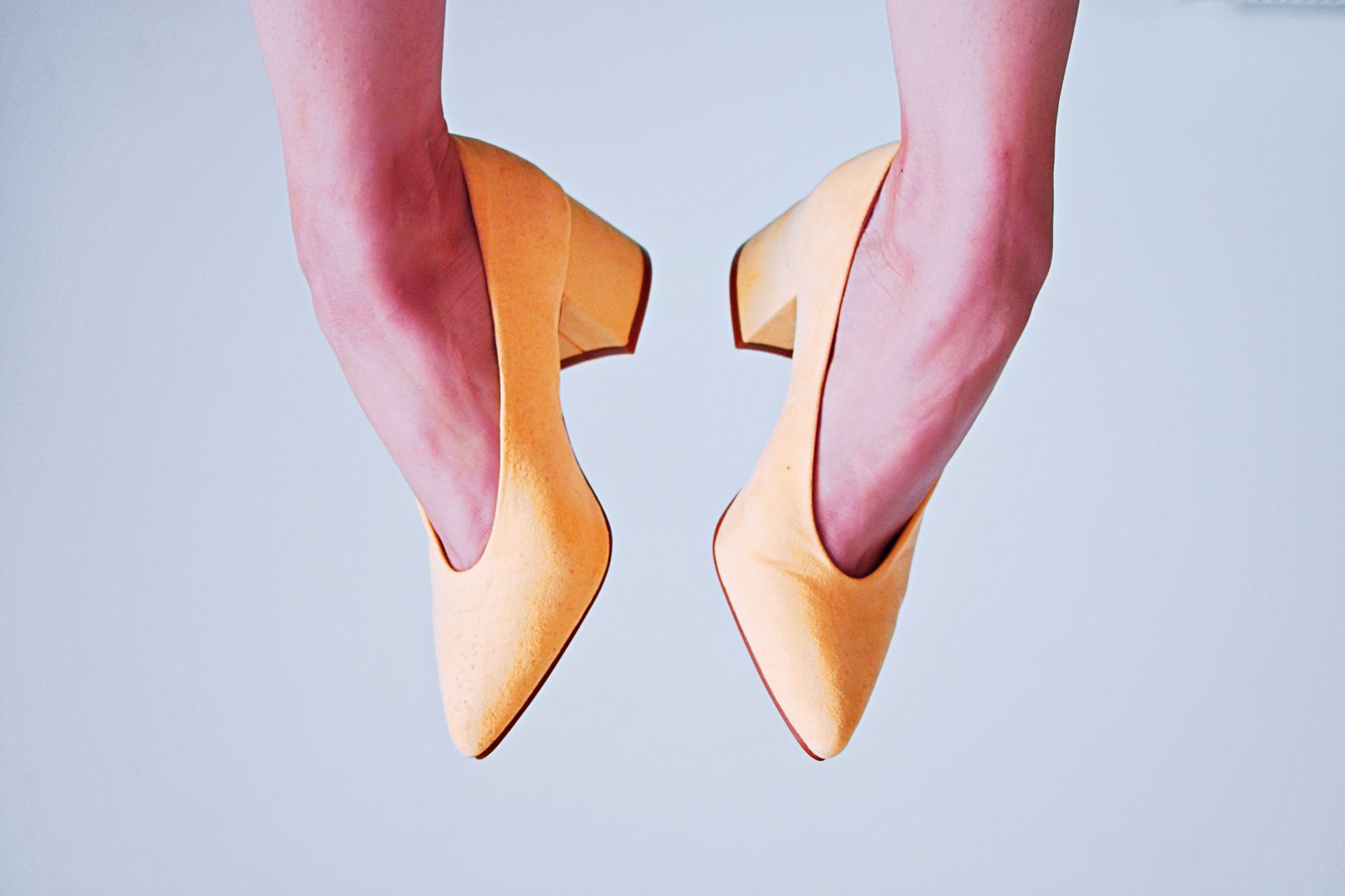
The practical argument for adding a stretch heel is straightforward: the silhouette is more versatile than it first appears. Wide-leg trousers that would overwhelm a mule find a clean anchor in a heel that extends up the ankle. Midi skirts, which have dominated the past few seasons, gain definition with a shoe that finishes the leg rather than leaving it open at the back. Even relaxed denim looks sharper against the elongated line. The stretch heel is not a departure from the ease that made the mule popular – it is the same instinct, refined for a moment when “easy” needs to look like it was considered.
Color and texture choices matter more with this silhouette than with almost any other shoe. Because the material lies against the skin and follows the foot’s contour, a shade that closely matches the wearer’s skin tone creates an extraordinary lengthening effect – a trick that runway stylists have been deploying at Bottega shows consistently. Conversely, a bold tonal block in a rich clay, black, or deep burgundy reads as a deliberate statement rather than an accessory. The shoe is flexible in that way. It can disappear into a look or anchor it, depending entirely on the choice made at the rack.
What the stretch heel cannot do is coast on the low-maintenance reputation the mule built. It asks for a heel height with enough lift to show the construction, and it works best on a foot that is comfortable in something fitted. For the wearer who found the mule appealing precisely because it required no commitment, the stretch heel is a different proposition – and that difference is exactly what makes it interesting right now.
Frequently Asked Questions
What are Bottega Veneta’s stretch heels?
They are sock-style or knit-construction pumps and heels that conform to the foot and ankle, creating a seamless, elongated silhouette distinct from traditional heels.
Why are stretch heels replacing mules as a trend?
Stretch heels create a cleaner leg line than backless mules and suit the current mood toward more intentional, structured dressing without sacrificing comfort or fluidity.