


The Belt That’s Been Here All Along
The chain waist detail had its moment – draped over blazers, cinched around midi skirts, stacked with chunky hardware at every price point from fast fashion to designer. For a few seasons it was inescapable. Now, something quieter is pulling focus: the woven leather belt, with its interlaced strips, muted tones, and crafted surface, is showing up in its place with a consistency that suggests the swap is less coincidence and more collective fatigue.
This is not a sudden trend reversal. Woven leather has existed in accessories for decades, appearing in classic Italian goods, equestrian wardrobes, and the kind of vintage shop haul that gets photographed on a Sunday afternoon. What’s changed is where it’s landing and what it’s being styled with – a shift in context that makes an old technique feel newly relevant.
Why the Chain Peaked and Stalled
The chain belt worked because it offered instant visual weight without the formality of a traditional buckle. It could dress up a white T-shirt or make a slip dress feel deliberate. But its weakness was always its flexibility – or rather, the lack of it. Chain hardware reads the same whether it’s on a runway look or a teenager’s Halloween costume, and after enough seasons of seeing it on everything, that sameness became its problem.
There’s also the noise factor, literal and aesthetic. Chain accessories carry a loudness – they catch light aggressively, they jingle, they announce themselves. For a certain customer who spent the last few years gravitating toward quieter, more textural dressing, that energy started to feel like too much. The woven belt, by contrast, draws attention through craft rather than shine.
It’s worth watching how the accessories market tends to self-correct after a hardware-heavy cycle. Studs give way to smooth leather. Chunky chains give way to fine links, and eventually to no metal at all. The woven belt is arriving at exactly the right moment in that rotation.

What Makes Woven Leather Work Now
The construction itself is the appeal. A woven belt – whether it’s a flat braid, a basket weave, or a more intricate lattice – shows visible skill in a way that a stamped logo or a welded chain link does not. That visibility matters to a buyer who is thinking more carefully about what they’re spending money on and wants to see the value in the object itself.
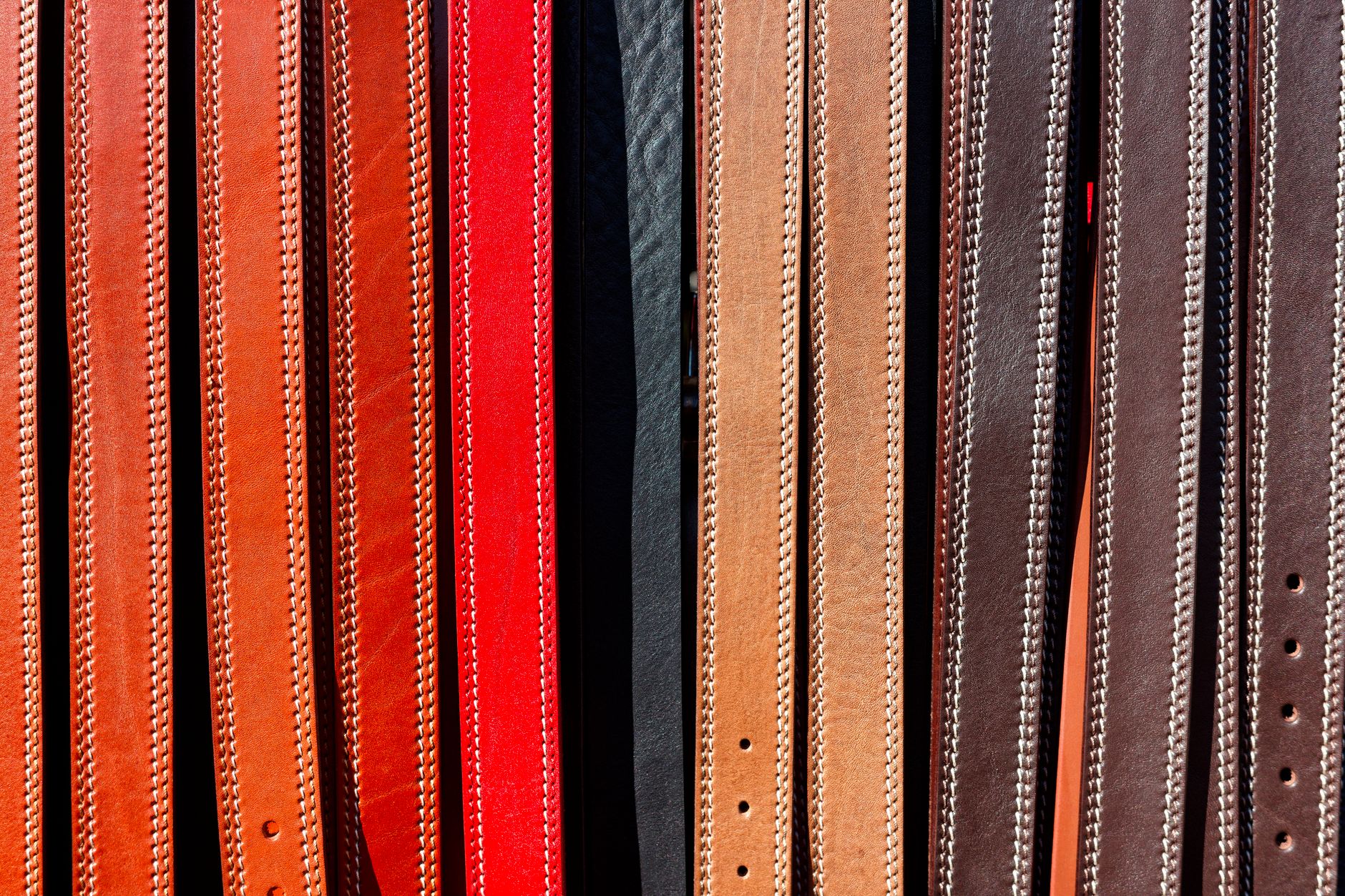
The color palette arriving with this trend is doing a lot of work, too. Most of the woven belts cutting through right now are coming in tobacco, cognac, natural tan, off-white, and the occasional terracotta – earthy tones that sit comfortably over the linen trousers, relaxed blazers, and wide-leg denim that have become the dominant casual wardrobe for women who dress with intention. The belt doesn’t compete with the outfit. It completes a texture story that’s already in progress.
Styling-wise, the woven leather belt is doing something the chain couldn’t: it works equally well with dressed-up and dressed-down pieces without changing its character. Looped through high-waisted trousers, it reads tailored. Worn loosely over a flowy dress, it reads effortless. That range of application is exactly why accessories with longevity tend to outlast statement-of-the-moment pieces – they solve more problems across a wardrobe. Much the same logic applies to footwear choices, like how the pointed-toe flat has been edging out the loafer for precisely this reason: understated versatility over a single-note statement.

There’s also a sizing conversation happening quietly underneath this trend. Chain belts tend to be one-size or minimal-adjustment pieces that work within a narrow range of body types and styling approaches. Woven leather belts, particularly those with a prong buckle rather than a clasp, offer actual fit flexibility. For a customer who has grown increasingly impatient with accessories that only technically work on the body they were designed for, that practicality carries real weight. The trend looks good in the editorial image and also functions in daily life – a combination that chain’s visual-first design never fully delivered.