

The Quiet Shift Happening at Your Feet
The lug-sole boot had a long run. For several seasons it was the default answer to any outfit question – something utilitarian, something with attitude, something that communicated effort without looking like you tried. But walk through any major city right now and the calculus has shifted. The slip-on loafer is showing up everywhere the chunky boot used to dominate: under tailored trousers, with midi skirts, even alongside athleisure separates that would have looked strange with anything this polished two years ago.
This is not a sudden reversal. Fashion rarely works that way. The loafer has been building its case quietly – season by season, runway by runway – until the moment arrived where the heavy-soled boot started to feel labored rather than cool. When a shoe that signals ease starts to feel like a statement, the pendulum swings toward something smoother.
Why the Lug-Sole Lost Its Edge
The lug-sole boot earned its place honestly. It came in during a moment when fashion was obsessed with deconstruction and utility – when the goal was to look like you had somewhere important and slightly gritty to go. It worked brilliantly alongside the oversized blazer trend and the wide-leg trouser wave. The problem is that those trends have matured, and the boot that once energized them now anchors them in a specific era. Wearing a chunky platform boot in 2025 reads less like style and more like nostalgia.
There is also the weight question – not metaphorical, but literal. The lug-sole boot is heavy. It works in autumn and winter, but it has been pushed through spring and even into early summer by people reluctant to retire it. That seasonal overextension accelerated its fatigue. A shoe works partly on contrast – it should feel appropriate, even surprising, for the moment. When a boot shows up in May with a linen dress, it stops being interesting and starts being stubborn.
The aesthetic that replaced the chunky-utility obsession is something quieter and more considered. Clean lines, relaxed tailoring, the kind of wardrobe that references the 1990s and early 2000s without replicating them exactly. That aesthetic needed a shoe, and the lug-sole could not provide it. Too loud, too heavy, too insistent on being noticed.
What the Loafer Is Actually Offering
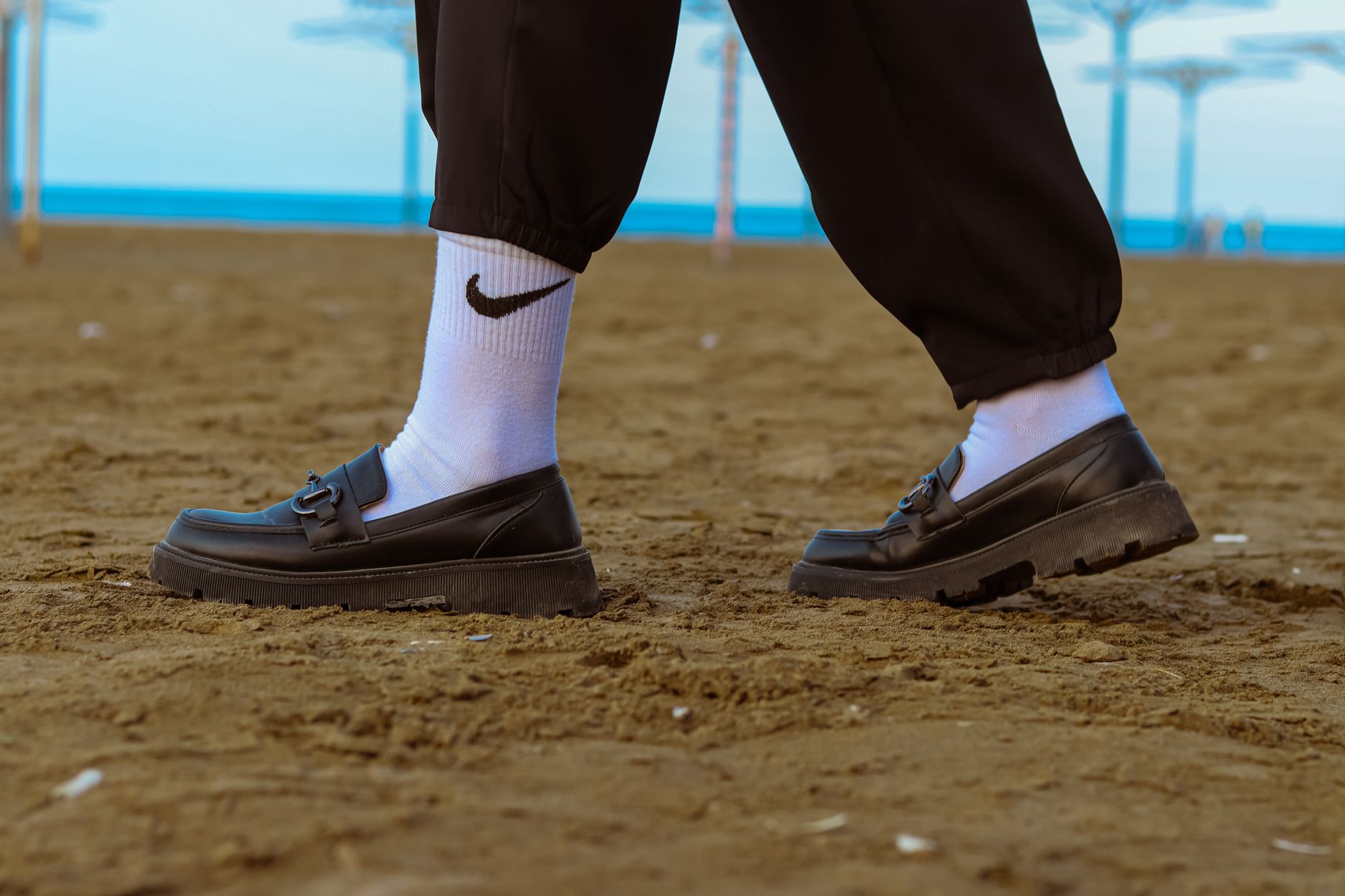
The slip-on loafer fills that gap by doing something the lug-sole never could: it disappears into an outfit. Not invisibly – loafers have presence – but in a way that lets the clothing lead. A polished leather loafer under wide-leg trousers does not compete with the silhouette; it completes it. That distinction matters now more than it did when fashion was about maximum visual tension. The current appetite is for cohesion, for outfits that look considered rather than assembled from competing statements.
The loafer also moves between contexts in ways that heavier footwear cannot. It works in professional settings that have grown more casual but still require polish. It works for dinner, for weekend errands, for the growing number of dress codes that resist easy categorization. That flexibility is not a small thing – it is exactly what a wardrobe staple needs to sustain relevance across multiple years rather than peaking in one season.

The Styling Logic Behind the Switch
Watch how the loafer is being worn right now and a clear logic emerges. It is almost always paired with something that has length – wide trousers, maxi skirts, asymmetric hem dresses that break at an unusual point on the leg. The loafer creates a clean finish at the floor line that a chunky boot would interrupt. The visual effect is elongating in a way that feels effortless, which is the exact quality that fashion is chasing right now.
Material choices are doing significant work in the loafer’s current iteration. Patent leather versions are appearing alongside tailored sets. Suede interpretations are being worn with denim in ways that bridge smart and casual without apology. Even penny loafers and horsebit styles – which carry their own heritage weight – are being styled without irony, as straightforward elegant choices rather than retro references. That directness is appealing precisely because the recent trend cycle relied so heavily on layered irony and visual subversion.
The sole profile matters too. Current loafer designs tend toward a low or slightly stacked heel – enough to add proportion but not enough to create the platform effect the lug-sole became known for. This subtle lift does the same job the chunky boot used to do in terms of balancing oversized silhouettes, but without the visual disruption. It is a more technical solution to the same styling problem, and that technical refinement is part of why it feels current.

There is a version of this conversation that is simply about the cycle turning – that the lug-sole boot will return in two or three seasons, slightly different, and the loafer will start to feel overexposed. That is probably true. But what is notable about the current loafer moment is how it is being adopted across demographics and price points simultaneously, which usually signals something more durable than a flash trend. When a garment or shoe starts appearing at both the luxury end and the mass-market end at the same time, in the same silhouettes, styled the same way, it means the culture has made a decision rather than just the fashion industry. The lug-sole boot can rest for now. Whether it wants to or not.
Frequently Asked Questions
Why is the lug-sole boot falling out of fashion?
The lug-sole boot has become associated with a specific trend era and feels heavy against cleaner, more relaxed silhouettes that are currently dominant.
How should you style a slip-on loafer in 2025?
Loafers work best with wide-leg trousers, asymmetric or maxi hemlines, and relaxed tailoring – silhouettes where a clean shoe finish elongates the overall look.