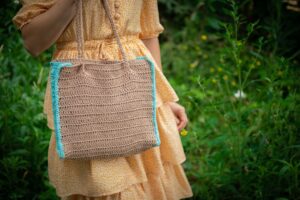

The woven bucket bag had a long run – raffia, rattan, seagrass, you name it. But scroll through street style accounts or browse the shelves of any independent boutique right now, and something is quietly taking its place: the crochet tote, in all its handmade, slightly imperfect, unapologetically tactile glory.
Why the Crochet Tote Is Having Its Moment
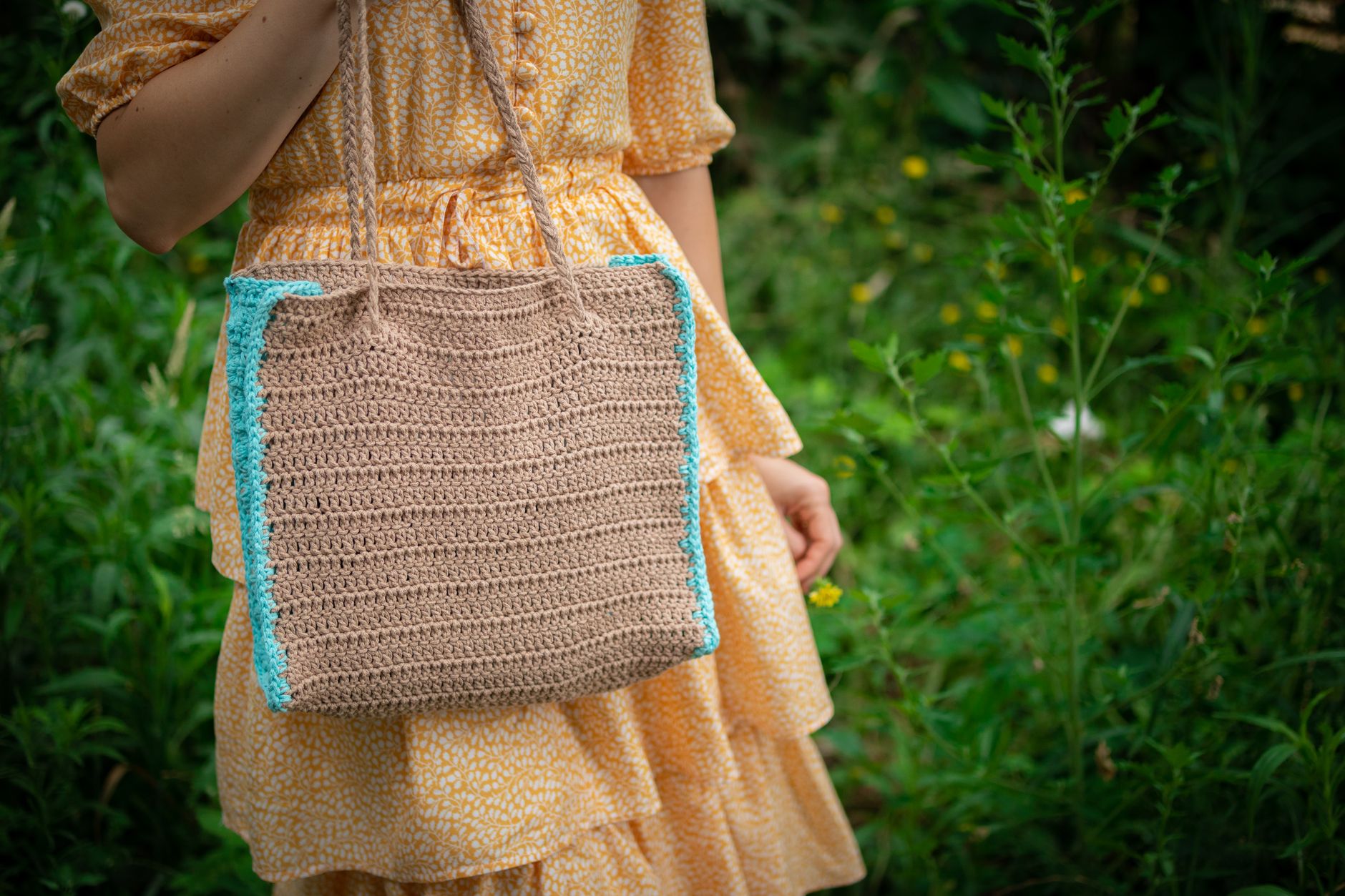
The crochet tote is not a new concept – your grandmother probably made one in the 1970s, and that is exactly the point. Fashion right now is deeply interested in things that feel like they were made by hand, passed down, or pulled from a market stall abroad. The crochet bag taps into all of that at once. It carries a visual warmth that no structured leather tote or polished nylon shopper can replicate, and that warmth is increasingly what shoppers are reaching for.
What separates the crochet tote from its woven predecessor is texture depth. A woven bucket bag – even a beautifully crafted one – has a relatively flat, uniform surface. Crochet, by contrast, creates loops, gaps, and dimensional patterns that shift depending on the light and the angle. The bag looks different at noon than it does at golden hour, and that visual variability has a lot of appeal when almost everything else in a wardrobe is smooth, fitted, and deliberately minimal.
There is also a sizing advantage. Woven bucket bags are inherently limited by their construction – the rigid weave needs structure to hold its shape, which caps how large or how relaxed the silhouette can get. Crochet is flexible. A crochet tote can be enormous and still drape naturally against the body without looking stiff or overly constructed. That makes it genuinely functional as a market bag, a beach bag, or an everyday carry without sacrificing any visual softness.
Color plays into this too. Crochet yarn comes in a far wider range of tones than natural woven fibers, which tend to cluster around neutrals – sand, cream, natural brown, black. Crochet totes are showing up in terracotta, cobalt, sage, dusty rose, and multi-tonal stripe combinations that feel fresh against summer whites or layered over linen sets. The bag becomes a color statement in a way the woven bucket bag rarely was.

How Brands and Makers Are Responding to the Shift
Independent makers were ahead of this curve by at least two seasons. Etsy shops and small-batch designers selling crochet totes saw interest build steadily through late 2023, and by mid-2024 the waitlists on certain handmade styles had stretched to several weeks. That kind of organic demand – driven by word of mouth and social sharing rather than a campaign – is a reliable signal that a trend has real staying power rather than a manufactured spike.
Larger brands took notice. A growing number of high street retailers began introducing crochet tote styles in their summer accessory edits, often positioning them alongside straw hats and linen separates as part of a broader artisan-adjacent aesthetic. Some have leaned into the handmade look even when the bags are machine-produced, adding visible knot details, uneven fringe, or raw edges that gesture toward craft without actually being one-of-a-kind pieces.
Luxury houses have approached this differently. Rather than mimicking the handmade effect, several have focused on elevating the material itself – using fine cotton mercerized thread, hand-dyed yarns, or intricate stitch patterns drawn from traditional craft regions. The result is a crochet tote that costs several hundred dollars and justifies it through the density and complexity of the work, not just the label. That positioning pulls the crochet tote out of its purely casual register and gives it a formal flexibility the woven bucket bag never really achieved.
The styling shift is visible too. Where the woven bucket bag was almost always worn as a summer-only accessory – swapped out by September for something in leather or canvas – the crochet tote is being styled year-round by early adopters. Paired with a chunky knit sweater and wide-leg trousers, it reads less like a beach bag and more like a considered texture play. That seasonal range matters enormously to how long a bag style survives in a market that rotates quickly.
Social media has not hurt. Short-form video is particularly good at capturing the tactile qualities of crochet – the slight give of the loops, the way the bag moves when you carry it, the openwork pattern that lets you glimpse the contents inside. Static photography never fully captured why crochet bags feel so appealing in person. Video changed that, and the result has been a surge in organic content around both styling and making crochet totes at home. The DIY angle is its own separate phenomenon: crochet tote patterns are among the most searched bag-making tutorials online right now, which means the style is being reinforced from the consumer side as well as the retail side.
What This Means for the Woven Bucket Bag
The woven bucket bag is not disappearing. It is too well established and too genuinely useful to vanish from shelves or wardrobes entirely. What is happening is more subtle – it is losing its status as the default choice. When a shopper walks into a store looking for a warm-weather bag with texture and character, the crochet tote is now the first thing they consider rather than the second. That shift in default preference is where trends actually live and die, and the woven bucket bag is currently on the wrong side of it.
What keeps this interesting is that crochet totes carry an inherent tension. Their open construction means they are genuinely impractical for anyone who regularly carries small items that can slip through the gaps – a problem the woven bucket bag, with its tighter surface, never posed. Some designers are solving this with interior linings; others are simply letting the impracticality be part of the charm. Whether that trade-off is acceptable is the question every buyer has to answer for themselves, and not everyone will answer it the same way.