


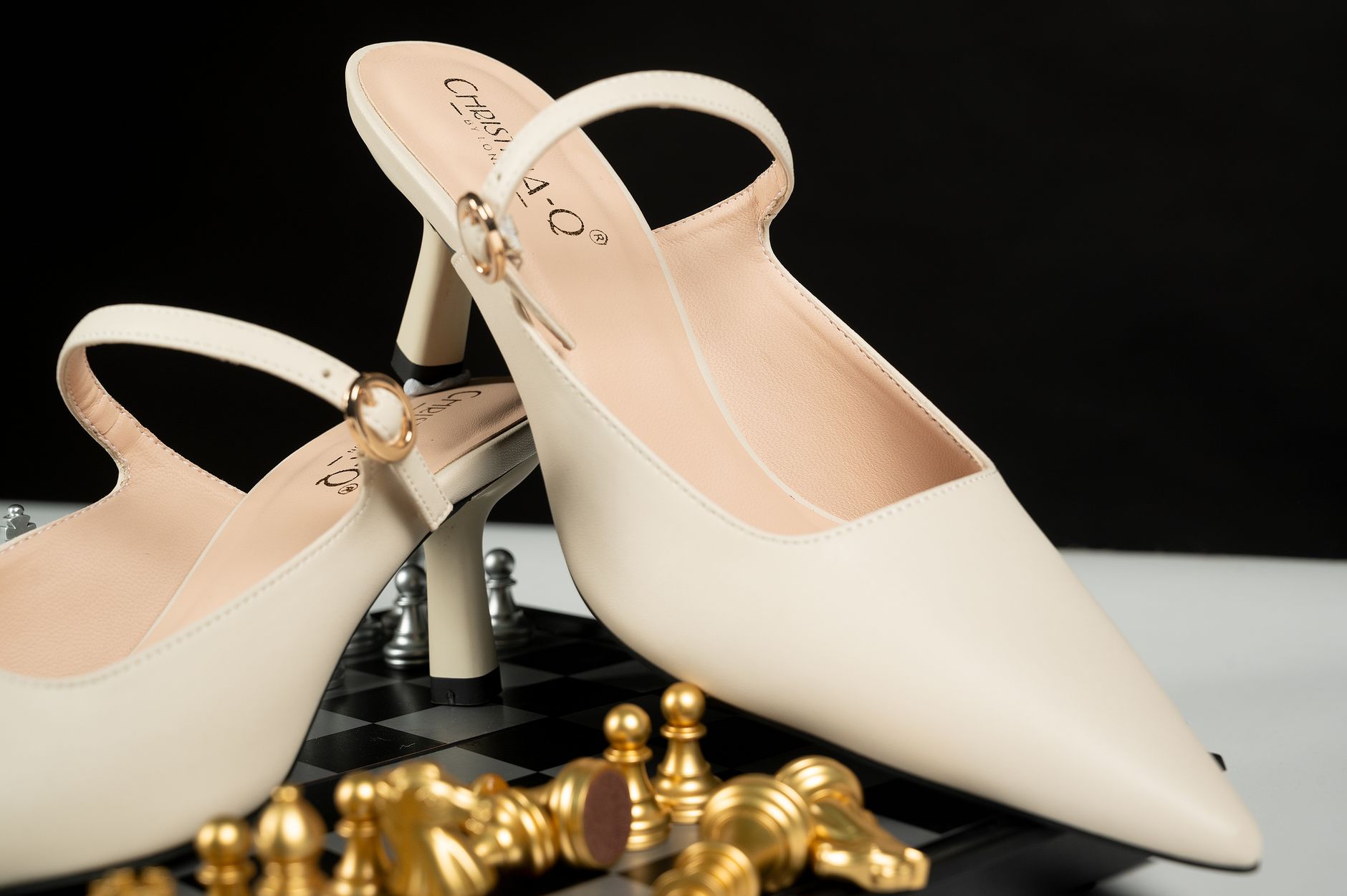
The kitten heel slingback had a good run. For the better part of three years, it dominated office dressing, wedding guest wardrobes, and the kind of aspirational “quiet luxury” styling that filled every fashion mood board worth scrolling. Low heel, delicate strap, polished toe – it checked every box for women who wanted to look put-together without committing to a stiletto. But something is shifting on the shelves and the streets, and the classic slingback pump – with a full, confident heel – is quietly moving into the space the kitten heel used to own.
This is not a sudden trend declaration or a runway shock moment.
The change is gradual and almost imperceptible season to season, but directional enough that buyers and stylists are paying attention. The slingback pump – defined by its open back, ankle strap, and a heel that actually means business, typically ranging from 60mm to 90mm – is appearing more frequently in new collections and restock priorities. Meanwhile, kitten heel versions of the same silhouette are being phased toward sale sections or repositioned as entry-level options. The category is not disappearing, but its grip on “the heel to have” is loosening.
Why the Kitten Heel Slingback Dominated for So Long
The kitten heel slingback made perfect sense for the moment it inhabited. After years of maximalist chunky platforms and towering block heels, women wanted a shoe that felt wearable in the most literal sense – something that could carry them through a full workday, a dinner, and a commute without becoming the focus of every walking decision. The kitten heel, typically between 25mm and 50mm, offered just enough lift to elongate the leg without demanding physical effort. The slingback strap gave it femininity and structure. It was practical dressed up as elegant, which is exactly what a post-athleisure audience wanted.
Fashion houses leaned in hard. Iterations in pointed-toe patent, square-toe suede, and two-tone leather became wardrobe anchors for anyone building what was described as a “clean girl” or minimalist capsule closet. The shoe became almost democratic in its appeal – it worked with wide-leg trousers, midi skirts, tailored shorts, and summer dresses without overwhelming any of them. Styling it required almost no thought, and that ease became part of its identity. It was the shoe you reached for when you wanted to look like you had tried without actually having to think too hard.
That effortlessness, though, is also what started to feel limiting. When a shoe becomes synonymous with “safe,” fashion audiences – especially those who use clothing and accessories to signal awareness and taste – begin moving on before the trend has technically peaked. The kitten heel slingback never had a specific moment of overexposure; it simply became so common that it stopped communicating anything distinctive.

What the Slingback Pump Offers That the Kitten Heel Doesn’t
The slingback pump brings back something the kitten heel never fully delivered: authority. A heel in the 70mm to 90mm range changes the posture, the gait, and the entire energy of an outfit. It does not need to be extreme to be assertive. The silhouette still carries all the refinement of the slingback form – the exposed heel, the clean vamp, the streamlined strap – but adds a vertical lift that gives the look weight and intention. Worn with a well-cut trouser or a knee-length skirt, the slingback pump reads as confident rather than careful.
There is also a styling versatility argument. The kitten heel slingback, because of its delicate scale, tends to soften whatever it is paired with. That works beautifully for feminine or flowy pieces, but it can get lost when paired with structured tailoring or heavier fabric. The slingback pump holds its own against both. A boxy blazer and wide-leg trousers in a heavier wool? The pump grounds the look. A silk slip dress? It elevates it without competing. The shoe has a visual weight that complements a broader range of outfit architectures.
Color and material choices are also expanding around the pump silhouette in ways that feel intentional rather than trend-adjacent. Chocolate brown leather, bone white patent, and tonal nude-to-skin shades are appearing in new slingback pump arrivals, positioning the heel as a year-round option rather than a spring-summer signature. A growing number of brands are introducing block-heeled slingback pump versions that split the difference between comfort and height – bringing in wearers who loved the kitten heel’s practicality but want a more visually substantial shoe.
The Styling Signals Worth Noticing
Street style documentation from recent fashion weeks tells a clear story. The slingback pump is appearing repeatedly as a finishing piece with tailored sets, wide-leg suits, and the kind of elevated casual dressing – think good denim and a structured top – that has replaced full office dress codes for many urban professionals. The kitten heel version of the same shoe is still present, but more often on guests who have committed to a strictly feminine aesthetic rather than a mixed or androgynous one. The pump is crossing more outfit categories, which in fashion terms means it is the version with momentum.
Social media styling communities have also started using the slingback pump as a marker of going slightly beyond the expected choice. The kitten heel slingback, for all its virtues, reads as the obvious option now – the shoe a stylist reaches for when a client says “I don’t want heels but I want heels.” The pump signals something different: that the wearer has made a specific decision, not a default one. That distinction matters more than it might seem to people outside of fashion, because it is how trends actually transfer from editors and stylists to wider consumer behavior.
Retailers tracking reorder patterns are noticing the same directional pull. Slingback pumps in mid-range heel heights are restocking faster than their kitten heel counterparts in several categories, and new colorways are being introduced at a faster rate for the taller heel version. This is not yet a statistical cliff for the kitten heel slingback – it remains a strong seller – but the investment energy is moving.
The slingback pump doesn’t need to announce its takeover. It is doing what the best shoe transitions always do: showing up consistently in the right contexts until, one season, the other option starts to look like last year’s answer to this year’s question.
Frequently Asked Questions
What is the difference between a slingback pump and a kitten heel slingback?
A slingback pump features a taller heel, typically 60mm to 90mm, while a kitten heel slingback has a shorter, more delicate heel between 25mm and 50mm. Both styles share the open-back ankle strap design.
Is the kitten heel slingback going out of style?
Not entirely, but it is losing its status as the directional choice. The slingback pump is currently gaining more attention in new collections and street style, while kitten heel versions are settling into a more classic, entry-level position.