


The statement necklace had a long run. Chunky chains, layered pendants, bib constructions that turned any simple top into an event – for nearly two decades, the necklace was the reliable answer to “how do I finish this look?” Now something quieter is taking its place at the collar, and it is not a piece of jewelry at all.
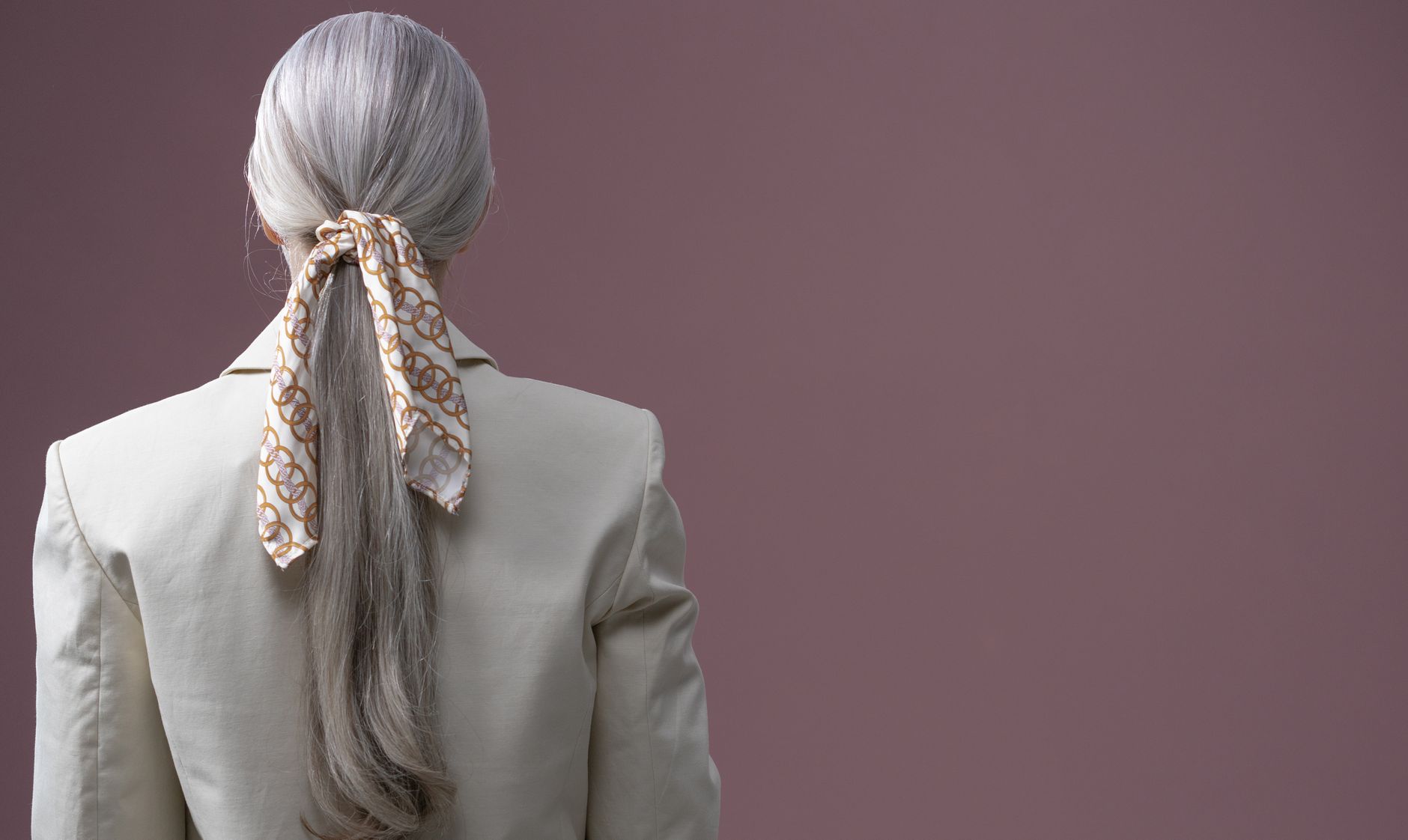
The slim scarf – worn knotted at the throat, draped loosely over one shoulder, or tied in a low loop – has been working its way through fashion weeks and street style circles for several seasons. What began as a nod to 1960s French dressing has sharpened into something more deliberate: a conscious move away from the bold and decorative and toward texture, color, and softness as the finishing element of an outfit.
The shift is subtle, which is exactly the point.
Why the Necklace Lost Ground
The statement necklace was built for a specific era of dressing – one that rewarded maximalism and visual impact above everything else. The logic was simple: neutral outfit, dramatic necklace, done. It worked because it required no further thought. But that same quality eventually became its limitation. The formula grew predictable, and predictability in fashion is rarely rewarded for long.
There is also a practical dimension that does not get discussed enough. A heavy bib necklace competes with everything – necklines, collars, lapels, the structure of a blouse. Styling around it demands that the garment underneath serve as a backdrop rather than a participant. As fashion moved toward more architectural tops, interesting collar work, and statement outerwear, the necklace stopped cooperating. It became one loud element too many.
The slim scarf solves that problem by working with garments rather than against them. Knotted over a button-down collar, it adds dimension without erasing what the shirt is already doing. Tucked into a blazer, it introduces color without disrupting the line of the jacket. It does not ask the rest of the outfit to step back.
How to Wear It Without Looking Like a Costume
The fear with the slim scarf is that it reads as costume – retro in the wrong way, or overly precious. That concern is legitimate if the styling is too studied. The version that is gaining traction now is deliberately casual in its approach: loose knots over tight ones, scarves worn with jeans and a simple tee as often as with tailored pieces, and patterns mixed rather than carefully coordinated.
Silk twill remains the most versatile material because it holds a knot without bulk and photographs well against almost any fabric. But the trend is not limited to silk – lightweight wool, gauze, and even thin cotton scarves are being used in the same way, which brings the look into a more accessible price range. A scarf that cost twenty dollars at a vintage market can function identically to a designer version when the proportions are right. Width matters most: anything much wider than four inches starts to behave like a neckerchief or a bandana, which carries a different aesthetic weight entirely.
Placement is where individual style enters. At the base of the throat, the effect is structured and intentional – closer to how the necklace functioned, but softer. Draped over the shoulder and left to fall loosely, it becomes almost incidental, like it ended up there by accident. That nonchalance is difficult to fake but easy to practice. Wearing it slightly undone, with the knot off-center, communicates ease in a way that a perfectly symmetrical chain never quite could. Pairing it with a gathered shoulder blouse creates exactly the kind of layered softness that has been moving through collections this season.
The Accessories Logic Behind the Trade-Off
Accessories tend to move in conversation with each other. When one category dominates, something else gets neglected until it cycles back. The necklace had the floor for long enough that the scarf at the neck feels genuinely new again, even though it is not new at all. Hermes was building scarves designed for exactly this kind of wear decades ago. What has changed is context, not the object itself.
What the slim scarf offers that jewelry cannot is temperature utility. It is a functional object that also works aesthetically, and that dual purpose resonates with how a lot of people are thinking about getting dressed right now – less about pure ornament, more about pieces that do more than one thing. It can come off and go into a bag. It can be retied differently in the afternoon. It can be lent to a friend who is cold. A necklace cannot do any of that.
There is a color argument to be made as well. Jewelry operates within a limited palette – gold, silver, the occasional enamel or gemstone. A scarf can be any color in any combination, which makes it a far more flexible tool for connecting the elements of an outfit. A mustard scarf pulls the warmth out of a camel coat. A deep red one disrupts an otherwise monochromatic navy look. The range of what a scarf can do chromatically simply outpaces what a necklace can offer.

The statement necklace is not gone – it will return, as everything in fashion does. But right now, the slim scarf is doing the work quietly and convincingly, and the women who have already made the switch are not looking back at their jewelry boxes with any urgency.