


The Shoe Shift Nobody Announced
The strappy wedge had a long run. Through beach vacations, summer weddings, and rooftop dinners, it delivered height without agony and a certain casual glamour that felt both effortless and dressed-up. But something has been happening on sidewalks, terraces, and event arrivals over the past two seasons: the metallic flat sandal and its slightly heeled cousin have been quietly claiming that same territory, and the wedge is losing ground faster than most people have noticed.
This is not a dramatic overthrow. Nobody held a press conference. The shift is happening at the street level, in the choices women are making when they reach for something that will carry them from a lunch reservation to an evening out. The metallic sandal is winning that decision more and more often, and the reasons are worth unpacking.
Why the Wedge Worked – and Then Stopped Working
The wedge thrived because it solved a real problem: how to get height without the pain of a stiletto. Espadrille wedges in particular became a summer wardrobe staple because they communicated a specific relaxed-chic mood that felt appropriate for almost everything casual. They paired with linen, with midi dresses, with wide-leg trousers. For a long stretch, they were the default answer to the question of what to wear on your feet when sandals felt too flat and heels felt too formal.
The problem is that fashion’s appetite for that particular silhouette has cooled, and the wedge has not adapted. The thick sole reads heavy now against the lighter, more streamlined direction that footwear has been moving toward. Where the wedge adds visual weight to the bottom half of an outfit, the metallic sandal does the opposite – it reflects light upward and keeps the eye moving. That is not a small distinction when you consider how much of styling is about proportion and where attention lands.
What the Metallic Sandal Is Actually Offering
The appeal of the metallic sandal goes beyond the obvious shine. What it brings to an outfit is a kind of visual shorthand for effort without the actual effort. A simple linen dress or straight-leg trouser with a silver or gold flat sandal reads as intentional in a way that the same outfit with a neutral leather sandal simply does not. The metallic element does the styling work, which is why the shoe has found such traction with the minimalist wardrobe crowd that wants maximum visual return from individual pieces.
There are also practical arguments running alongside the aesthetic ones. A flat or low-heeled metallic sandal handles more situations than a wedge can. It works for cobblestone streets, for long gallery walks, for the kind of evening where you genuinely do not know how much walking is ahead of you. The wedge, with its elevated sole, always carries a certain commitment – you know before you leave the house that you are choosing height over comfort, and not everyone wants to make that trade every time.
The gold toned versions have been particularly dominant. Gold sits warmly against skin tones across a wide range, which makes it the more versatile purchase, and it pairs with the earthy, warm color palettes – terracotta, camel, cream, olive – that have been running through ready-to-wear for several seasons now. Silver has its own following, particularly with cooler palettes and anything that leans toward a more directional, editorial look. Both finishes have been showing up in styles that range from barely-there straps to wider gladiator-influenced bands, which means there is enough variation in silhouette to prevent the trend from feeling uniform.
What is also fueling the sandal’s rise is how well it plays with the current direction in clothing more broadly. Flowing midi skirts in broderie anglaise and lightweight fabrics, relaxed tailoring, and soft suiting all benefit from a grounded, low shoe rather than an added platform. The metallic finishes elevate those looks without competing with them.
Who Is Driving the Trend
The metallic sandal’s current momentum is not coming from a single direction. Younger buyers are drawn to its social-media readability – the way it catches light in photographs and adds something distinct to an otherwise quiet outfit. At the same time, women who have been navigating fashion for longer are returning to it as a more refined alternative to the flip-flop and a more comfortable one than the heeled options they might have defaulted to a decade ago.
The price range has also helped democratize it. Unlike some footwear trends that live primarily at the luxury end, metallic sandals are available across almost every price point, and the quality difference between a well-made affordable version and a designer one is less visible than with, say, a leather loafer or a structured boot. That accessibility means the trend spreads horizontally rather than trickling down slowly from one market tier to another.
What This Means for the Wedge
The wedge is not disappearing. Shoes rarely vanish completely – they cycle in and out of relevance, and the espadrille wedge in particular has such a strong seasonal association with summer holidays and Mediterranean dressing that it will retain a loyal following. But its position as the default smart-casual warm-weather shoe is clearly under pressure, and the metallic sandal is the most direct beneficiary of that.
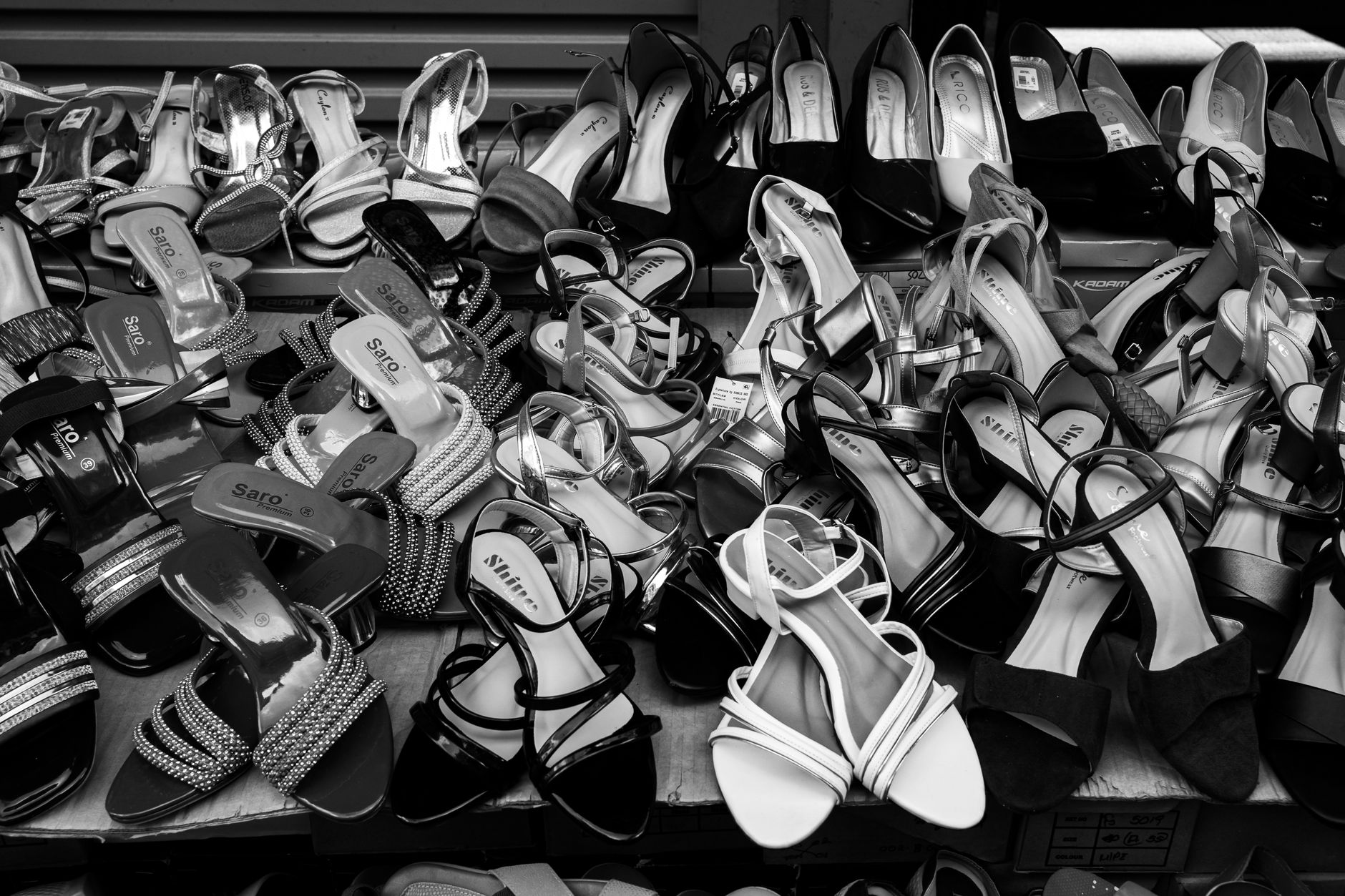
The real test will come in how stores stock the category this season and next. Retail buying decisions lag slightly behind street-level shifts, but when buyers start pulling wedge orders back and deepening their metallic flat inventory, the trend will have officially calcified into a new normal. At a number of mid-range retailers, that rebalancing is already underway – the metallic sandal section has grown noticeably wider, while wedge options have been quietly condensed to a smaller selection of core styles. That is usually the clearest signal of where things are actually headed.
The detail that captures the shift most precisely: resort collections, which historically leaned heavily on the wedge as an easy warm-weather sell, have been showing significantly fewer platform and wedge silhouettes and replacing them with embellished flats and low metallic strappy styles. When the resort market moves, it tends to stay moved.