


The ankle-strap heel has had a long, comfortable reign. It showed up at weddings, gallery openings, and rooftop dinners without question, a default for anyone who wanted a little lift without committing to a stiletto. But something has been shifting quietly on the shoe floor, and it isn’t a platform or a mule. It’s a sandal trimmed in grosgrain ribbon – structured, slightly preppy, and somehow fresher than anything that’s come through in the last few seasons.
The grosgrain trim sandal doesn’t announce itself. It has a low-to-mid heel or a flat footbed, a thin ribbon border running along the straps or the edge of the sole, and a silhouette that reads put-together without reading formal. That restraint is exactly the point. While the ankle-strap heel asks for a whole outfit to meet it, the grosgrain sandal fits around whatever you’re already wearing.

Why Grosgrain, Why Now
Grosgrain ribbon – the ribbed, matte fabric tape with a subtly textured weave – has been circling fashion for a few seasons without quite landing as a defining detail. It appeared on ballet flats, on headbands, on the waistbands of trousers styled for the quiet luxury crowd. The move to sandals feels less like a trend decision and more like a logical next step: grosgrain already communicates a specific kind of taste. It’s the material of equestrian ribbons, of old Chanel trim, of archival Hermès packaging. It signals refinement through restraint rather than through embellishment.
Applied to sandals, grosgrain does something structurally interesting. It flattens the visual weight of the strap, so the foot looks cleaner and the leg looks longer. A woven leather strap or a buckled ankle strap draws the eye to the hardware. A grosgrain-trimmed strap moves the eye along, which is a more flattering effect and also a quieter one. This is a sandal that doesn’t compete with what’s above it.
The color options help, too. Because grosgrain comes in such a wide spectrum – navy, ivory, camel, burgundy, pale pink – brands experimenting with this detail can offer shoes that feel coordinated without being matchy. A navy grosgrain trim on a cream leather sandal works for a beach town weekend. The same silhouette in black grosgrain on black leather works for an evening out. The ankle-strap heel rarely offered that kind of range without becoming a different shoe entirely.
What the Ankle-Strap Heel Got Wrong
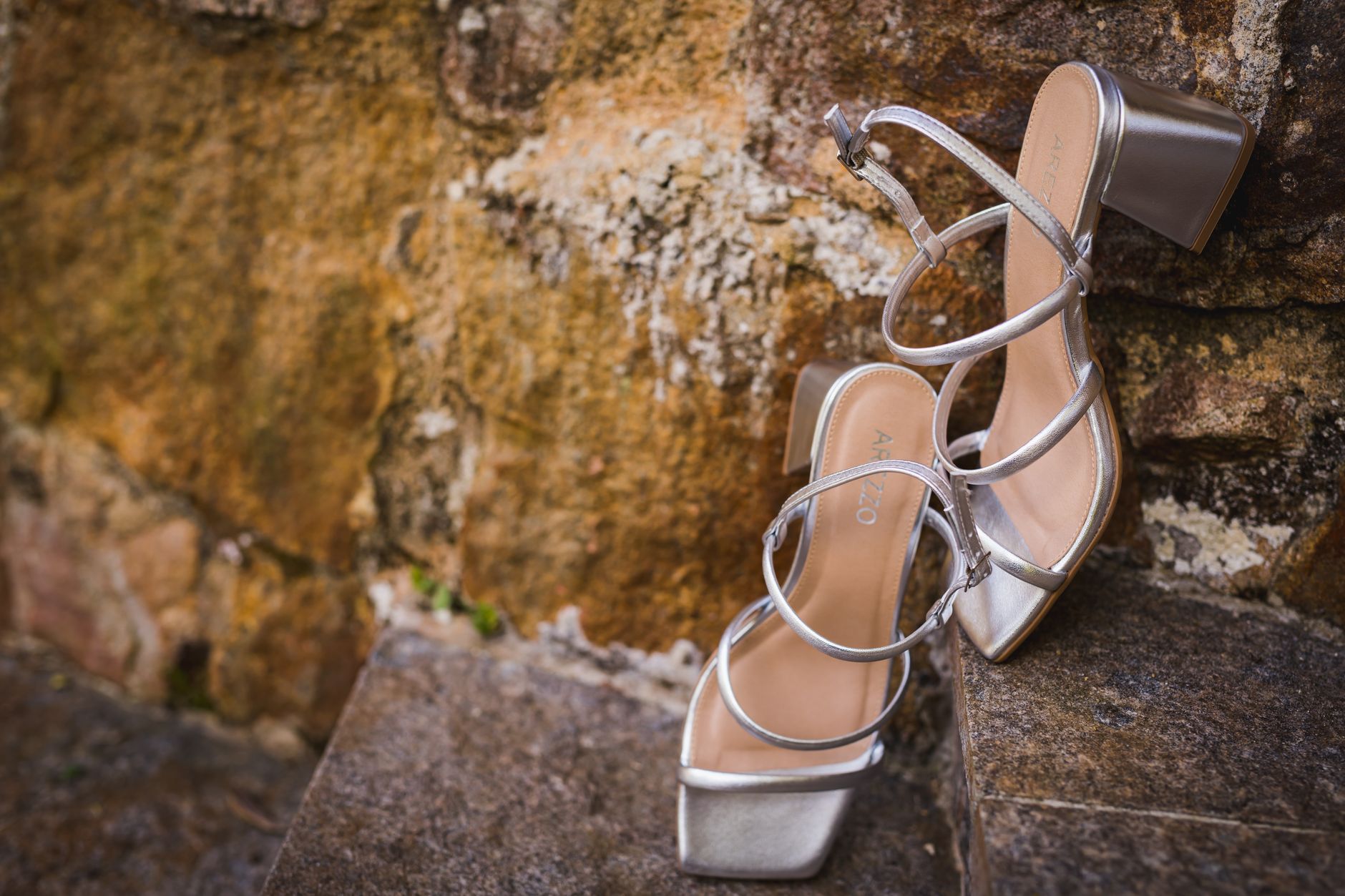
The ankle-strap heel earned its ubiquity honestly. It solved a real problem: how to wear a heel that actually stays on. The strap across the ankle keeps the shoe in place, which matters if you’re walking more than a block. For years, that functionality made it a go-to for events where women planned to actually move around – cocktail hours, dance floors, long summer evenings. But the strap also creates a horizontal line across the ankle, which is a known visual shortening effect, and no one found a satisfying fix for that.
Beyond proportion, the ankle-strap heel carries a certain formality that has become harder to place in a wardrobe that increasingly blurs between dressed and casual. When the dominant outfit formula became linen trousers with a simple top, or a slip dress with a cardigan, the ankle-strap heel started to look like it belonged to a different category. Too dressy for relaxed outfits, too expected for anything that actually needed a statement shoe. The grosgrain trim sandal, by contrast, sits comfortably in the space between.
How It Wears in Practice
The grosgrain trim sandal functions like a well-edited wardrobe staple: it doesn’t require justification. Paired with a linen shirt dress, it reads refined without looking coordinated in the calculated way that sometimes tips into costume. With straight-leg jeans and a tucked blouse, it adds enough structure at the foot to pull the whole look together. With tailored shorts, it looks intentionally preppy rather than accidentally so.
What it doesn’t do is overpower. That’s the difference between a sandal with grosgrain trim and a sandal with a bow or a buckle or a braided leather detail. Those elements ask for attention. Grosgrain refuses to. The texture is subtle enough that you have to look twice to identify it, which means the shoe registers as polished rather than decorated. That distinction matters to a certain kind of dresser – someone who wants the finish of a considered choice without the visual noise.
Heel height in this category tends to stay low. Many grosgrain trim sandals are flat or have a small block heel under two inches, which makes them wearable across the full day rather than reserved for the hours when you know you’ll be sitting. That wearability is a direct answer to one of the ankle-strap heel’s persistent complaints: the strap helps the shoe stay on, but a high heel is still a high heel, and by hour four of a wedding, the calculus changes. A grosgrain flat or low sandal doesn’t ask for that calculation.

The sandal also photographs cleanly, which isn’t a trivial consideration anymore. The ribbed texture of grosgrain catches light without reflecting it, so it shows up well on camera without looking shiny or overdone. On a neutral or pastel background, a grosgrain-trimmed sandal reads as deliberate and polished – the kind of detail that gets noticed in a flat lay or an outfit post without needing to be the centerpiece. For a shoe category that’s often overlooked in favor of sneakers or statement boots, that visibility matters. Whether grosgrain eventually reaches the same saturation as the ankle strap, or stays a quieter preference for a more specific dresser, is a question the next two seasons will answer.