



What happens when a pop star decides the concert hall and the dance floor should share a bill? Rosalía spent the entire rollout of Lux answering that question in public.
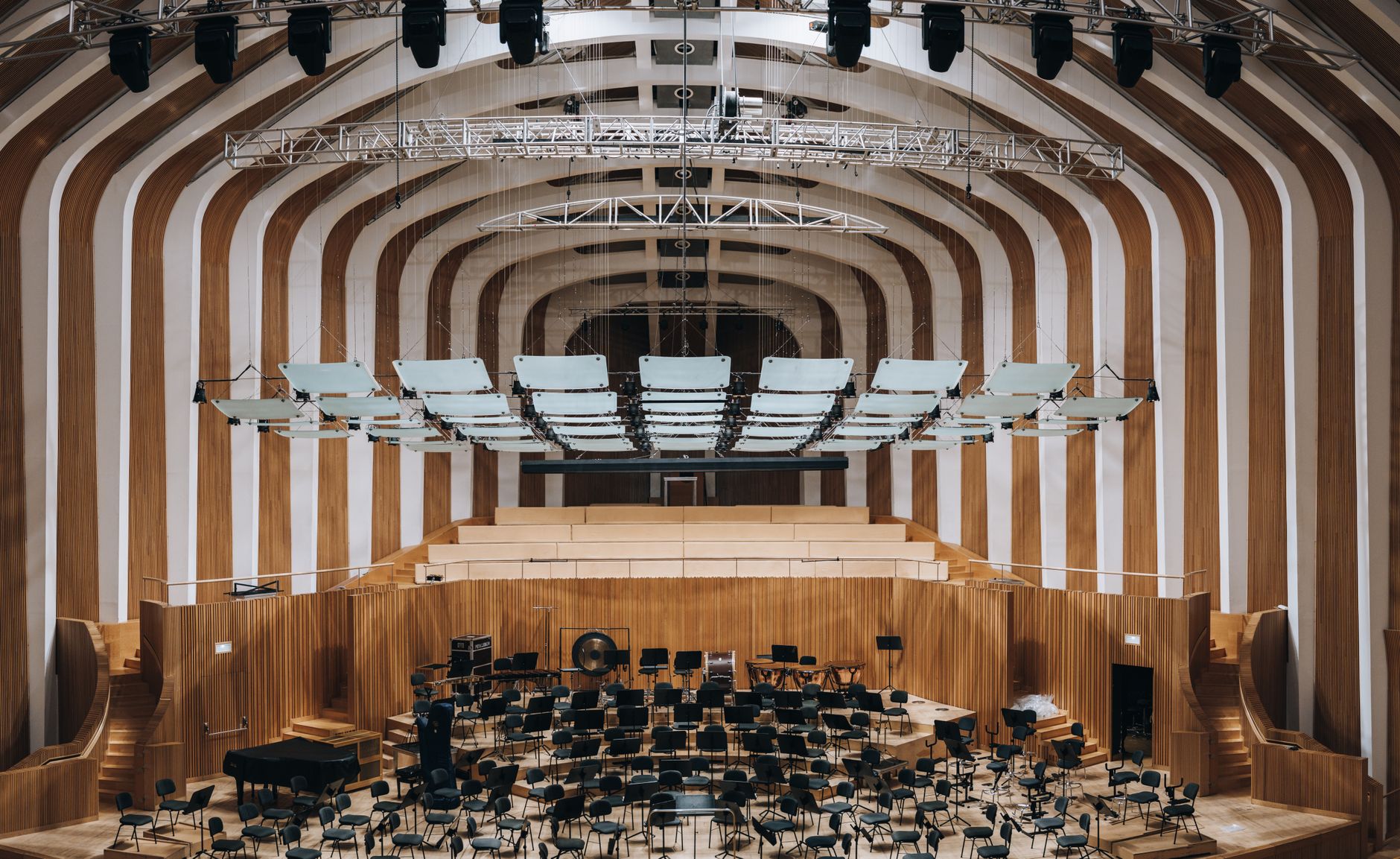
A Record Built Like a Score
Lux arrived with the kind of credentials pop albums rarely carry: the London Symphony Orchestra, orchestral arrangements at the center of the sound, and a track list organized into movements rather than a loose run of singles. Rosalía has never been a casual genre tourist. Her training in Barcelona sat underneath the flamenco reinvention of El mal querer, a concept album loosely built on a medieval Occitan novel, and it informed the glitchy, reggaeton-tilted chaos of Motomami. Lux is the first time that background moved from the foundation to the facade.
The language choices push the idea further. The album is reportedly sung in around a dozen languages, which turns the vocal performance into something closer to a recital than a standard pop campaign. Switching tongues from song to song forces a listener to follow tone and phrasing instead of lyrics alone. That is how opera audiences have always listened, and it is an unusual demand to place on a streaming-era crowd.
Religious imagery, and in particular the lives of female saints, gives the project its emotional framework. Saints are a smart subject for an artist chasing both grandeur and drama, because their stories already contain devotion, suffering, ecstasy and spectacle. Rosalía did not have to invent a mythology. She borrowed one with centuries of visual and musical history attached.
The risk with a record like this is obvious. Classical ambition can read as homework, a pop artist borrowing prestige from an older art form to look serious. Lux avoids most of that by keeping the melodies sharp and the production physical, so the orchestra works as a source of force rather than decoration.
How the Rollout Became an Event
The lead single, “Berghain,” named after the notoriously strict Berlin nightclub, set the terms early. It paired the London Symphony Orchestra with guest appearances from Björk and Yves Tumor, and it placed a string section in a setting where listeners expected a drum machine. The title alone told the audience that club culture and high culture were going to occupy the same room. A single that confusing and that confident gets argued about, and arguments are the cheapest form of promotion pop has.
Visuals did the rest of the work. Rosalía has always treated imagery as part of the music, and the Lux campaign leaned on religious iconography, couture-level styling and stark, ceremonial staging. Fans do not just hear a record like this, they decode it. Every costume, every cover detail and every on-screen gesture becomes a puzzle to be shared and picked apart online, which keeps the album in conversation long after the first listen. A conventional release cycle has a spike and a fade. A puzzle keeps people returning.
Scarcity of context also helped. Rather than explaining the album in a stream of chatty promotional clips, the campaign let the material speak in its own heightened register. That restraint makes the project feel like an occasion instead of a product. When an artist behaves as though a release deserves reverence, audiences tend to meet her halfway.
Contrast with Motomami matters here. That era was loud, kinetic and deliberately messy, built around bodies in motion and a sense of play. Lux trades that energy for scale and stillness, and the pivot is the point. Pop stars usually repeat a winning formula until it stops working, while Rosalía changed the entire aesthetic grammar after a hit cycle, and that unpredictability is now part of her brand.
The deeper reason it works as a pop event, not just an art project, is that none of the ambition is hidden behind a gate. A listener who knows nothing about orchestration can still feel a string swell land like a chorus. Someone who has never heard of a movement structure can still sense the album building toward something. The classical machinery is there for those who want to study it, but the pleasure arrives without a syllabus, and that is exactly what separates a crossover event from a niche experiment.
What the Lux Era Changes for Pop Ambition
For years the usual pop playbook for seeming serious was a stripped-down acoustic record or a prestige collaboration with a respected producer. Lux shows a bigger option: borrow the full apparatus of another tradition and make it part of the spectacle. That raises the bar for what a major-label release can attempt. Other artists with similar training or curiosity now have a recent, very public precedent for pitching something this large.

The harder question is whether the model travels. Rosalía had the credibility, the catalog and the fan base to make an orchestral, multilingual, saint-obsessed album land as an event, and an artist without those advantages would likely face a much colder reception. So does Lux open a door for pop at large, or did it simply prove that one singular artist could walk through it alone?