



The Bar jacket was never supposed to fade. Christian Dior introduced it in 1947 as the architectural spine of his New Look – a padded, nipped, uncompromising silhouette that rewrote what a woman’s jacket could do. Nearly eight decades later, the house is pushing the Bar jacket back to the center of its identity, and the fashion world is paying attention in a way it hasn’t for years.
A Silhouette With Structural Memory
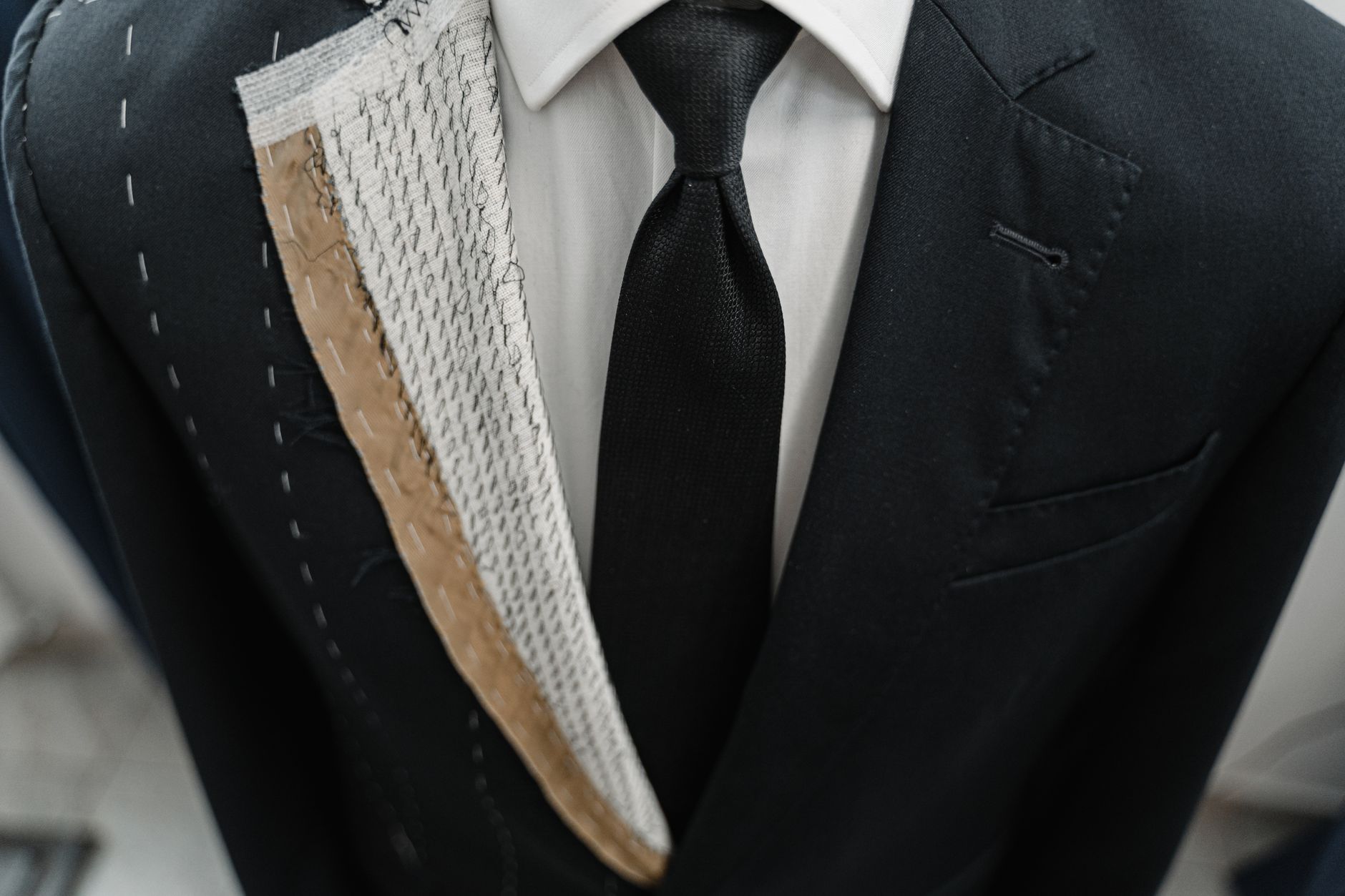
What makes the Bar jacket different from other house signatures is that it never really became decorative. It remained, at every point in Dior’s history, a garment about construction. The rounded shoulders, the cinched waist, the flared peplum – these aren’t stylistic choices so much as engineering decisions. Each element exists in tension with the others, and removing any one of them collapses the whole logic of the piece. That kind of internal coherence is rare in fashion, where signatures tend to drift toward logo and away from craft.
Maria Grazia Chiuri’s tenure at Dior has been marked by a sustained interest in unpacking the house’s founding mythology – questioning it, sometimes subverting it, but rarely abandoning it outright. The Bar jacket has served as a useful test case. Chiuri has sent versions down the runway in denim, in technical fabric, in sheer organza – each iteration designed to stress-test the silhouette’s adaptability without erasing what makes it recognizable. The jacket absorbs material experiments without losing its posture, which says something about how precisely the original pattern was built.
The current resurgence isn’t just a runway story. The Bar jacket is appearing with more frequency in Dior’s editorial campaigns, in its store presentations, and in the pieces being selected for high-profile appearances and cultural moments. That kind of coordinated visibility suggests a deliberate repositioning rather than a seasonal trend. The house is using the jacket to remind the market – and itself – what Dior’s couture authority actually looks like when it’s grounded in something specific.
There’s a broader context worth placing this in. Luxury fashion has spent several years chasing streetwear adjacency, logomania, and accessible entry price points. Those strategies moved product, but they also created a real distance between heritage houses and the couture legacy that justified their prestige in the first place. The Bar jacket functions as a corrective. It cannot be casualized easily, it cannot be reduced to a logo play, and it cannot be worn without some degree of intentionality. Those limitations are its argument.
Why Couture Authority Needs a Physical Object
Prestige in fashion is an abstract concept until it’s attached to something you can touch. Brand heritage, founding mythology, and archival storytelling all do useful work in establishing authority – but they require a physical anchor to feel real rather than promotional. The Bar jacket gives Dior that anchor. It’s a garment that holds the house’s founding claim in its actual construction, not in a campaign narrative or a museum exhibition. When someone wears it, they are wearing a decision Dior made about what women’s clothing should feel like in 1947, and that continuity of physical form is something no amount of branding can replicate.
This matters more right now because the luxury market is recalibrating around quality and craft after years of volume-focused expansion. Clients who are spending serious money on fashion are asking sharper questions about what they are actually getting – what the construction is, how long it will last, what the garment means within the house’s history. The Bar jacket answers all of those questions confidently. Its padding, its boning, its hand-finishing – these are not details that can be faked at scale, which is precisely what makes the jacket a useful signal of where Dior’s real expertise sits.
The styling choices surrounding the jacket have also shifted noticeably. Dior is pairing it with fluid skirts rather than the matching structured suits that dominated earlier iterations, which creates an interesting visual argument about the jacket’s dominance within an outfit. When the Bar jacket appears above something relaxed and moving, its architecture reads even more forcefully. The contrast doesn’t soften the jacket – it sharpens it. That kind of deliberate styling decision suggests the house is thinking carefully about how the piece communicates, not just how it sells.

There’s a generational dimension here that doesn’t get enough attention. A significant portion of the current luxury consumer base grew up in an era when the Bar jacket was background knowledge – something you knew about Dior without necessarily knowing why. Younger buyers who are now entering the high-end market at a serious level are encountering the jacket as genuinely new information. For this audience, the Bar jacket isn’t a nostalgic reference; it’s an introduction to a different kind of fashion logic – one built around structure and permanence rather than seasonality and drop culture. Dior’s current marketing seems aware of this, presenting the jacket’s history as context rather than heritage marketing.
The question of whether a single silhouette can carry the weight of an entire house’s couture repositioning is a fair one. The answer is probably no – no jacket does that work alone. But it can function as a declaration of intent. Saint Laurent’s investment in sharp suiting has shown that when a house commits to a structural signature with real discipline, the market eventually reads that commitment as authority rather than nostalgia. Dior is making a similar bet with the Bar jacket, and the consistency of that bet across collections, campaigns, and client-facing moments suggests the house believes the timing is right.
What Staying Power Actually Looks Like
The Bar jacket has survived creative directors, corporate ownership changes, cultural shifts, and decades of market pressure to democratize or modernize what Dior means. It has survived because it was never a trend in the first place – it was a structural proposal about the relationship between a garment and a body, and that proposal has held. The couture workrooms at Dior still produce the jacket using techniques that require hundreds of hours of hand labor, and that production reality is part of what keeps the piece from becoming a costume. It is expensive and time-consuming to make because making it correctly requires genuine skill, and that requirement has kept it honest.
Whether the current resurgence translates into a sustained elevation of the jacket’s cultural status – rather than a well-executed seasonal emphasis – depends on whether Dior can resist the temptation to over-expose it. The Bar jacket’s power has always come partly from its restraint, from the sense that wearing one requires a particular kind of decision. Flood the market with accessible versions and simplified silhouettes, and that decision disappears. Right now, Dior is holding the line on that question. How long that discipline holds is the more interesting story.