
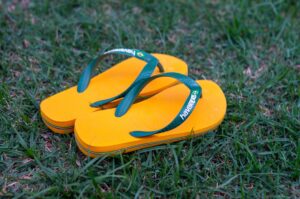

The round-toe flat had a long, comfortable run. Comfortable being the operative word – not just in terms of fit, but in the cultural sense. It was safe, approachable, and easy to style. Now, without much fanfare or a single viral moment to mark the shift, the pointed-toe flat is showing up everywhere: on fashion week street style, in the new-season lookbooks from quiet luxury labels, and on the feet of women who are clearly done with safe.
This is not the stiletto-adjacent pointed toe of the early 2000s, sharp enough to read as aggressive. The current version is more elongated than extreme – a soft, tapered point that adds visual length to the foot without demanding attention. It works under wide-leg trousers, alongside midi skirts, and with straight-leg denim. The round toe, by comparison, is starting to look a little stubby. A little finished. A little last-season.
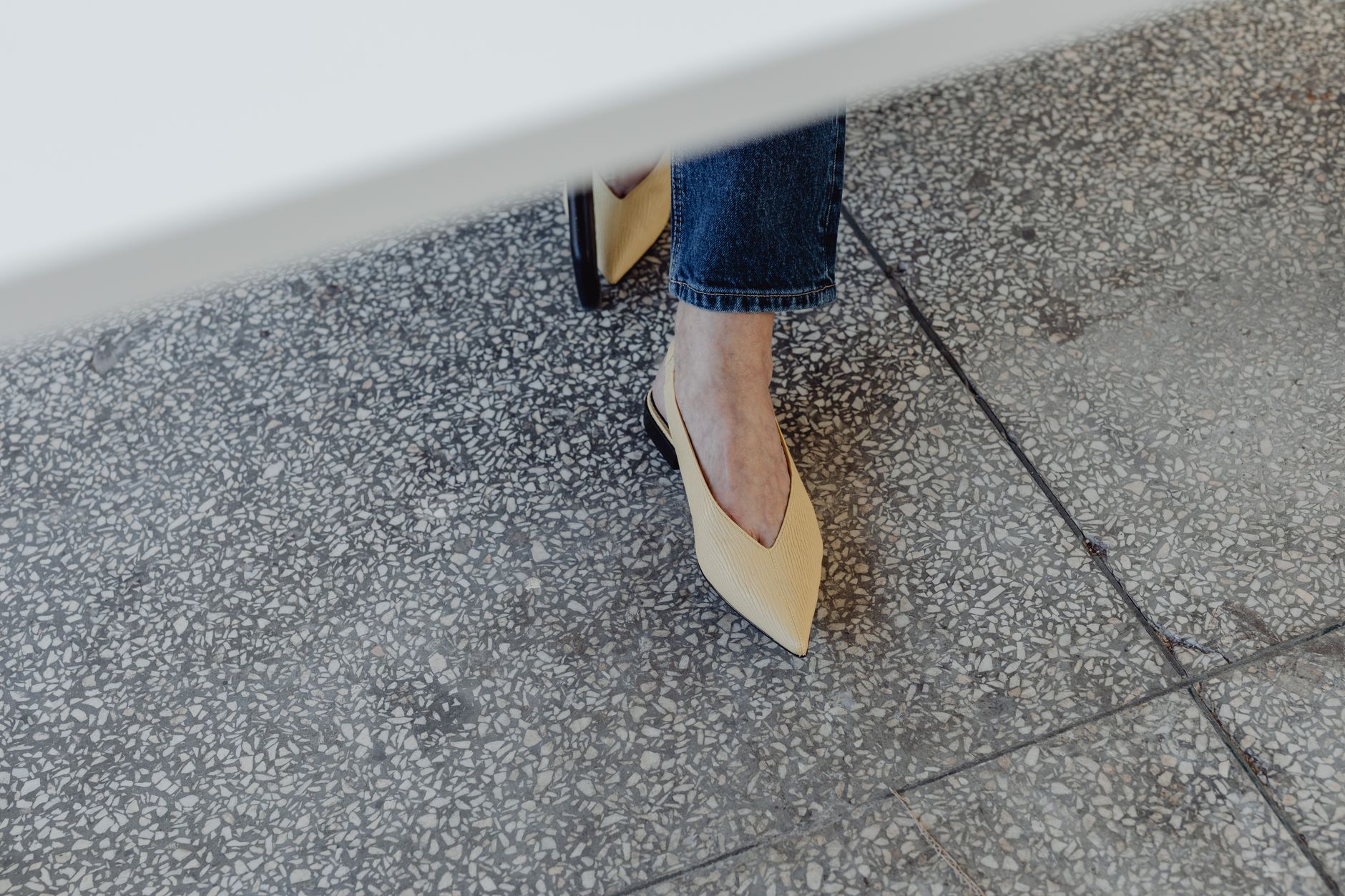
Why the Silhouette Is Shifting Now
Shoe trends tend to follow clothing silhouettes with a slight delay. When proportions in ready-to-wear get bigger – wider trousers, voluminous skirts, oversized outerwear – the shoe eventually compensates. The round toe worked well against the streamlined cuts of the early 2020s. Now that the relaxed trouser has fully taken hold, the foot needs something to cut through all that fabric. A tapered flat does that without adding height, which is exactly the point.
There is also something to be said about the broader appetite for what might be called “dressed-down elegance.” The pointed-toe flat reads as inherently more deliberate than its round counterpart. It suggests intention. You do not accidentally reach for a pointed-toe flat the way you might grab a ballet rounded for a quick errand. That slight formality – without the discomfort of a heel – is exactly what a lot of dressers are after right now.
The ballet flat boom of the past two years did a lot of the groundwork here. It normalized flat shoes as a genuine fashion choice rather than a concession, and it brought pointed-toe options along with it. Brands that had been producing soft, rounded ballet flats began to push the toe further, testing how far the silhouette could stretch before it stopped reading as casual. As it turns out, the answer is: quite far.
What the Labels Are Actually Doing
Across multiple collections this season, pointed-toe flats have appeared in materials that firmly separate them from any lingering association with the kitten-heel era: butter-soft leather in neutral tones, suede in chocolate and camel, patent finishes in deep burgundy and black. The construction is clean. The hardware, if any, is minimal. These are not shoes trying to prove anything with embellishment – they let the shape do the work.
Some brands are experimenting with extended toes that push the point so far forward it creates a small overhang past the foot – a detail borrowed from men’s dress shoes that gives the silhouette a slightly editorial edge. It is a divisive choice, but it is showing up with enough consistency that it no longer reads as a single designer’s quirk. That kind of cross-label repetition is generally how a trend stops being a trend and starts becoming a standard.
The Case Against the Round Toe
To be clear, the round-toe flat is not disappearing. It is a genuinely versatile shape that flatters a wide range of foot types and still works well in casual, off-duty contexts. But its cultural cachet is waning. When a silhouette starts appearing primarily in comfort-focused, value-positioned lines rather than the labels that tend to set the directional pace, that is a reliable signal of where it sits in the cycle.
The round toe also suffers in comparison when placed against the current enthusiasm for sleek, elongated proportions across the full outfit. A rounded toe can interrupt a line that the rest of the look is working hard to maintain. The pointed flat, even in a very subtle form, keeps the eye moving downward and outward rather than stopping it at the foot. For anyone building outfits with intention, that continuity matters more than people tend to admit.
There is also a generational conversation happening quietly around what “minimal” actually means. For a long time, minimalism in footwear defaulted to the simple round-toed ballet flat – clean, neutral, undemanding. But a new reading of minimalism is more architectural. It values line over softness, precision over ease. The pointed flat fits that framework. The round flat, however neutral its color, reads as soft in a way that does not always align with where contemporary minimalism is heading.
What makes the pointed-toe flat particularly useful is that it requires almost no styling adjustment. It does not demand a heel-appropriate hem length or a specific trouser break the way a block-heeled mule might. It slots into existing wardrobes with very little friction – and for a trend to actually move through a broad swath of shoppers rather than staying confined to fashion insiders, that ease of adoption matters enormously. The women who are not yet reaching for it are mostly still in the round-toe reflex, not because they actively prefer it, but because they have not been given a strong enough reason to switch.

That reason is coming, slowly and without announcement. The pointed flat is getting quieter, more refined, and easier to wear with each passing season – and the gap between what it offers and what the round toe provides is getting harder to ignore on a hanger, on a shelf, or side by side in a flat lay. At some point, the round toe will stop looking classic and start looking like a default. That point may already be here.