
The block-heel ankle boot has had a good run. For the better part of a decade, it was the sensible workhorse of transitional dressing – sturdy enough to navigate cobblestones, low enough to wear all day, and boxy enough to anchor wide-leg trousers without looking precious. But something is shifting on the selling floor, and the shoe quietly stealing its thunder has a much more slender silhouette.
The kitten heel boot is back, and this time it is not arriving as a nostalgic novelty or a runway affectation. It is showing up in the kind of wardrobe slots the block heel used to own: weekend dressing, office outfits, and the shoulder-season gap between summer sandals and serious winter boots. The swap is not dramatic or sudden – it is the slow, quiet kind of trend movement that tends to stick.
Why the Block Heel Is Losing Ground
The block heel ankle boot earned its dominance because it solved a real problem. It gave women height without the instability of a stiletto, and its chunky base made it easy to pair with the relaxed, oversized silhouettes that dominated fashion from around 2016 onward. It worked with wide-leg denim. It worked with midi skirts. It was the aesthetic equivalent of a comfortable answer to everything.
The problem is that fashion has moved on from comfort-as-aesthetic. The pendulum is swinging back toward something more considered – sharper tailoring, slimmer trouser legs, a general preference for clothing that looks deliberate rather than deliberately relaxed. In that context, the block heel reads heavy. Its proportions, once reassuring, now feel like they belong to a different mood entirely.
The Kitten Heel Boot Makes Its Case
What makes the kitten heel boot compelling as a replacement is not just that it looks different – it is that it solves a different set of problems. The block heel was about stability and visual weight. The kitten heel is about elongation and refinement without the physical toll of a four-inch spike. It sits at a height – typically between one and two inches – that most people can actually wear for an extended period without consequence.
Styling-wise, the kitten heel boot is considerably more versatile than its reputation suggests. The silhouette is slim and tapered, which means it slides cleanly under the hem of a straight-cut trouser or a fitted skirt without disrupting the line. With wide-leg trousers, the heel peeks out just enough to add structure without fighting the volume of the fabric above. It is a shoe that cooperates with the outfit rather than competing with it.
The ankle boot format specifically does a lot of work here. Full-length kitten heel boots can tip into theatrical territory, and kitten heel pumps require a certain deliberateness to carry off. But the ankle boot version hits a middle register – it is grounded and practical while still carrying the lightness that the heel shape implies. It works in a way that feels almost accidental, which is exactly the effect that tends to resonate right now.
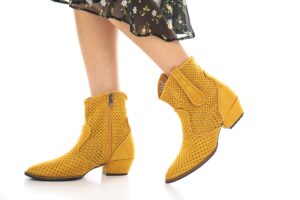
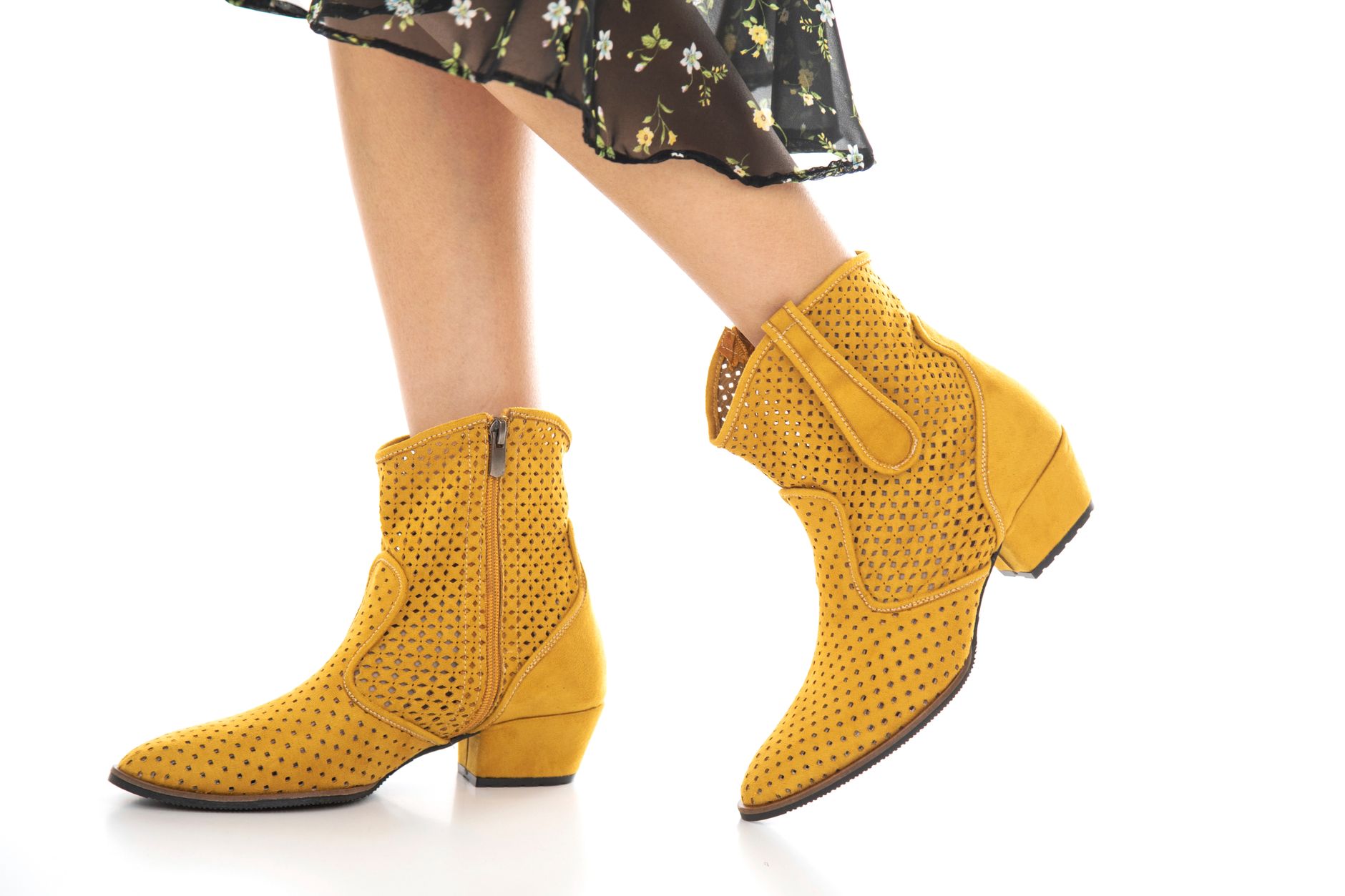
Leather and suede versions are driving most of the commercial interest, with pointed or slightly squared toes giving the silhouette a modern edge. The square toe in particular does a lot to update what might otherwise read as strictly vintage – it signals that the wearer is referencing the past on purpose rather than simply failing to move forward. Color-wise, the strongest sellers are tracking toward deep neutrals: black, chocolate brown, dark tan, and a growing interest in burgundy as a crossover option that works from early autumn through winter.
Who Is Actually Wearing This
The kitten heel boot is finding its audience across a wider age range than its vintage associations might suggest. Younger shoppers are drawn to the retro reference – the heel shape carries associations with mid-century dressing that reads as ironic or archival depending on how it is styled. Older shoppers are coming to it from a purely practical direction: it offers more visual elegance than a flat ankle boot without the physical demands of a real heel. Both groups are arriving at the same shoe from entirely different angles.
The styling choices around it tend to separate the two camps. A cropped leather jacket, low-rise straight-leg jeans, and a kitten heel ankle boot reads as deliberately vintage-coded. The same boot with tailored trousers and a structured coat reads as straightforwardly chic. That range of applications is part of what makes a shoe genuinely move through the market – it is not locked into a single look or a single customer.
What This Means for the Block Heel
None of this means the block heel ankle boot is disappearing. Fashion does not work by complete replacement – it works by shifts in emphasis, and right now the emphasis is moving. Block heel boots will continue to sell, particularly in markets where practicality is the primary concern and where the infrastructure – literally, the streets – demands a more forgiving sole contact. But the cultural energy around them has quieted considerably.
The brands that built strong block heel franchises over the past several years are already diversifying their heel shapes. A growing number of boot ranges that leaned heavily on the chunky aesthetic are introducing slimmer heel options alongside their existing silhouettes rather than replacing them outright – a hedging strategy that suggests even the manufacturers are reading the room.
What is worth watching now is whether the broader flat shoe moment that has been building across sandals and casual styles starts to pull some of the kitten heel’s momentum. The two trends are running in parallel right now – one toward a slender, low heel, the other toward no heel at all – and the market is currently wide enough to sustain both. But if the flat shoe aesthetic continues to intensify, the kitten heel could find itself squeezed between the block heel it is replacing and the flat it is trying to distinguish itself from. That tension is where things get genuinely interesting.