

The raffia market bag had a good run. Woven, oversized, and endlessly pinned across summer mood boards, it became the unofficial tote of the linen-and-espadrilles set. But something softer, stretchier, and considerably more handmade-feeling is pulling attention away from it – the crochet tote, which has gone from craft fair staple to serious fashion statement with very little fanfare.
How Crochet Took the Tote Category Seriously
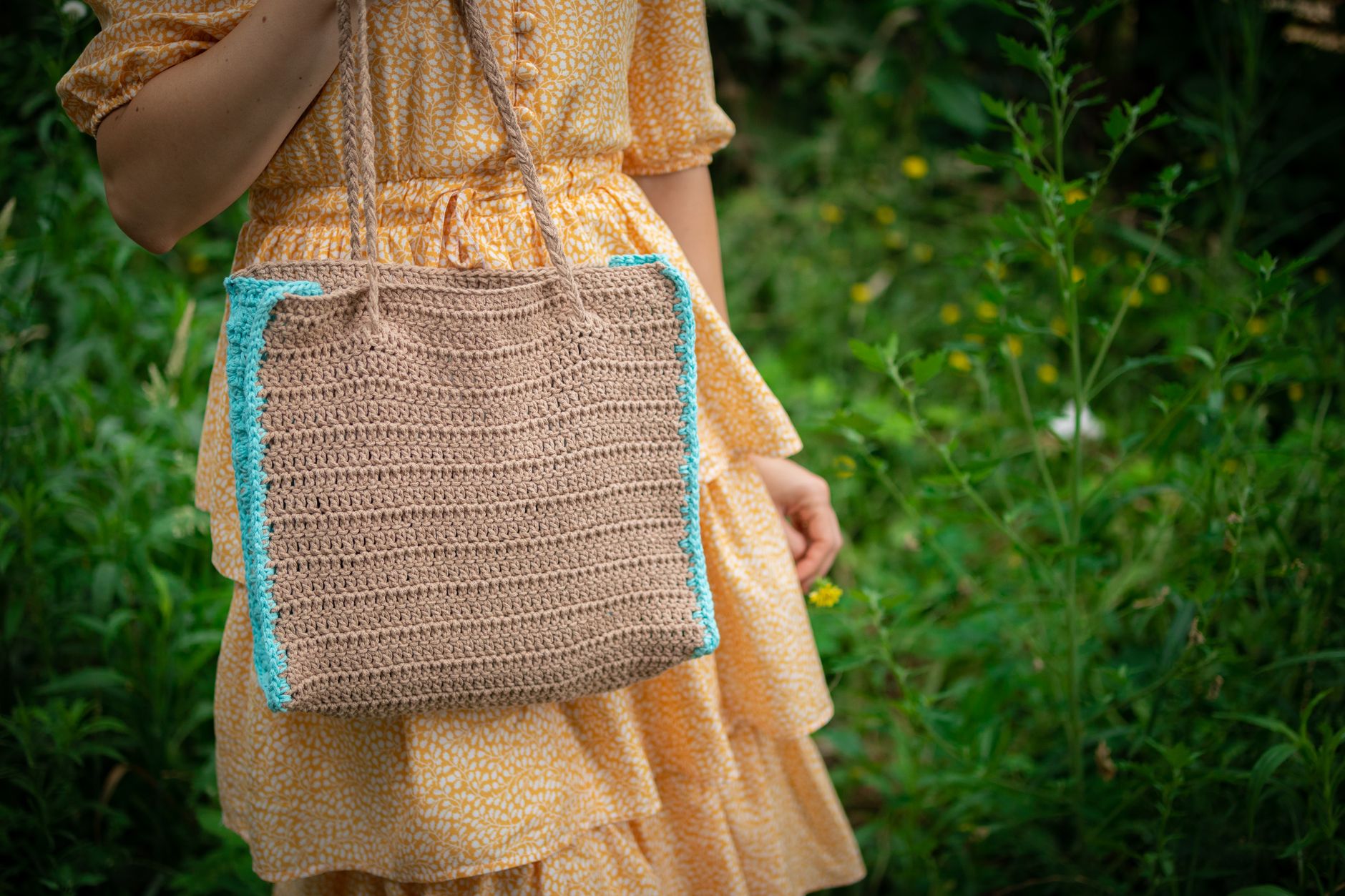
For years, crochet bags lived in a specific aesthetic lane: beachy, bohemian, slightly nostalgic. They showed up at farmers markets and music festivals, usually in natural cotton or jute, dangling fringe optional. The category felt more hobby than high fashion. That perception has shifted. Crochet totes are now appearing on the arms of women who also carry structured leather bags, and they are being styled with tailored trousers and blazers as readily as they are with sundresses.
The distinction between crochet and raffia matters here. Raffia bags, made from a palm plant fiber, have a stiff, dry, slightly waxy quality. They hold their shape, look polished, and photograph well – which explains their dominance on travel content and resort wear campaigns. But they are unforgiving in daily use. They do not expand for an overstuffed grocery run or compress to fit under an airplane seat. Crochet, by contrast, has give. The open weave stretches, accommodates, and rebounds. Practically speaking, it is a better bag for a day that does not go according to plan.
The texture conversation is also important. Raffia has become so ubiquitous over the past three summers that it risks tipping into visual background noise. Every high street brand released a version, often cheaply made, and the market saturation did what saturation always does – it flattened the appeal. Crochet, with its variations in stitch density, yarn weight, and construction, offers more visual differentiation. Two crochet totes sitting side by side rarely look identical in the way two raffia totes do.
Runway acknowledgment has followed. A growing number of designers have sent knitwear-adjacent bags down the runway that owe their construction logic to crochet techniques, even when the materials skew more luxurious – think mercerized cotton, silk ribbon yarn, or fine linen thread worked into dense, intricate patterns. The silhouettes have also evolved. Where crochet bags once defaulted to bucket or tote shapes with wide, simple stitching, current iterations include structured half-moon bags, baguette shapes, and top-handle versions that read considerably more formal.
The Aesthetic Case for Switching Allegiances
Color is where the crochet tote truly separates itself. Raffia’s natural palette is limited by the material itself – earthy tans, warm neutrals, the occasional strip of color woven through. Crochet works in any yarn color, which means the bags have arrived in cream, chocolate brown, cobalt, butter yellow, dusty rose, and deep forest green. The color options make the crochet tote a genuine accessory rather than a neutral carrier, capable of anchoring an outfit or completing one.
The sizing range has also expanded in ways that feel relevant to how people actually dress now. Micro crochet bags – barely large enough for a phone and card holder – have developed a following for evening use, while oversized market-style crochet totes work for the beach, the office, or the supermarket depending on what is inside. That range, from genuinely tiny to genuinely cavernous, gives crochet bags a versatility that the raffia market bag, which tends to cluster in a medium-large size, cannot match.
Styling has become looser and more creative around crochet than it ever was around raffia. The raffia bag arrived with its own clear visual rulebook: linen pants, a white shirt, sandals. It signaled a very specific kind of effortlessness, which is to say, a very specific kind of wealth-adjacent leisure. Crochet totes resist that narrowness. They appear in street style content alongside leather jackets and chunky boots just as often as they appear with floaty summer dresses. That stylistic flexibility gives them longer seasonal range and broader appeal across different aesthetics.
There is also something happening around the handmade quality that reads differently now than it did five years ago. A crochet tote that is visibly hand-worked, with slight irregularities in the stitching or a homespun quality to the finishing, is increasingly read as a marker of quality and intentionality rather than amateurishness. The appetite for things that look made rather than manufactured has grown steadily, and crochet benefits directly from that. A raffia bag, no matter how expensive, tends to look mass-produced because the material itself is so uniform. Crochet rarely does.
Brands pricing crochet totes at the premium end of the market are betting that consumers will follow. And so far, the evidence suggests they are right. Waitlists have appeared for small-batch crochet bags from independent makers, and search interest in crochet bag patterns has climbed alongside search interest in finished pieces, which points to an audience engaged with the product at both the buying and making level. That dual engagement is rare in the accessories category and suggests the trend has real staying power rather than just a moment.
What This Means for the Broader Summer Accessories Picture
The soft-texture, natural-material moment in accessories is not going anywhere. Linen as a fabric category continues to expand across clothing, and the same tactile, anti-synthetic instinct driving that shift is feeding the crochet bag’s rise. Consumers want things that feel made from something real, that carry some visual evidence of craft, and that do not look like they came off the same factory floor as everything else on the rack.
Raffia will not disappear. There will always be a customer for the clean, structured stiffness of a well-made raffia tote, and the best versions of those bags, made from quality material with careful construction, hold up beautifully for years. But the cultural conversation around summer bags has moved. The crochet tote is no longer the underdog option for people who missed out on the raffia trend – it is the option that a growing number of people are actively choosing first, before they even consider anything else.