
The Quiet Shift Happening in Your Summer Wardrobe
The cotton knit cardigan has held its ground for years – reliable, soft, endlessly layerable. But something is replacing it on the rails of boutiques and the feeds of the fashion-forward, and it is not another knit. The broderie anglaise cardigan, with its perforated embroidery, eyelet detailing, and overtly feminine texture, is showing up in a way that suggests this is not a seasonal blip but a deliberate recalibration of what warm-weather layering looks like.
What makes the shift notable is not just the fabric swap. It is the attitude the broderie anglaise cardigan carries with it. Where the cotton knit signals ease and practicality, the broderie version signals intention. It says the wearer thought about what they put on, even if the outfit underneath is as simple as a white slip dress or straight-leg jeans and a tank.
Why Broderie Anglaise Belongs in Knitwear Territory
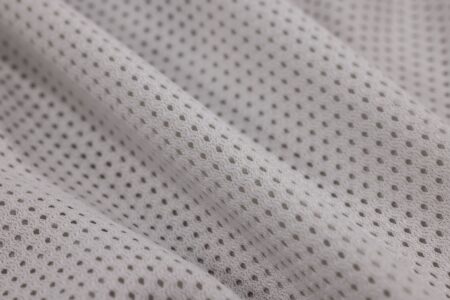
Broderie anglaise as a textile has long been confined to specific categories: blouses, skirts, summer dresses with a cottage-garden sensibility. Cardigans were not part of that conversation. But the logic of putting broderie in cardigan form is actually quite straightforward. A cardigan is a layering piece. Broderie anglaise is a fabric built on openwork – its eyelet holes let air through, which makes it far more practical in warm weather than even the lightest cotton knit. You get the coverage of a layer without the heat trap.
The construction also matters. Broderie anglaise cardigans are typically cut from woven fabric rather than knitted panels, which gives them a cleaner drape and a silhouette that sits closer to a jacket than a sweater. That structural quality makes them easier to style with tailored pieces – a wide-leg trouser, a fitted skirt, even workwear separates. The knit cardigan, by contrast, has always skewed casual regardless of how it is styled.
There is also the detail question. A cotton knit cardigan, even a well-made one, is largely a textural statement at best. A broderie anglaise version carries visual interest without graphic prints or bold color. The embroidery does the work. That is a meaningful distinction at a moment when maximalism feels exhausting and minimalism feels flat – broderie anglaise occupies a middle register that is increasingly desirable.
The Styling Logic Driving Its Popularity
The broderie anglaise cardigan works because it does not require a matching set to feel finished. Wear it open over anything – it reads as deliberate rather than thrown on. Wear it buttoned as a top on its own and it holds its shape well enough to stand alone. That versatility, combined with the fact that the fabric photographs beautifully due to its texture and tonal variation, makes it particularly well-suited to how people actually document and share their outfits now.
It pairs naturally with the other textures already gaining ground this season. The rope-sole sandal, linen trousers, woven bags – all of them sit comfortably alongside broderie anglaise without competing. The fabric belongs to the same family of considered, craft-adjacent materials that have been gaining ground as an alternative to the sleek, synthetic-heavy aesthetic that dominated the early part of this decade.
What the Cotton Knit Is Losing Ground To
The cotton knit cardigan is not disappearing. It is still on the floor at every mid-market retailer and it will likely remain a wardrobe staple for years. But its dominance as the default warm-weather layer is being challenged in a specific style register – the register occupied by women who shop at independent boutiques, follow Substack newsletters about getting dressed, and are actively moving away from the idea that practical must mean plain.
Part of what the cotton knit lost was its novelty. The oversized cotton cardigan had a long, dominant run through various slow fashion and quiet luxury cycles. It became shorthand for a certain kind of effortless dressing, which meant it also became slightly predictable. Broderie anglaise offers the same ease with a different visual grammar – one that feels more specific, less generic, and harder to replicate at fast fashion price points with the same quality of finish.
The eyelet embroidery in broderie anglaise also requires more skilled production than a standard knit, which has the effect of pushing higher quality versions toward independent and contemporary designers rather than mass production. That scarcity relative to the cotton knit – even if it is production-driven rather than deliberate – gives the broderie anglaise cardigan a slightly more elevated profile. Finding a well-made one requires more effort, which tends to make people who wear them feel more committed to the choice.
There is a clear connection forming between the broderie anglaise cardigan and the broader appetite for embellishment as substance rather than decoration. The broderie anglaise belt has been making similar moves in the accessories space, which suggests the fabric itself is being reconsidered as a category-wide material rather than something reserved for specific garment types. When the same textile starts appearing across multiple categories simultaneously, it usually means designers are genuinely invested in it rather than cycling through a trend.
The real question is how long the cardigan version maintains its distinction once mass retailers catch up, as they inevitably will. The moment broderie anglaise cardigans become as easy to find as cotton knits, the styling calculus changes entirely. Right now, the advantage belongs to those who moved early.