



The Label That Stayed When Everything Else Left
Quiet luxury had a very loud moment. For roughly two years, fashion was consumed by the aesthetic – muted palettes, logo-free surfaces, the studied nonchalance of old money dressing. Brands scrambled to reposition themselves within it. Then, as trends do, it began to recede. The discourse moved on, the mood boards changed, and the maximalism crowd started celebrating again. What remained, quietly, was Proenza Schouler’s White Label.
White Label is the secondary line from designers Jack McCollough and Lazaro Hernandez, launched as a more accessible entry point to the Proenza Schouler universe. It does not advertise itself as luxury. It does not particularly advertise itself at all. But the line has maintained a consistent following through the peak quiet luxury cycle and into whatever comes after it – which says something more interesting than trend alignment ever could.
What White Label Actually Is
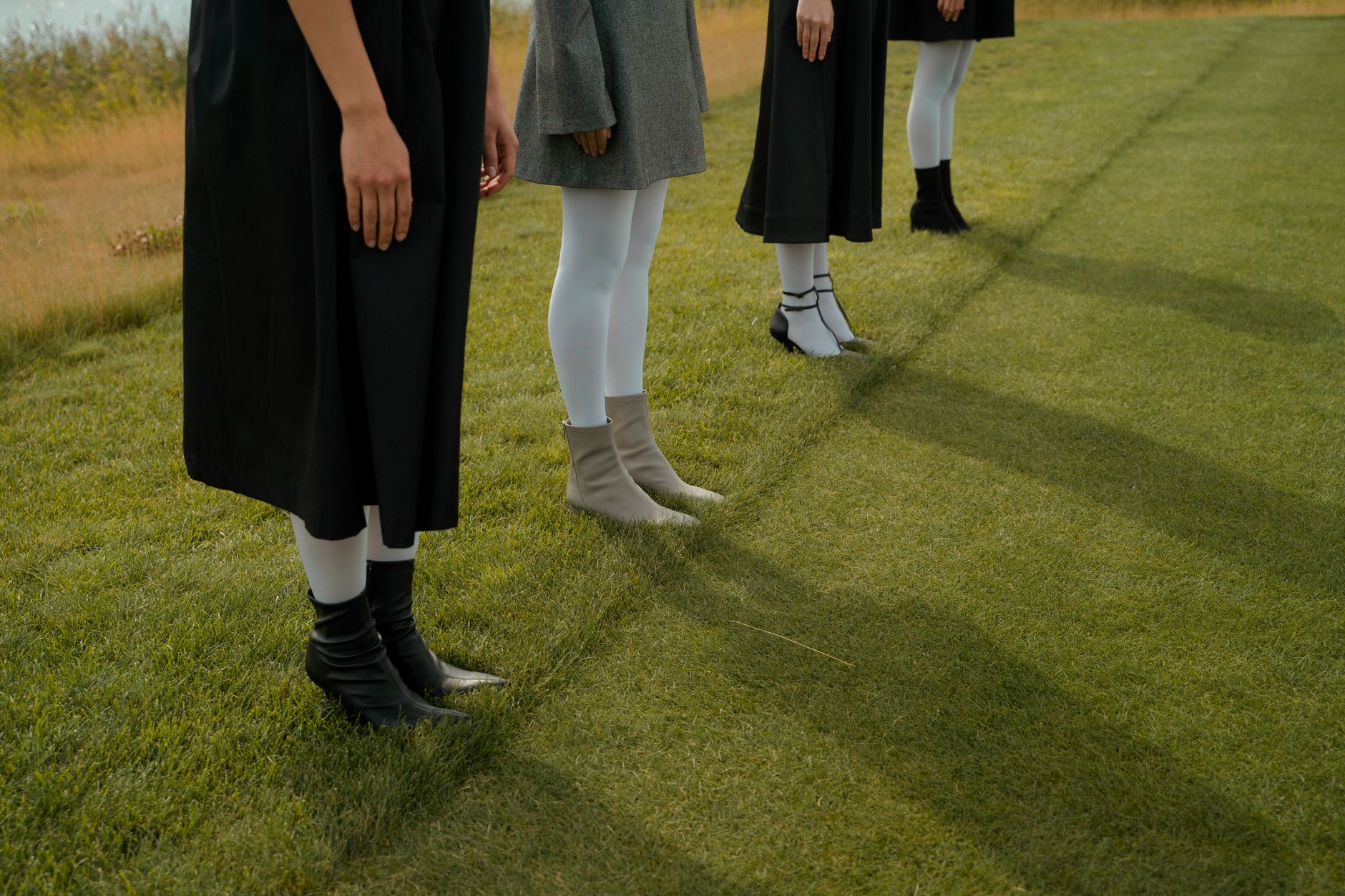
The collection sits at a deliberate midpoint: elevated enough to feel considered, but stripped of the preciousness that makes some designer pieces unwearable on an ordinary Tuesday. The silhouettes tend toward clean geometric cuts – wide-leg trousers that sit with authority, unlined blazers in technical fabrics, jersey dresses with the kind of drape that reads expensive without announcing itself. Nothing performs effort. That is the entire point.
McCollough and Hernandez built the mainline on a specific creative tension – the collision of downtown New York energy with high-fashion construction. White Label retains the construction instinct while releasing the tension. The result is clothing that does not ask the wearer to justify it. A straight-cut coat from a recent White Label collection functions exactly the same on the street as it does photographed in a studio. That coherence is genuinely rare at any price point.
The fabrication choices are worth attention on their own terms. White Label regularly works with cottons and wools that behave properly – that drape rather than cling, that hold a shape through a full day rather than collapsing by noon. There is a structural honesty to the construction that the quiet luxury conversation kept gesturing toward without always delivering. Many brands that positioned themselves as purveyors of understatement were selling the idea of quality more than quality itself. White Label tends to produce the actual thing.
Why the Timing Matters
The quiet luxury moment attracted a wave of brands that adopted its visual language without its underlying philosophy. Beige proliferated. Minimalism became its own kind of costume. And because the trend was so tied to a specific mood – nervous money, reaction against excess, a particular cultural anxiety about visibility – it was always going to be time-limited. Aesthetics built on cultural anxiety tend to last as long as the anxiety does, and not much longer.
White Label was not built for that moment, which is precisely why it survived past it. The line’s sensibility predates the quiet luxury conversation by years. It arrived at restraint through design logic rather than trend positioning, which means there is no pivot required now that the conversation has moved. Gabriela Hearst’s approach to refined knitwear operates from similar ground – genuine conviction about material and construction that exists independently of whatever the trend cycle is doing at any given moment.

The Staying Power Question
Fashion longevity at the secondary-line level is genuinely difficult to achieve. Most diffusion collections follow a predictable arc: launch with strong brand halo, attract attention from consumers who want proximity to the mainline, then slowly drift as the mainline’s identity evolves or as the brand prioritizes other revenue channels. The secondary line becomes an afterthought or gets quietly discontinued. White Label has avoided this pattern, and the reasons are structural rather than lucky.
The line is merchandised with enough coherence that it reads as a complete wardrobe proposition rather than a collection of individual pieces. Buying into White Label means buying into a point of view – a way of dressing that prioritizes ease without sacrificing exactness. That is a more durable customer relationship than one built on the appeal of a single it-piece or a trending silhouette. Customers who dress this way tend to keep dressing this way, regardless of what the runway conversation is doing in any given season.
There is also the pricing architecture to consider. White Label occupies a zone where the price-to-quality ratio is defensible on its own terms, independent of brand prestige. This matters because consumers at this level are capable of doing the math. They can compare a White Label coat to a fast-fashion coat and a full luxury coat and arrive at a rational conclusion rather than one driven purely by aspiration. That rational argument is not always available at the secondary-line level, where brands sometimes inflate prices on the strength of the parent name alone.

The broader fashion landscape is now processing its post-quiet-luxury hangover. Some brands that leaned heavily into the aesthetic are recalibrating toward color and embellishment, chasing the next mood. The risk in that recalibration is losing whatever genuine identity was built during the minimalist period – trading one borrowed sensibility for another. White Label does not have that problem because it never borrowed the sensibility in the first place. The real question is whether its consistency becomes an asset that attracts a wider audience, or whether the line’s refusal to chase anything keeps it exactly where it has always been: preferred by the people who already know, invisible to everyone else.