



Plenty of actors say they want to alternate between small films and big ones. Few manage it without one side swallowing the other.
Paul Mescal has spent the past few years making that look easy, though the pattern behind his choices is more deliberate than it appears. He went from the lockdown phenomenon of Normal People to an Oscar-nominated turn in Aftersun, then to a Ridley Scott sword-and-sandals sequel, with a run of quiet character pieces and a London stage production tucked in between. Each move seems to answer the one before it, as if he is checking his own work against the last job.
That rhythm matters because the usual path for a breakout television star is predictable: a studio franchise offer, a few years of scale, and then a scramble back toward credibility. Mescal has refused to sequence his career that way. He is running both tracks at once, and the interesting question is how long the two can coexist without one dictating terms to the other.

The Indie Foundation That Built His Reputation
Aftersun is the clearest example of why his indie credentials carry weight. Playing a young father on a holiday with his daughter, he gave a performance built almost entirely on restraint, with grief and affection surfacing in glances rather than speeches. The film earned him an Oscar nomination for Best Actor, and it did something more useful than raise his profile: it showed casting directors and filmmakers that he could carry an emotionally ambiguous role without leaning on dialogue. That is a rare, bankable skill, and it sits at the center of everything that followed.
The smaller films that came next were not random. He appeared in All of Us Strangers, Andrew Haigh’s ghost story about loneliness and memory, and in Foe, a sci-fi drama opposite Saoirse Ronan. He also took supporting work in The Lost Daughter and God’s Creatures, parts that were never going to dominate a poster. Choosing roles like these keeps him inside conversations about directors and craft rather than box office. For an actor still early in his film career, that positioning is a form of insurance: if a blockbuster underperforms, the arthouse résumé stays intact.
There is also a practical logic that rarely gets said aloud. Independent productions tend to move fast and run on trust, which means actors get closer to the creative process than they would on a studio set with hundreds of crew members and a dozen executives watching dailies. Those experiences sharpen instincts that later pay off in bigger productions. A performer who has learned to hold a scene with two cameras and almost no coverage will look very different when he is dropped into a spectacle built around visual effects.

What the Blockbuster Side Actually Offers
Gladiator II was the obvious stress test. Stepping into a franchise that Ridley Scott made famous, and sharing the screen with veterans like Denzel Washington and Pedro Pascal, put him in a very different arena from a two-hander about a father and daughter. The role of Lucius asked for physicality, volume and a kind of classical heroism that his earlier work never required. Reports around the production emphasized how much he changed his body for the part, and the shift was visible. Whatever audiences thought of the film itself, it proved he could occupy a frame that large.
The payoff from a project like that is leverage, and it works in a way that is easy to underestimate. A global release puts a name in front of audiences who have never seen an A24-style drama, and it tells financiers that an actor can anchor something expensive. That recognition feeds back into the smaller films, since a name that opens doors can help a modest script get funded. In effect the blockbuster subsidizes the independent work, while the independent work protects the actor from being reduced to a franchise face. Mescal seems to understand that the two kinds of film are not opposites but parts of one economy.
Where the strategy gets more interesting is in the middle ground he has been exploring. Chloé Zhao’s Hamnet, in which he plays Shakespeare, and Oliver Hermanus’s The History of Sound, a period romance that pairs him with Josh O’Connor, are prestige films with real audiences but none of the machinery of a tentpole. Sam Mendes’ planned Beatles films, with Mescal cast as Paul McCartney, sit on the far end of that spectrum: a huge-scale undertaking with a director known for serious, actor-driven work. Taken together, these choices suggest he is not simply toggling between small and large. He is building a third lane where scale and ambition overlap.
The Risk of Staying in Both Lanes
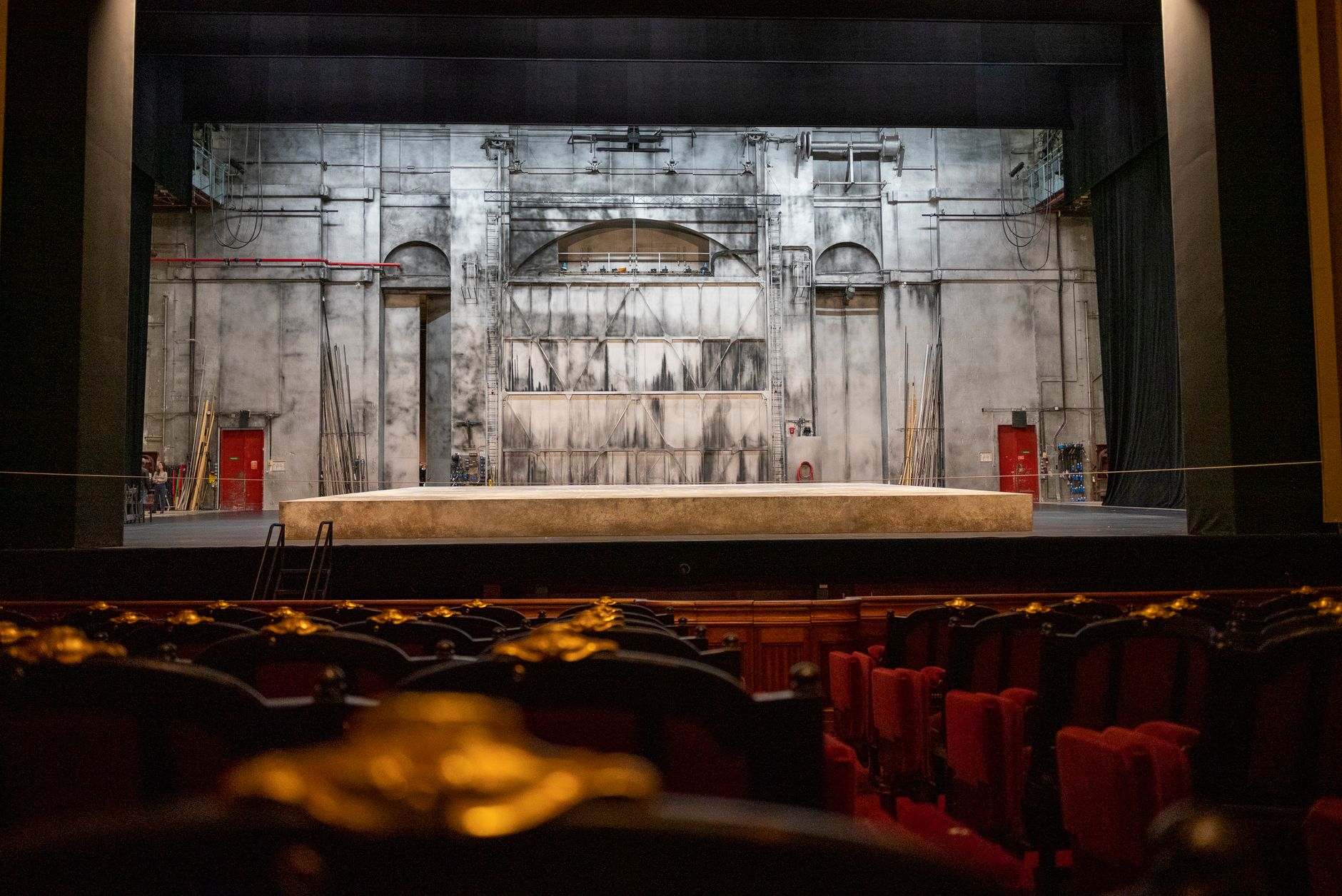
The Streetcar Named Desire production at the Almeida in London, with Mescal as Stanley Kowalski, belongs in this picture too, because the stage keeps him honest in a way film cannot, and a sharp public turn on the theater circuit reminds the industry that his skills are not a product of editing. Whether the next phase of his career keeps that balance, or tilts toward franchise scale once the Beatles films arrive, may depend on a single question: how many years of his twenties and thirties is he willing to hand to one director’s four-film project?
Frequently Asked Questions
Was Paul Mescal nominated for an Oscar?
Yes. He received an Oscar nomination for Best Actor for his performance in Aftersun, directed by Charlotte Wells.
Which blockbuster has Paul Mescal starred in?
He played Lucius in Gladiator II, the sequel directed by Ridley Scott, which marked his first major studio spectacle.
What indie films has Paul Mescal appeared in?
His independent credits include Aftersun, All of Us Strangers, Foe, The Lost Daughter and God’s Creatures.
What is Paul Mescal doing next?
He is attached to projects including Hamnet, The History of Sound and Sam Mendes’ planned Beatles films, in which he is cast as Paul McCartney.