



Maximalism had its moment – multiple moments, actually. The sequined excess, the clashing prints, the dopamine dressing that dominated runways and Instagram feeds for the better part of three years. And yet, quietly, without a campaign or a cultural manifesto, Jil Sander’s approach to suiting has simply continued to sell, to be worn, and to look relevant in a way that louder fashion often doesn’t.
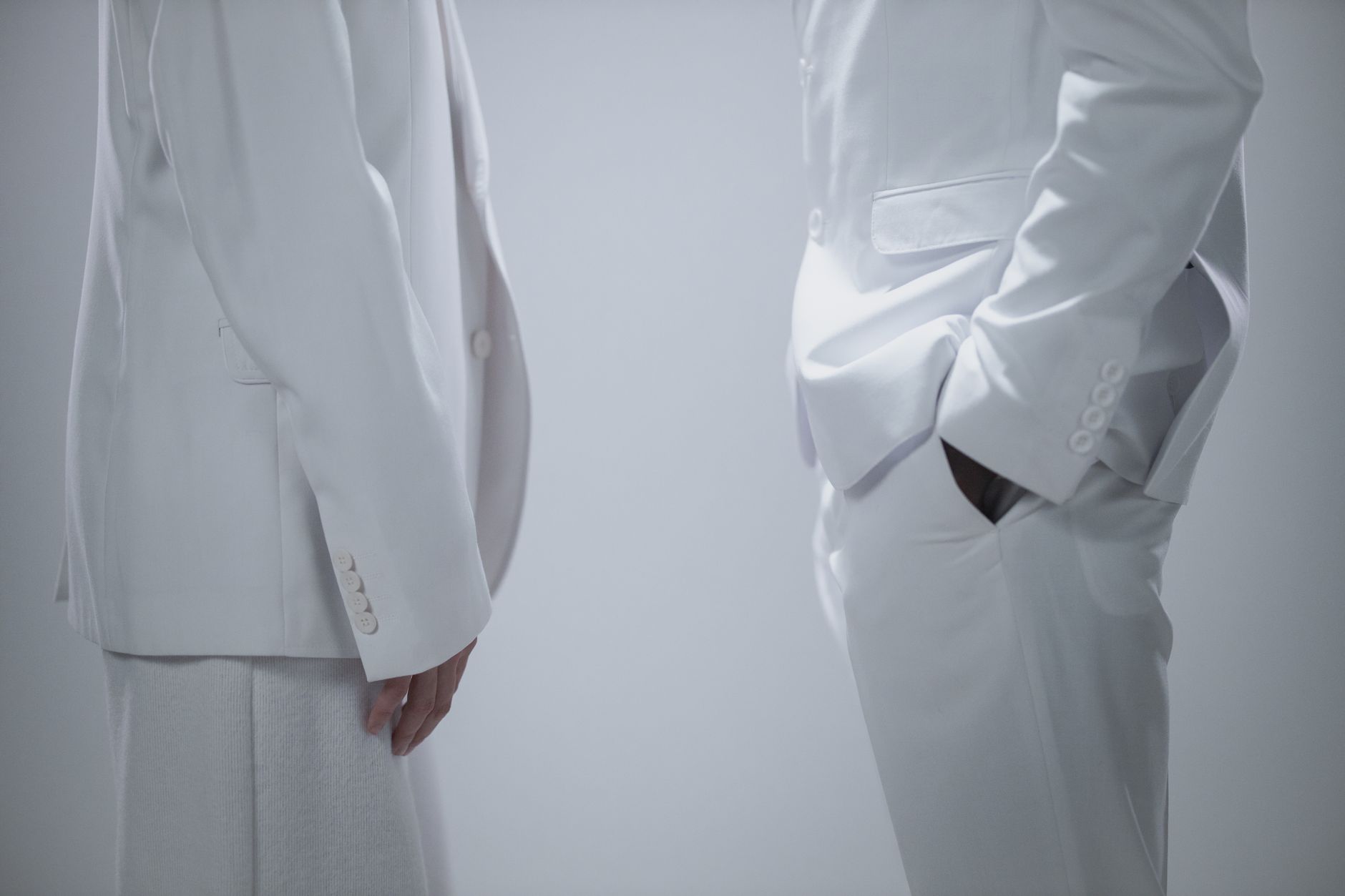
The Architecture of Nothing Extra
Jil Sander’s house was built on a specific philosophy: that clothing should do less so it can mean more. The suiting that emerged from this thinking – sharp shoulders, clean lapels, fabric with enough weight to hold its shape – was never trying to compete with embellishment. It was operating on a different register entirely. Where maximalism demands attention, Sander’s suits command it through refusal.
The current creative direction under Lucie and Luke Meier has maintained this with a precision that feels almost stubborn. Season after season, the silhouettes are refined rather than reinvented. A jacket might shift from double-breasted to single. A trouser break rises or falls by a centimeter. The changes are small enough that someone buying a Jil Sander suit today is investing in something that will not read as dated beside a suit bought four years ago – and that’s not an accident.
This approach works because it demands more from fabric and construction than from surface decoration. The suits are expensive in the way that well-made things always are: the cost sits in the structure, the lining, the way the shoulders sit without assistance. When there’s nothing visual to distract from the cut, the cut has to be correct. And when it is, the garment doesn’t expire the way a trending silhouette or a novelty print does.
Fashion that minimizes itself tends to outlast fashion that announces itself. The logic is straightforward: a suit that reads as “now” because of its restraint doesn’t stop reading that way when trends move. Maximalist pieces, by contrast, are often tied to a specific cultural moment – they document a mood rather than transcend it. Jil Sander’s suiting doesn’t document anything. It simply exists, well-made and unwilling to age.

Why Restraint Is Winning Right Now
There’s a fatigue setting in around excess. After years of maximalist dressing being positioned as joyful and expressive – and it was, genuinely – a growing number of buyers are returning to the question of what they actually want to wear every day, repeatedly, without thinking about it. The Jil Sander suit answers that question before it’s finished being asked.
The styling codes that accompany this kind of suiting are part of its appeal. A single Jil Sander blazer can move across contexts in a way that a heavily embellished piece cannot. Worn over a white shirt it reads as boardroom. Worn over nothing with wide-leg trousers it becomes something else – softer, more considered, the kind of outfit that photographs well without trying to. This versatility isn’t a styling trick. It’s a function of the design’s neutrality, which is itself the result of extreme editorial discipline.
The brand’s pricing puts it squarely in the luxury tier, which means buyers are making considered decisions rather than impulse purchases. Someone spending at that level tends to think in terms of cost-per-wear, of longevity, of whether a piece will still feel right in five years. Jil Sander’s suiting passes that test in a way that fashion-forward luxury often doesn’t. The house has effectively positioned itself as the answer to the question serious dressers eventually ask: what do I actually keep?
The cultural moment matters here too. Quiet luxury as a conversation has moved from niche style forums to mainstream awareness, and while that phrase has been applied sloppily to almost anything beige, Jil Sander represents its more rigorous version. The house predates the trend by decades, which gives it an authenticity that brands hurriedly stripping their logos can’t replicate. When a look has been consistent since the 1970s, it doesn’t need to claim relevance. Relevance arrives on its own.
There’s also something to be said about the relationship between this kind of dressing and professional life. As workwear has become less defined – dress codes collapsed, then partially reasserted themselves, then collapsed again – the Jil Sander suit functions as a kind of answer to the ambiguity. It’s formal without being stiff, authoritative without being aggressive. A woman wearing one in a meeting doesn’t look like she’s dressing up or dressing down. She looks like she has decided, definitively, what she wears.
The Slow Burn of Staying Power
What separates Jil Sander from other houses working in a minimal register is that the restraint never tips into blandness. The details are specific – a seam placement, a collar width, a fabric choice that behaves differently in light than it does in shadow. These are decisions that take skill to make and take wearing to notice. First encounters with the clothing are sometimes underwhelming. Second and third encounters are when the logic reveals itself.
That slow-reveal quality is exactly what sustains a wardrobe piece over years rather than seasons. The Jil Sander suit doesn’t have a peak moment where it looks best and then begins to decline. It stays flat across time – neither thrilling on day one nor exhausting by year three. And in a market where the most visible fashion moves fast and ages faster, that flatness is starting to look a lot like a competitive advantage.