


The Stage as a Statement
Billie Eilish does not build concert sets. She builds environments. From the wraparound LED tunnels of her “Happier Than Ever” world tour to the floor-level performance platforms that collapsed the distance between artist and audience, her production team has consistently treated the physical concert space as an extension of the music itself – not a backdrop for it. The result is a visual language that touring acts, production designers, and venue engineers are now actively studying.
That influence is showing up in tours well outside the pop sphere. Production designers working on mid-tier and arena-level tours have started borrowing her approach to lighting architecture: specifically, the decision to build inward rather than upward. Where legacy arena staging stacked risers, trusses, and LED walls into vertical towers designed to fill a 20,000-seat room, Eilish’s team built horizontally, pulling the production toward the floor and the crowd. It changes what a live show feels like, not just what it looks like.
What Her Production Team Actually Did Differently
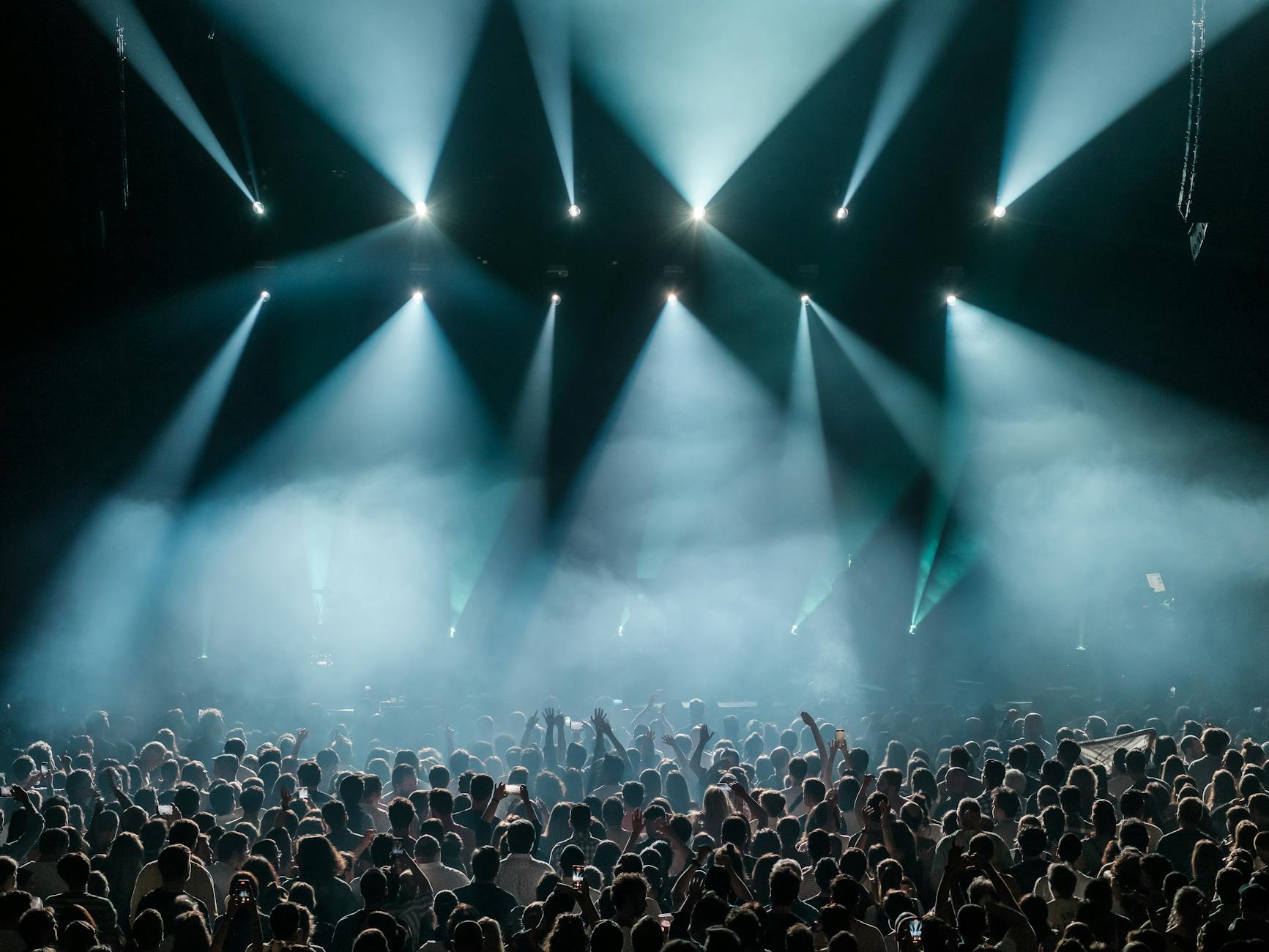
The “Happier Than Ever” tour, which ran through 2022, was designed around controlled intimacy. The main stage featured a low-profile runway extending into the crowd floor, with minimal vertical rigging above the performance zone. Lighting came primarily from side rigs and ground-level sources rather than overhead drops, which created a softer, more enveloping atmosphere than the hard top-down wash that dominates most arena shows. The color palette stayed desaturated – heavy on greens, deep teals, and stark whites – reinforcing the album’s muted emotional register.
Pyrotechnics were largely absent. So were confetti cannons and the other high-impact spectacle tools that touring productions typically rely on during peak moments. Instead, the show used negative space deliberately: dark passages between songs, long holds on a single color wash, sound design elements bleeding into the lighting cues. For a 20,000-capacity arena, it was an unusually restrained approach, and it worked because restraint read as confidence rather than budget constraint.
Her “Hit Me Hard and Soft” tour, launched in 2024, pushed the concept further. The production introduced an elaborate suspended overhead structure that doubled as a diffuse lighting source, casting the stage in an almost cinematic ambient glow. Reports from industry observers who attended early dates described the rig as functioning more like an atmospheric installation than a concert lighting system. The distinction matters: concert rigs communicate. Installation environments absorb. Eilish’s team built something that did both.
Why Other Touring Acts Are Paying Attention
The economics of large-scale touring have always pushed toward spectacle. Bigger screens, more LEDs, louder pyro – the escalation logic is baked into how promoters and managers think about ticket price justification. A $200 ticket needs to feel like $200, and for a long time the industry consensus was that “feeling like $200” meant visible scale.
Eilish’s tours challenged that math without abandoning it. Her production budgets are not small. The “Hit Me Hard and Soft” tour’s custom rigging and bespoke LED architecture reportedly represent exactly the kind of capital investment that large-scale touring requires. The difference is where the money went – into texture and atmosphere rather than size and brightness. That recalibration is now being watched closely, because it opens a design path that feels fresh at a moment when conventional arena staging has started to look interchangeable.
The Ripple Through Production Design
Production designers working across genres have noted a shift in what clients are requesting. The conversation around “immersive” staging has been happening for years, but it typically defaulted to 360-degree LED walls or extended runway setups lifted directly from fashion week. What Eilish’s team demonstrated is that immersion can be achieved through restraint in color, strategic use of darkness, and architecture that prioritizes audience enclosure over artist elevation. Those are principles with much broader application.
Younger artists preparing for their first arena runs are specifically requesting mood-forward production treatments over spectacle-forward ones. Whether that’s a direct response to Eilish’s influence or a parallel shift in aesthetic taste is hard to isolate – but the timing tracks. Her tours have provided a visible proof of concept that quiet can scale.
The other shift her productions accelerated involves the relationship between stage lighting and set design. Traditionally, a tour’s scenic design and its lighting design were developed somewhat separately, then integrated during tech rehearsal. Eilish’s production workflow – at least as described by crew members in trade publications like Lighting and Sound America – treats the two as a single system from the start. The structural elements of the set are designed to interact with light, not just receive it. That integrated approach produces a visual coherence that audiences register emotionally, even if they can’t articulate why the show feels different from a standard arena production.
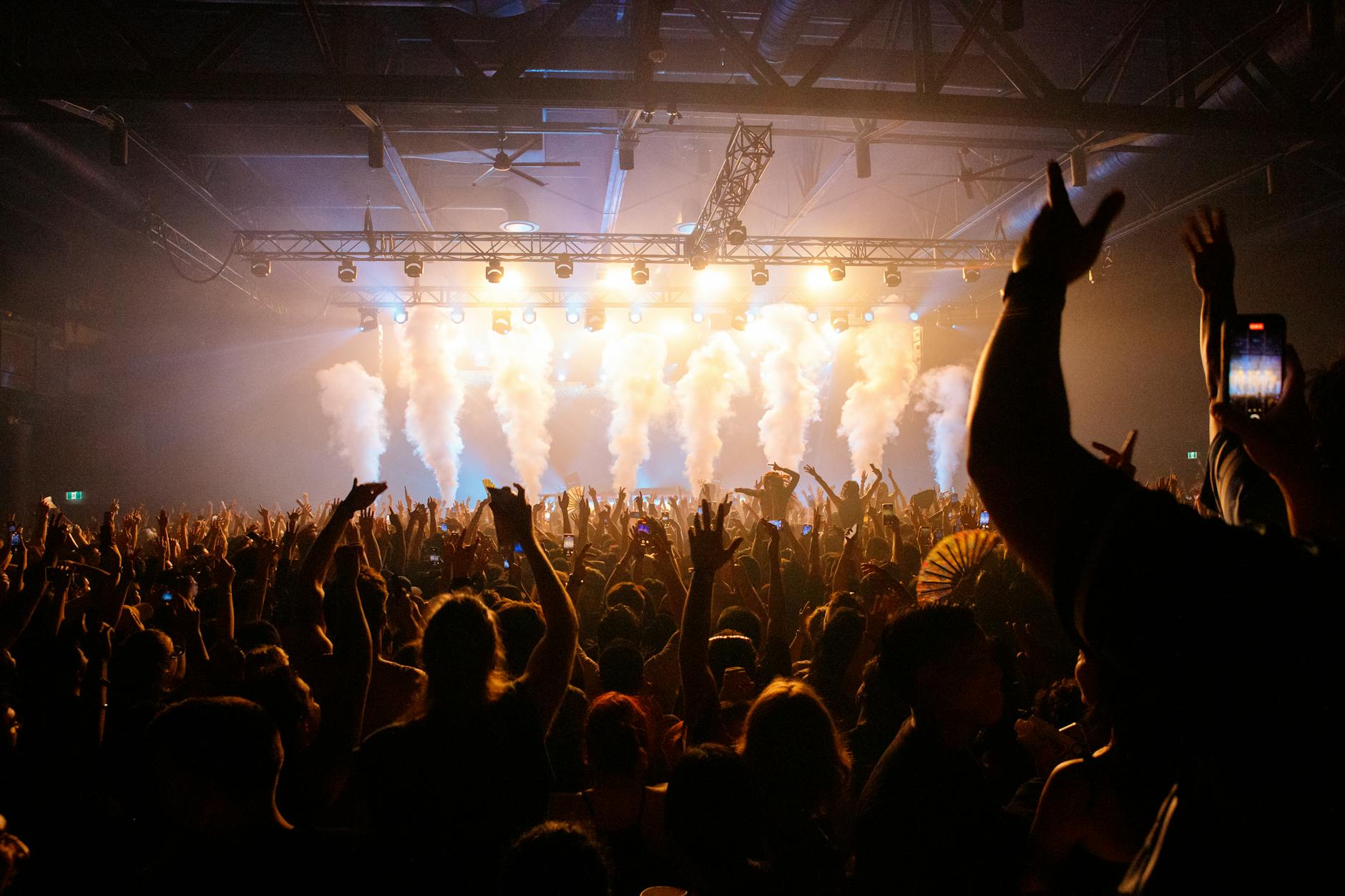
The staging for her 2024 tour also drew attention for its environmental commitments. The production team publicly documented efforts to reduce the show’s carbon footprint through LED efficiency, reduced trucking loads from modular set design, and venue-specific power sourcing. That documentation circulated widely through production and sustainability trade circles, attaching a practical framework to what was already an aesthetically influential template. For touring acts starting to face pressure from venues, sponsors, and fans on sustainability metrics, the “Hit Me Hard and Soft” tour offered a model where environmental accountability and high production value occupied the same space.
Whether that combination becomes standard practice depends less on aesthetic interest than on cost – sustainable touring infrastructure is still more expensive to build and source than conventional alternatives. Eilish’s production operates at a budget level that most touring acts cannot match. The design principles are portable. The price tag is not, which means the industry is watching a brilliant production playbook it can only partially afford to copy.
Frequently Asked Questions
What makes Billie Eilish’s concert production design different from other arena tours?
Her team builds inward rather than upward, using ambient lighting, low-profile stages, and integrated scenic and lighting design to create atmosphere rather than spectacle.
Which Billie Eilish tours are considered influential in production design?
Both the “Happier Than Ever” tour (2022) and the “Hit Me Hard and Soft” tour (2024) have drawn attention from production designers for their restrained, mood-forward approach.