


The Flat That Got Interesting
The ballet flat was supposed to stay simple. Its whole appeal rested on that simplicity – a single layer of leather or suede, a round toe, nothing to distract from the outfit it anchored. For years, that formula held. Then mesh arrived, and the shoe became something worth looking at on its own terms.
Mesh ballet flats have been circulating at a slow burn for a few seasons, but this year the style crossed a threshold. What was once a runway novelty – spotted on spring and summer collections as a sheer, almost costume-like experiment – is now selling through at mid-market and accessible luxury price points, moving from fashion week interest into actual closets.
The slingback, which spent the better part of five years as the flat of choice for anyone who wanted polish without a heel, is starting to feel slightly overworked.
Why the Mesh Version Works Where Others Didn’t
Sheer shoes have attempted comebacks before, usually falling flat because they read as purely occasion-specific – the kind of thing you wear once and photograph, not something that makes sense on a Tuesday in September. Mesh changes the equation because the material is structural enough to hold a shoe’s shape without the weight of a full upper. The foot is visible but the silhouette remains clean. That combination lets the flat move between casual and dressed-up contexts without announcing effort.
The styling logic is also broader than it first appears. Mesh ballet flats pair without friction against wide-leg trousers, midi skirts, tailored shorts, and even sheer hosiery – a combination that would have read as too much a few years ago but now functions as a coherent layering choice. The shoe works precisely because it does not compete visually. It shows skin, which creates lightness, but the ballet flat shape keeps everything grounded and legible. That balance is harder to achieve than it looks.
Part of what’s pushing the slingback aside is its rigidity as a category. A slingback needs to look dressed. Wear one with something overly casual and the disconnect registers immediately. The mesh flat carries no such social contract – it adjusts to context rather than demanding one. That adaptability matters more than it used to when workplaces are hybrid, social schedules are unpredictable, and the line between a lunch outfit and an evening one has effectively dissolved.

How the Trend Is Actually Moving Through the Market
The interesting part of this shift is where it’s happening. Mesh ballet flats are not being driven by one brand or a single viral moment. A growing number of labels – from under-the-radar European shoemakers to accessible fashion houses – are releasing versions with different mesh densities, toe shapes, and trim details. Some are entirely transparent with a pointed toe and a minimal sole. Others use a more structured fishnet weave with a slightly padded footbed. The variation signals genuine category expansion rather than a trend being worn out quickly by overproduction.
Pricing is scattered across a wide range, which matters for longevity. When a shoe style only exists at the luxury tier, it stays aspirational and fades when the editorial attention does. Mesh flats are available at enough price points that a much wider group of people can actually buy and wear them, which feeds the cycle of visibility that keeps a trend alive past its initial season. Early adopters styling them on social media have done what editorial alone rarely can – shown the shoe in ordinary, recognizable contexts rather than on set.
The closest parallel worth drawing is the return of nylon as a serious fashion material – the rehabilitation of a fabric that was once considered too sportswear-adjacent for elevated dressing, until it wasn’t. Miuccia Prada’s nylon revival demonstrated exactly how a material can move from functional to covetable without losing its original character, and mesh is following a similar path. The shoe does not pretend to be something other than what it is. That honesty reads as confidence.
The Slingback Is Not Gone
To be clear, the slingback is not vanishing. It will remain a strong option for anyone who needs a flat with defined, office-appropriate structure. But the category that once felt like the natural answer to “polished flat that isn’t a loafer” now has real competition, and the mesh ballet flat is providing it – not through flash or novelty, but by being genuinely easier to wear across more situations, at a moment when ease is the quality most shoes are being quietly judged on.
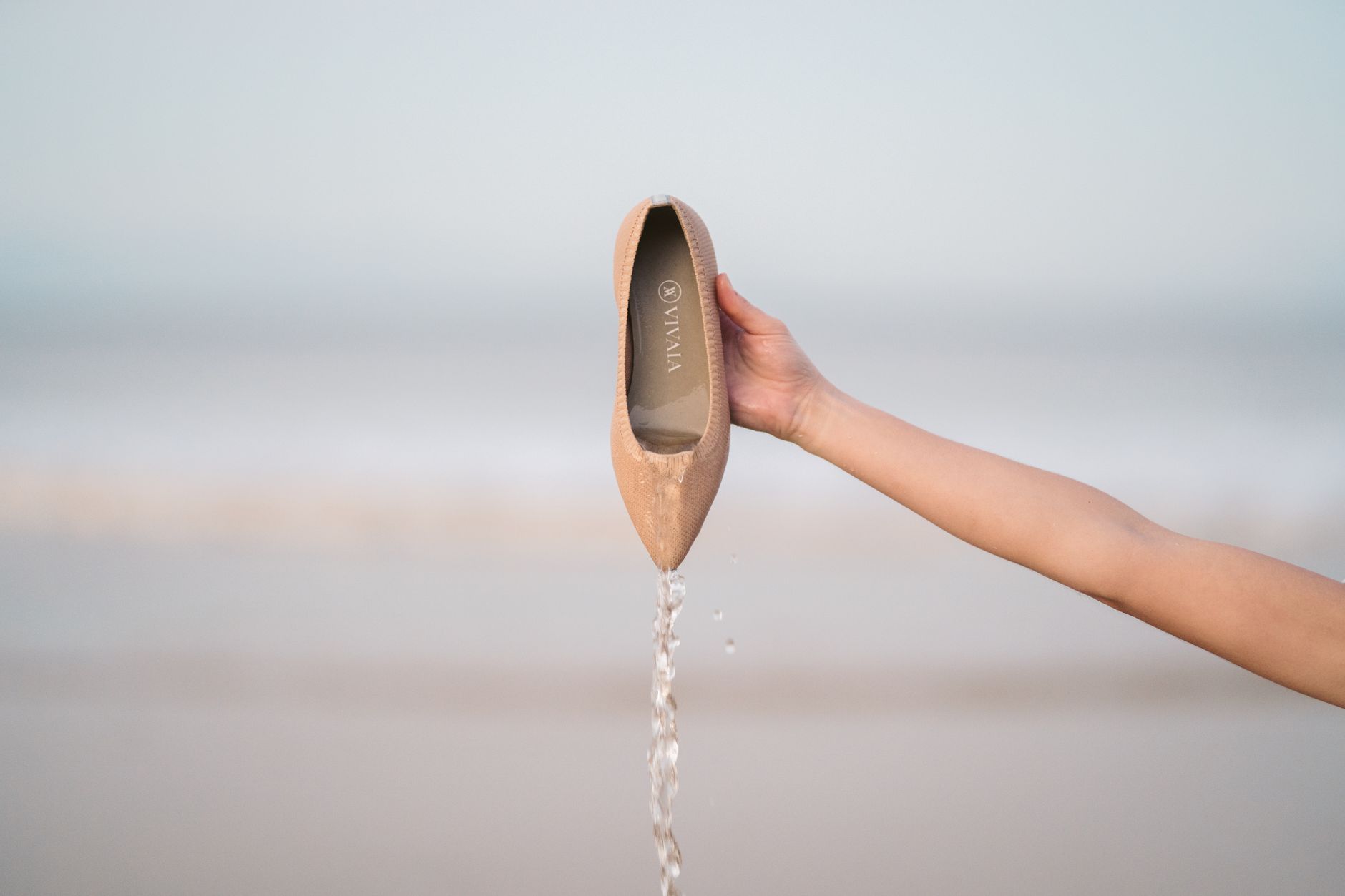
The version to watch right now is the pointed-toe mesh flat with a thin contrast trim, worn with no hosiery over bare skin – the styling choice that makes the sheer construction feel intentional rather than accidental, and that will likely define how the silhouette is remembered when this particular cycle finally closes.