



The Shoe That Wasn’t Supposed to Win
The loafer has always had a certain immunity. Through platform sandal waves, chunky sneaker takeovers, and the long reign of the ballet flat, it held its ground as the one shoe category that felt genuinely untouchable – a piece of wardrobe architecture rather than a trend. It carried the weight of a century of dressing well, and that history functioned like armor. Then Maison Margiela’s Tabi loafer arrived, split-toe and all, and started doing something nobody quite anticipated: making the loafer look conventional by comparison.
The Tabi silhouette, with its cloven hoof split derived from traditional Japanese tabi socks, has existed in Margiela’s vocabulary since 1988. It showed up first as a boot, then as a heel, occasionally as a flat. But the loafer version arrived at a specific cultural moment when the loafer itself had just peaked – Gucci Horsebit fatigue was real, penny loafer ubiquity had finally caught up with the style – and the Tabi loafer stepped directly into that opening. It didn’t replace the loafer. It complicated it.
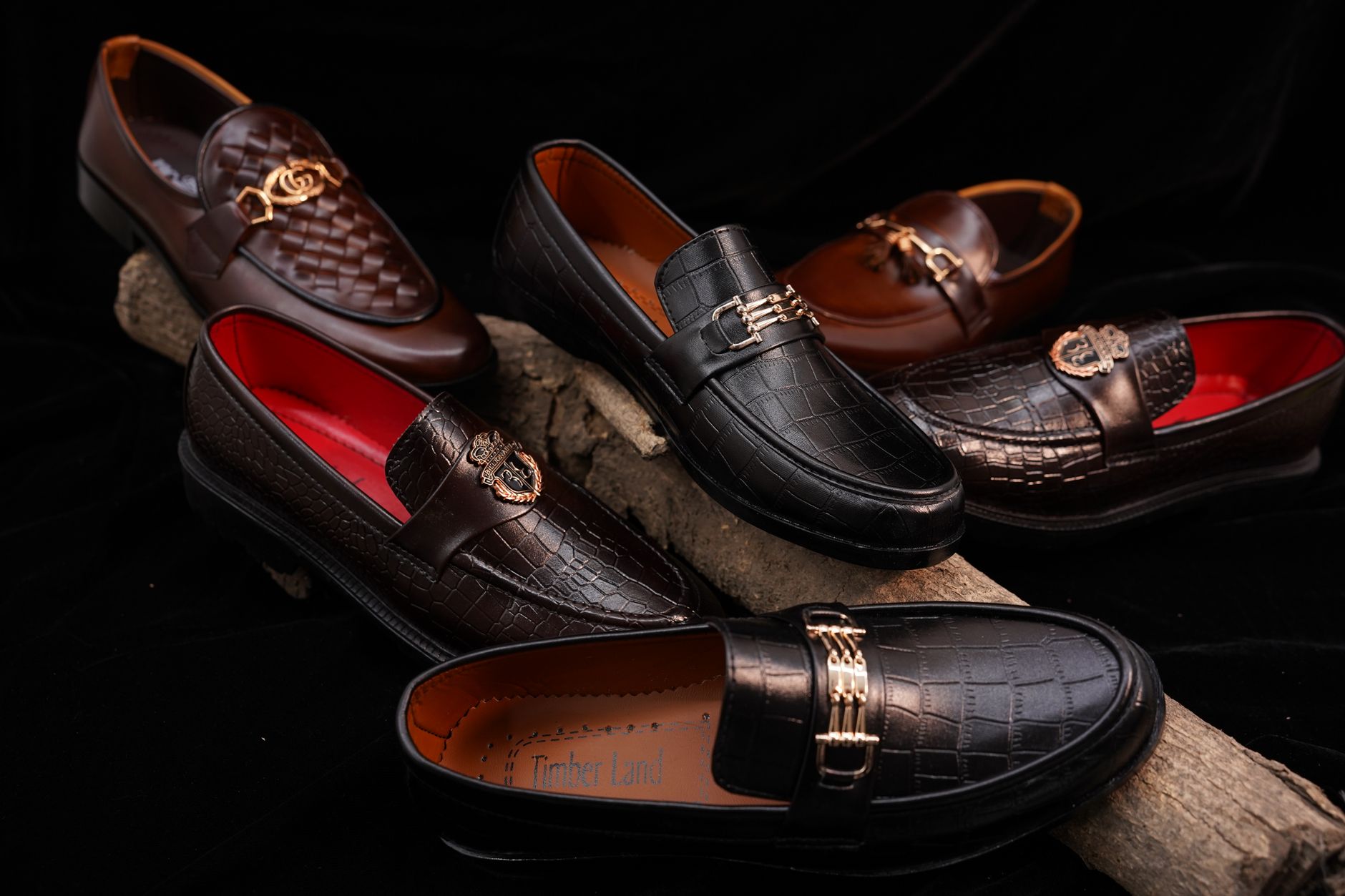
What the Tabi Does to a Silhouette
The structural logic of the Tabi loafer is harder to dismiss than it first appears. On first encounter, the split toe reads as a provocation – a deliberate ugliness in the tradition of Margiela’s conceptual house codes. Worn once, it starts doing something visually interesting to the foot’s relationship with the ground. The bifurcated tip elongates the silhouette while grounding it differently than a round or pointed toe would. It’s not that it looks better in any conventional sense. It’s that it looks more deliberate, like an argument rather than a decoration.
That distinction matters right now. The loafer’s long cultural power came from its ability to signal effortlessness – the shoe you grabbed because it was there, because it worked with everything, because thinking about it too hard would defeat the point. The Tabi loafer does the opposite. It demands acknowledgment. You cannot wear it casually in the same way, because a split-toe shoe on an otherwise minimal outfit immediately becomes the sentence’s subject. That’s either a liability or an advantage depending entirely on what you want your clothes to do.

The Styling Problem (and Why It’s Not Really a Problem)
Conventional wisdom says novelty footwear is harder to style. The Tabi loafer inverts that assumption to a degree. Because it carries such a specific visual weight, it actually simplifies decisions elsewhere in the outfit. Pair it with wide-leg trousers and the cropped hem draws the eye straight to the floor, where the split toe creates a clean landing point. With a midi skirt, the loafer’s inherent formality is retained while the toe split adds enough tension to avoid the outfit reading as safe. The shoe does the heavy lifting so the rest of the look doesn’t have to.
Where it struggles is in contexts that depend on the loafer’s self-effacing quality. The classic loafer is, at its best, invisible in the sense that it finishes an outfit without drawing attention. Business casual dressing, for example, runs on this principle – the shoe that reads as “appropriate” without being the point. A Tabi loafer in that setting is always the point. Some wearers find this liberating. Others find it exhausting, which is a legitimate response to a shoe that essentially requires you to commit to being noticed from the ankle down.
The leather quality across the Tabi line is consistent with Margiela’s positioning – supple, structured, and with a break-in period that rewards patience. The sole is substantial without being clunky, which matters for a shoe with this much visual weight up top. Balance is the thing the design relies on: take away the quality of the material and the concept tips into costume. That material seriousness is also what separates the original from the growing number of split-toe interpretations circulating at lower price points, some of which get the silhouette right while missing the weight entirely.
The price sits firmly in the range where you’re buying an object as much as a shoe. That’s not criticism – it’s the honest framing for what the Tabi loafer is. It belongs to the category of footwear where the investment signals something beyond utility. Like the resurgent Mary Jane’s slow displacement of the ballet flat, the Tabi loafer’s advance on traditional loafer territory is happening through conviction rather than volume – one committed purchase at a time rather than a mass market swing.
Where the Loafer Still Holds
None of this means the traditional loafer is retreating. Penny loafers, Horsebit styles, and the simple slip-on formats that have anchored smart casual dressing for decades are not going anywhere. The point is more specific: the Tabi loafer has established a foothold in the emotional and aesthetic space that used to belong exclusively to the loafer, and it’s done so without needing to be more wearable, more versatile, or easier. It simply offered a different version of the same proposition – structured, shoes-that-mean-something energy – with a more confrontational form.
That’s a meaningful development because it suggests the loafer’s category immunity wasn’t really about the silhouette at all. It was about the feeling the silhouette delivered. The Tabi loafer delivers a version of that feeling – grounded, considered, slightly elevated over the casual – while making the conventional loafer look, for the first time in a long time, like the conservative choice rather than the refined one.
The Long Takeover
Margiela has been releasing Tabi variations for over three decades, and the loafer iteration is not new. What’s new is the context in which it’s being chosen. Resale activity on the Tabi loafer has increased noticeably over the past two seasons, and the secondary market price on well-maintained pairs has held in a way that novelty shoes rarely do. That holding power is the real signal – it means buyers are treating the shoe as an investment in a wardrobe rather than a seasonal experiment.
The styling conversation around the Tabi has also matured. Early adoption was concentrated in fashion-forward circles where the split toe read as a statement of insider awareness. That community still exists, but it’s been joined by a broader group of buyers who are less interested in the conceptual history and more interested in what the shoe does to an outfit. When a design crosses that line – from reference to function – it typically doesn’t cross back.
The question the Tabi loafer raises is whether the loafer’s authority was ever really about the form, or whether it was always about a certain kind of confident refusal to perform. If it’s the latter, then the Tabi loafer qualifies. You can’t wear a split-toe shoe accidentally. Every time you put it on, you’ve already decided something.