

The Flat That Replaced Your Loafer Without You Noticing
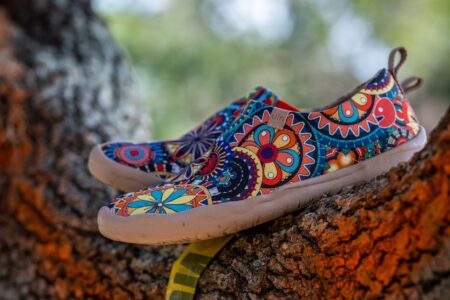
The leather loafer had a long run. For the better part of three years, it was the default “elevated casual” shoe – the piece that made a simple outfit look considered, that bridged the gap between sneaker and heel without much effort. But something shifted on shop floors and in street style over the past two seasons. The knit ballet flat started showing up where the loafer used to live: paired with wide-leg trousers, tucked under the hem of a midi skirt, worn with tailored shorts at outdoor events. Not as a novelty, but as the obvious choice.
What makes this worth paying attention to is how quietly it happened.
There was no single runway moment that crowned the knit flat as the new dominant shoe. No viral celebrity pairing that ignited a sell-out cycle. It arrived through accumulation – a growing number of European brands introducing knit constructions in their flat shoe ranges, wardrobe stylists reaching for them on editorial shoots, and ultimately consumers realizing that their leather loafers were sitting unworn while the knit flats got pulled out every single day. The shift is about comfort logic as much as it is about aesthetics, and that combination tends to stick.

Why Knit Works Where Leather Doesn’t
Leather loafers have one persistent problem: they require breaking in. Even the most well-constructed pair involves a period of discomfort – stiff soles, tight toe boxes, the heel slip that doesn’t fully resolve until the shoe has been worn enough to mold slightly to the foot. Knit ballet flats skip that process entirely. The material stretches and gives immediately, accommodating the foot rather than conditioning it. For anyone who has ever abandoned a pair of loafers mid-afternoon because their feet couldn’t take another hour, this is not a small thing.
The weight difference is also significant. A knit flat is genuinely light in a way that most leather shoes aren’t. It changes how the foot moves through the day – there’s less fatigue, less drag, less of the general heaviness that comes with substantial footwear. This matters more in some seasons than others, but as warm-weather dressing increasingly extends into year-round wardrobes, lighter shoes have a clear advantage. Knit flats also fold or compress, making them the shoe that actually fits in a bag when you need to swap footwear on the go. The leather loafer does not offer that option.
None of this means knit flats are winning on practicality alone. The aesthetic case is strong too. The texture of a knit upper adds a softness that leather simply doesn’t have, and that softness plays well against the harder lines of structured clothing – a blazer, a pleated trouser, a stiff cotton shirt. Leather loafers and leather blazers together can read as too much of one thing. A knit flat against a tailored piece creates contrast that looks deliberate. Designers building collections around texture mixing have leaned into this dynamic, and shoppers have followed.

The Styling Logic Behind the Swap
The loafer always carried a certain prep-adjacent energy – a reference to collegiate style, equestrian culture, the kind of polished-casual that reads as old money or at least old money-adjacent. That wasn’t a flaw; it was the appeal. But as fashion broadly moved away from ironic heritage references and toward something more genuinely relaxed and less coded, the loafer started to feel like it was making a statement the wearer didn’t necessarily intend. The knit flat carries no such baggage. It reads as simply comfortable and current, which is exactly where style appetite is right now.
For anyone tracking the broader ballet flat resurgence, the knit version slots into the same conversation but with a slightly different customer. Mesh flats skew dressier, better suited to evening or occasion wear. The knit flat is the everyday option – the shoe that works with whatever is already in the wardrobe without requiring an outfit to be built around it. It pairs with denim without looking too casual. It works under a trench coat without looking underdressed. That kind of versatility is what puts a shoe into heavy rotation.
Color and finish have expanded the category further. Early knit flats leaned heavily on neutral tones – cream, beige, black, navy – which made sense for a shoe establishing itself as a basics staple. But the current wave includes more interesting options: tonal stripes, textured knits that mimic boucle, two-tone constructions that make the shoe more of a focal point. The category has moved past its utilitarian starting point without losing what made it useful in the first place.

What This Means for the Loafer
The leather loafer is not disappearing – it still owns certain contexts, certain aesthetics, certain weather conditions that knit simply can’t handle. But its position as the default considered flat has weakened, and the knit ballet flat is filling that space with a logic that’s hard to argue with: it costs less to produce, it feels better immediately, it travels well, and right now, it looks right in a way that the loafer, through no particular fault of its own, does not. The question isn’t whether the knit flat earned its place – it clearly has. The question is how long before loafer loyalists quietly stop defending the choice.