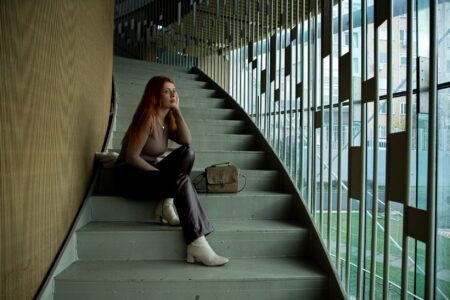



The ballet flat had a long run. For the better part of a decade, it was the go-to shoe for anyone who wanted to look polished without committing to a heel – practical, minimal, and endlessly pairable. But something has shifted in the shoe conversation, and the kitten heel Mary Jane is steadily claiming the space that once belonged exclusively to flats.
This is not a sudden takeover. The kitten heel Mary Jane has been building momentum in the background, showing up on runways, in street style photography, and in the kinds of quietly influential wardrobes that tend to set the tone before mainstream fashion catches on. The ballet flat is not gone, but it is no longer the automatic answer.
Why the Ballet Flat Lost Its Edge
The ballet flat’s appeal was always rooted in simplicity. It worked because it asked nothing of the wearer – no adjustment period, no outfit negotiation, no height. That zero-effort quality made it a staple, but it also eventually became its limitation. When a shoe requires no thought, it stops generating any.
Fashion, at its core, cycles through tension and release. After years of aggressively flat footwear dominating the minimalist aesthetic, there is an appetite for something that does a little more without going all the way into statement territory. The kitten heel Mary Jane lands exactly in that gap.
What the Kitten Heel Mary Jane Gets Right
The kitten heel – typically between one and two inches – sits in a sweet spot that the fashion world keeps rediscovering. It adds enough elevation to lengthen the leg and shift the posture without the physical commitment of a stiletto or the visual weight of a block heel. Paired with a Mary Jane strap across the instep, the shoe gains a structural elegance that a ballet flat simply cannot replicate.
The Mary Jane strap is doing significant work here. It anchors the shoe visually, giving it a defined silhouette that reads as intentional rather than convenient. There is a vintage quality to the form – referencing mid-century dressing without looking costume-y – and that tension between nostalgia and modernity is exactly where fashion tends to find its most durable moments.
Styling versatility is another reason this shoe is gaining ground. A kitten heel Mary Jane works under wide-leg trousers in a way that creates a clean, grounded finish. It pairs with midi skirts and tailored shorts equally well. It can sit beside a chunky knit without the outfit looking confused. The kitten heel boot has been proving the same point in the cold-weather wardrobe – the silhouette is simply having a moment across its variations.
Comfort, which was always the ballet flat’s strongest argument, is less of a differentiator now. Better construction and thoughtful sole engineering across shoe categories mean that a low-heeled shoe no longer automatically means sacrifice. Many kitten heel Mary Janes on the market now are built for actual wear, not just runway appearances.

The Styling Shift Happening Right Now
What is most telling is where the kitten heel Mary Jane is showing up. Street style at European fashion weeks this year has featured the silhouette repeatedly – worn with everything from tailored suiting to relaxed linen separates. This is not the kind of shoe being styled for effect. It is being worn as the default, which is the position the ballet flat held for years.
The broader wardrobe context matters too. As dressing in general has moved toward what might be called considered casualness – clothes that look relaxed but clearly deliberate – the ballet flat can tip too far into understated. The kitten heel Mary Jane offers the same ease of outfit-building with a slightly elevated finish that reads as dressed, not dressed up.
Who Is Wearing It and How
The early adopters of this shift tend to be women who stopped following trends prescriptively and started building wardrobes around proportions and silhouette. For that group, the kitten heel Mary Jane resolves a specific styling problem: how to finish an outfit with something that has personality without becoming the focal point.
Pairing choices are converging around a few recurring combinations. With straight-leg or slightly cropped trousers, the strap of the Mary Jane creates a clean horizontal line at the ankle that finishes the look neatly. With dresses and skirts, the heel adds enough of a lift to balance volume without fighting it. The shoe works because it is legible – you understand immediately what it is doing in an outfit.
Color and material choices are also broadening the shoe’s range. Black patent remains the foundational version, but chocolate leather, soft nude suede, and even metallic finishes are all appearing in current offerings. That range means the shoe can function as a neutral or as a quiet accent depending on how it is worn – a flexibility that keeps it from feeling like a trend piece with a short shelf life.
The ballet flat is not disappearing from anyone’s wardrobe overnight, and the mesh ballet flat in particular has found a way to stay relevant by borrowing texture and visual interest from adjacent shoe categories. But the direction of fashion’s attention is clear. When the shoe you reach for out of habit starts feeling like the path of least resistance rather than an actual choice, something else tends to fill the gap. Right now, that something is a two-inch heel and a single strap across the foot.