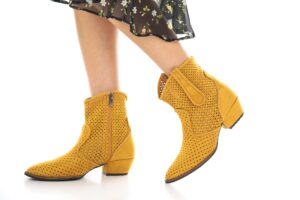


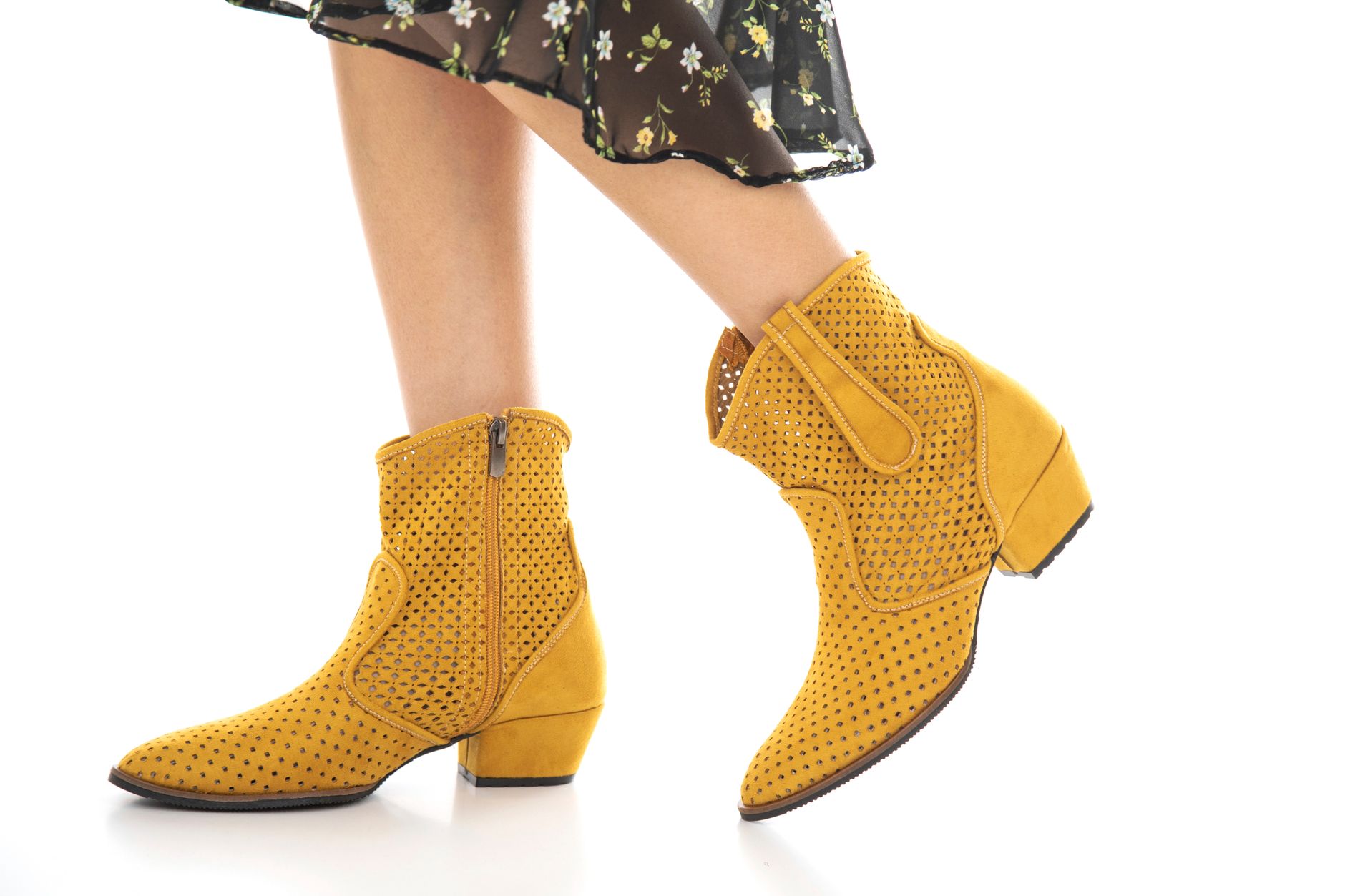
The Chelsea boot has held its position as the reliable workhorse of transitional dressing for years – practical, clean-lined, and easy to style with almost anything. But something is shifting on the sales floors and style feeds this season. The kitten heel boot, with its slender 1.5 to 2.5 inch heel and often sleeker silhouette, is showing up where the Chelsea used to dominate: paired with wide-leg trousers, tucked under midi skirts, worn to the office without a second thought.
This is not a dramatic overthrow. The Chelsea boot is not disappearing. But the kitten heel boot is capturing attention in a way that suggests the flat, elastic-sided silhouette may be facing its first real competition in years – not from a chunky platform or a dramatic over-the-knee style, but from something far quieter and more precise.
Why the Kitten Heel Boot Is Gaining Ground
Part of what is driving interest in the kitten heel boot is the broader return of refined dressing that does not feel stiff. The fashion conversation has been moving away from the extremes – away from ultra-flat and away from the towering heel – toward something in between that still reads as intentional. The kitten heel boot sits exactly in that sweet spot. It adds just enough elevation to lengthen the leg and sharpen the silhouette without demanding a different way of walking.
The Chelsea boot earned its staying power through its silhouette: no laces, no buckles, nothing to fuss with. The kitten heel boot is competing on the same terms. Many of the styles gaining traction right now share that clean profile – a pointed or slightly rounded toe, minimal hardware, a slim heel that does not interrupt the line of the leg. The result is a boot that looks more dressed than a Chelsea without crossing into formal territory.
There is also a comfort argument that is harder to dismiss than it used to be. A kitten heel distributes weight differently than a flat sole, and for people who spend hours on their feet, the slight pitch can actually reduce strain on the lower back and arch. That is not a marketing claim – it is simple biomechanics. The kitten heel has always had this on its side; the fashion world is just catching up to what the sensible-shoe crowd has known for decades.
The Styling Shift
What is most telling is how the kitten heel boot is being worn. It is not showing up in maximalist, heavily styled editorial spreads. It is appearing in the kind of everyday, put-together looks that the Chelsea boot used to anchor – with straight-leg jeans, with tailored separates, with knit dresses that hit at the knee. That placement matters. It signals that the kitten heel boot is not being treated as a statement piece but as a building block, which is precisely how the Chelsea built its reputation.
The heel height also gives the kitten heel boot a slight advantage with certain hemlines. With the pleated midi skirt continuing its rise as a daytime staple, the small lift of a kitten heel keeps proportions balanced in a way that a flat boot sometimes struggles to achieve. A flat Chelsea under a midi can read as heavy at the base; the kitten heel creates just enough visual lightness to let the skirt move properly.

What This Means for How We Think About Boot Dressing
The Chelsea boot succeeded because it made decisions easier. One silhouette, endlessly versatile, no styling anxiety required. The kitten heel boot is beginning to offer something similar, but with a slightly more elevated payoff. That is a different kind of proposition – not easier, exactly, but more rewarding for the same amount of effort.
Retailers are responding. A growing number of footwear brands are expanding their kitten heel boot offerings, particularly in the ankle and short-calf length range, which mirrors the proportions that made the Chelsea so wearable. The styles coming through now are less fussy than the kitten heel boots of the early 2000s – no excessive embellishment, no overly tapered toe that distorts the foot. The aesthetic is closer to a well-made European walking shoe than anything nostalgic.
The Chelsea boot’s weakness has always been the ankle area. The elastic panel, practical as it is, creates a slight visual interruption that some outfits cannot absorb – particularly with cropped trousers or rolled hems, where the elastic panel becomes the focal point whether you want it to or not. The kitten heel boot typically does not have this problem. Its structure tends to be cleaner through the ankle, which makes it easier to wear with the kind of tailored, slightly cropped bottoms that are everywhere right now.

What makes this moment interesting is that the kitten heel boot is not winning on trend momentum alone. It is winning on fit – fit with the hemlines people are actually wearing, fit with the pace of dressing that has settled in after years of extreme comfort dressing on one end and dressed-up occasion dressing on the other. The kitten heel boot lands in the middle of that with an answer that the Chelsea boot, for all its virtues, is not always positioned to give. The question now is whether the Chelsea adapts – a kitten-heeled Chelsea is not an unreasonable prediction – or whether two distinct boot silhouettes simply share the season going forward.