
The Flat That’s Making Heels Feel Optional
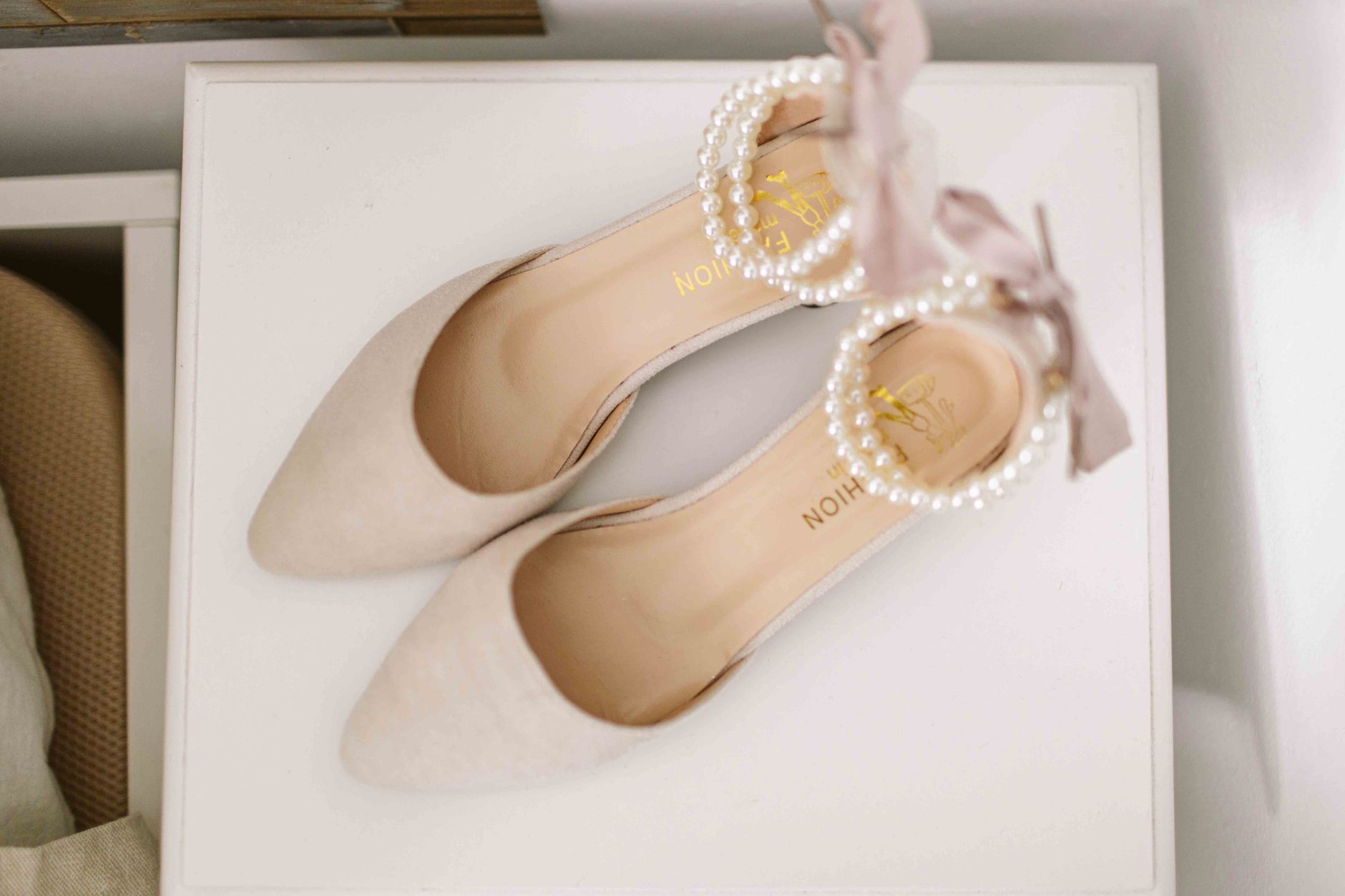
Simone Rocha’s embellished ballet flat has spent the last two seasons quietly accumulating a following that most shoe trends take years to build. Covered in pearl clusters, floral appliques, or delicate beading depending on the iteration, the silhouette sits somewhere between heirloom and streetwear – soft enough for cobblestones, considered enough for a gallery opening. It is not trying to be practical. It succeeds anyway.
What’s notable is where it’s landing relative to the Mary Jane, a shoe that spent most of the last decade as fashion’s go-to answer for “flat but interesting.” The Mary Jane had a strong run – buckled, chunky-soled, worn with socks or without, photographed on every other creative-adjacent person in any major city. But Rocha’s flat is doing something the Mary Jane stopped doing once it became ubiquitous: it’s creating genuine conversation about the shoe itself, not just the outfit.
What Rocha Built and Why It Lands Differently
Rocha’s design language has always been obsessed with the tension between innocence and weight – girlhood as something to be taken seriously, not diminished. The embellishments on her flats are not decorative afterthoughts. They’re architectural. Pearls don’t scatter randomly; they cluster with intention. Flowers sit heavy on the toe box, almost sculptural. The shoe reads as a complete object before it reads as a shoe.
That completeness is what separates it from the broader ballet flat revival that’s been circulating for a few years now. A plain ballet flat works because of how it defers to the rest of the outfit. Rocha’s flat refuses to defer. It demands to be seen and, because it’s flat, it doesn’t ask the wearer to sacrifice comfort for that visibility. That combination – statement shoe, zero heel – is rarer than it sounds and harder to pull off than it looks.
The Mary Jane’s Complicated Position Right Now
The Mary Jane isn’t disappearing. It’s just being reassigned. A few seasons ago, it occupied a specific cultural role: the shoe you wore when you wanted to signal that you understood fashion history, that you were playing with schoolgirl references without being literal about them. It was knowing. It worked because enough people were in on the joke without the reference feeling exhausted.
Then it tipped. When a silhouette appears on every fast fashion site in every colourway, the encoded meaning drains out of it fast. The Mary Jane became a solid, reliable shoe choice rather than a choice that communicated anything specific. There’s nothing wrong with that trajectory – most trend cycles end there – but it does leave room for something else to occupy the space the Mary Jane held when it still felt like a decision.
Rocha’s flat stepped into that space without announcing itself as a replacement. It arrived through runway looks heavy with tulle and lace, attached to an aesthetic that already had a committed audience. Editors picked it up first, then stylists, then the kind of buyer who reads those editorial pages carefully. The diffusion was slow and deliberate, which is exactly why it has the cultural weight it does right now rather than feeling like it was engineered for a moment.
There’s also a price consideration worth acknowledging plainly. Rocha’s flats sit in the luxury bracket, which means they’re not accessible to the majority of people who might want them. That exclusivity does some of the work for the trend. It keeps the visual in circulation through editorial and social media while keeping the actual object scarce enough to retain its pull. The Mary Jane’s broad adoption happened partly because the silhouette translated easily at every price point. Rocha’s embellishments are much harder to execute cheaply, which slows that flattening effect considerably.
How Stylists Are Using It on the Ground
On the styling side, the flat is being deployed in ways that break the expected pairing logic. Rather than matching it with the floaty, romantic dressing that Rocha’s runway suggests, stylists are increasingly pulling it against harder pieces – straight-leg trousers, structured coats, even suiting. The embellishment provides enough softness that the shoe does the tonal work without the entire look needing to follow it into whimsy.
That versatility is the flat’s real competitive advantage over the Mary Jane as a styling tool. The Mary Jane, particularly in its chunkier iterations, requires more deliberate pairing – it has a specific gravity that pulls looks in one direction. Rocha’s flat, despite its ornate surface, sits more neutrally in a look. The embellishment draws the eye without redirecting the outfit’s entire conversation.
Where the Silhouette Goes From Here
Rocha has continued to develop the flat across collections rather than treating it as a static hero piece. Different materials, different embellishment densities, variations in toe shape and strap detail – each season adds a chapter without erasing the previous ones. This is how a shoe becomes a design signature rather than a trend with an expiration date, and it’s a meaningful distinction for anyone trying to track where the market moves next.
High street brands have begun attempting versions – floral detailing at the toe, pearl accents on otherwise plain flats – but the translations tend to look adjacent rather than convincing. The construction is difficult. The weight of good embellishment requires specific attachment techniques, and the difference between a clustered pearl that stays put over years of wear and one that shifts or falls is immediately visible to anyone who has handled both. That gap is keeping the original relevant even as the aesthetic migrates downward through the market.
The more interesting question is what Rocha does if and when the flat reaches the same saturation point the Mary Jane hit. Given her track record, the answer is probably already in development somewhere – a different surface treatment, an unexpected material, the same design intelligence applied to a silhouette nobody is currently watching. The flat is succeeding right now because the shoe itself earns its attention. Whether that’s still true in three seasons depends entirely on whether the embellishments still feel considered or simply expected.