



The bomber jacket has held its ground in menswear and womenswear for decades, but something is quietly displacing it at the higher end of the fashion market: Rick Owens’ draped leather silhouette, with its angular shoulders, falling hems, and structural weight that reads as armor rather than outerwear.

Why the Draped Leather Silhouette Is Gaining Ground
The bomber jacket earned its staying power through versatility – it sits comfortably over a hoodie or under a trench, and it works in a dozen subcultures without fully committing to any of them. That neutrality, which was once its strength, is starting to look like its limitation. Owens’ draped leather pieces do the opposite: they commit completely, and that commitment is exactly what a certain buyer is looking for right now.
Owens has been building this silhouette over multiple collections, refining how leather drapes rather than structures, how a jacket can fall off the shoulder and still maintain volume, and how black on black can produce visible contrast through texture alone. The result is a garment that reads as directional without requiring explanation. You don’t need to know the collection name or the runway context to understand that this is not a casual piece.
The bomber, by contrast, has been absorbed so thoroughly into everyday fashion that it no longer signals anything specific. Fast fashion versions, luxury sport versions, and heritage military versions now all occupy the same visual category. A Balenciaga bomber and an airport gift shop bomber are, at a glance, the same shape. That erosion of signal value matters enormously to the kind of consumer who shops at the top of the market.
Owens’ leather pieces carry no such ambiguity. The draped silhouette requires a level of physical confidence to wear – the hemlines are unconventional, the proportions are deliberate, and the leather weight means the jacket shapes the wearer rather than adapting to them. That degree of intentionality is part of the appeal.

The Commercial Logic Behind the Shift
What makes this more than a niche runway preference is how the draped leather look is moving through the market. Retailers that stock Owens alongside other designer outerwear are seeing the leather pieces hold their price longer in the secondary market. The resale durability of a Rick Owens leather jacket far exceeds that of a designer bomber at a comparable original price point, partly because the leather construction ages into the piece rather than against it.
There is also a functional argument. Draped leather, particularly when cut in heavier vegetable-tanned hide, develops a patina that makes each jacket progressively more individual. A bomber, regardless of material, looks essentially the same from the first wear to the fiftieth. The Owens aesthetic is built around garments that reward long ownership, and that pitch – buy once, wear for a decade, watch it become yours – is gaining real traction as buyers grow skeptical of trend cycling.
The styling versatility of the draped silhouette is wider than it first appears. Styled over a narrow-leg trouser and a clean shirt, the leather jacket reads as severe but polished – appropriate for an opening, a dinner, or a gallery. Layered over heavier knitwear, it becomes something closer to sculptural outerwear. The bomber, even a luxury one, doesn’t move between those registers. It has a ceiling.
The cultural timing is also worth examining. The maximalist wave that dominated fashion media for several years – bold prints, clashing colors, logo saturation – is visibly losing energy. What’s replacing it isn’t the quiet minimalism of a decade ago exactly, but a different kind of restraint: monochromatic darkness, pronounced silhouette, material quality over surface decoration. Jil Sander’s pared-back suiting has been making a similar case in tailoring. Owens is making the same argument in outerwear.
The price gap between a mid-tier bomber and an Owens leather piece is significant, but that gap is less of a barrier for the buyer who has already decided the bomber isn’t the answer. These are two different conversations about what outerwear should do. The bomber says: adaptable, functional, cool in a low-stakes way. The Owens draped jacket says: this is a choice, not a default.
What This Means for Outerwear Going Forward
Designers watching Owens’ leather pieces gain traction are already responding. Several labels have introduced draped leather styles in their current outerwear lines, keeping the angular shoulder and the falling hem while softening the overall severity for a broader audience. That pattern – Owens introduces the extreme, the market follows at a more accessible version – has happened before with his silhouettes in footwear and suiting. The bomber is not disappearing, but it is being repositioned. It will continue to work as casual and streetwear outerwear, where its associations are genuinely appropriate. What it’s losing is the argument that it can also serve as a statement piece.
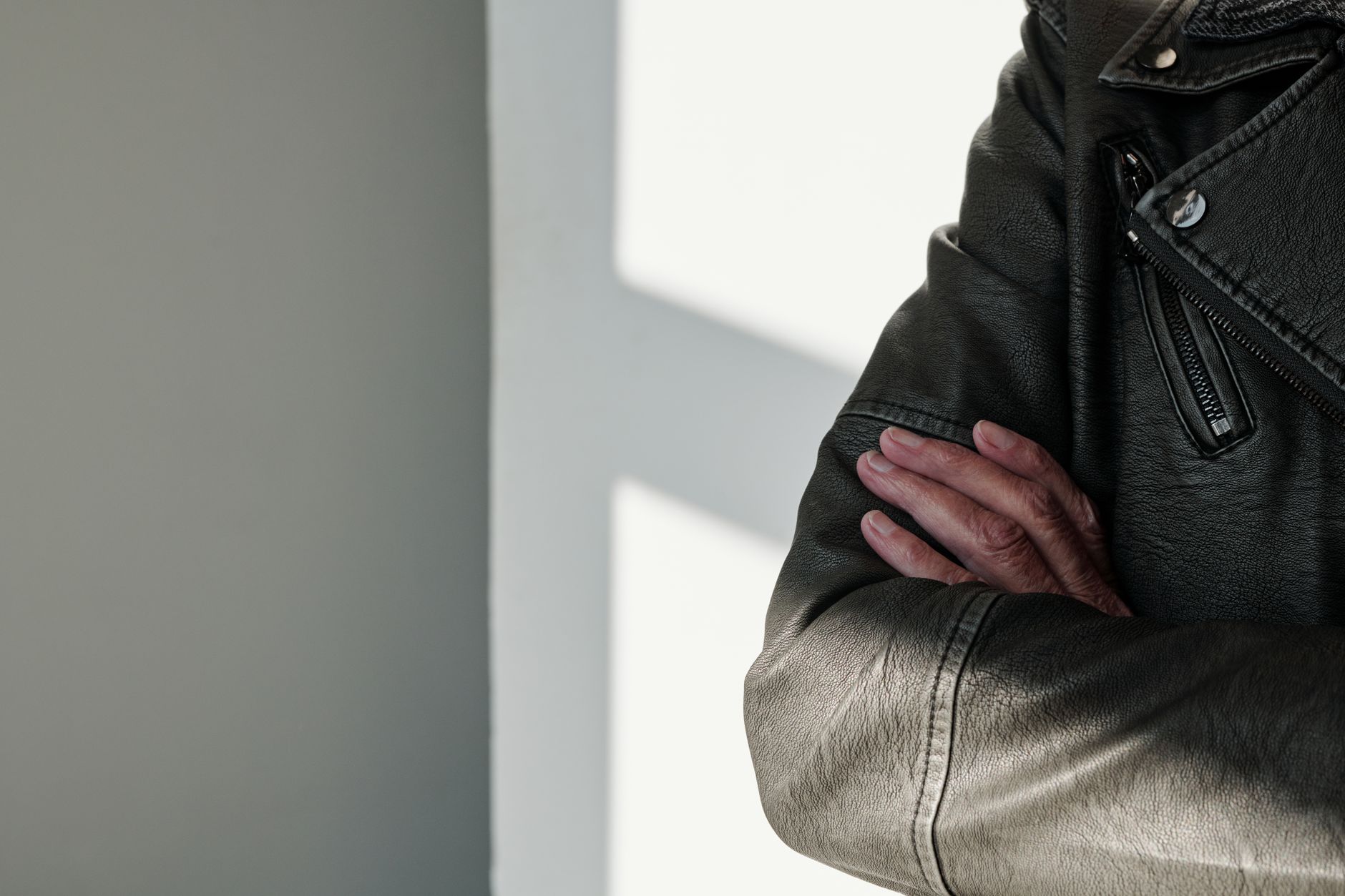
The harder question for buyers right now is whether the draped leather silhouette can sustain its edge once it gets widely copied. Owens’ version works because of construction: the leather grade, the internal structure that allows drape without collapse, and the proportion calibration that takes multiple seasons to perfect. A fast-fashion approximation will have the right shape and none of the function. Whether that distinction remains visible to enough buyers to protect the original’s position is the unresolved tension that will determine how long this shift actually holds.
Frequently Asked Questions
What makes Rick Owens’ draped leather jacket different from a standard leather bomber?
The draped silhouette uses angular shoulders, unconventional hemlines, and heavier leather construction that shapes the wearer, rather than adapting to them like a bomber does.
Why is the bomber jacket losing ground at the luxury end of the market?
The bomber has been so widely adopted across price points that it no longer signals anything specific – its versatility has become a liability for buyers looking for a directional statement piece.