



The Suit That Says Everything Without Shouting
Pedro Pascal has spent the last two years becoming the internet’s favorite everything – action hero, internet dad, unlikely fashion icon. But while his roles in The Last of Us and Gladiator II kept him on every screen imaginable, it’s his red carpet appearances that have quietly built a case for why tailoring still matters. Not loud tailoring. Not fashion-week tailoring. The kind that fits so well it barely needs describing.
His formula is consistent: dark or neutral suiting, minimal hardware, cuts that follow the body without dramatizing it. No oversized silhouettes. No novelty lapels. No florals wrestling for attention.
What Pascal is doing on the red carpet isn’t just a personal style preference – it’s a direct counter to the maximalism that dominated celebrity dressing for the better part of a decade. When everything around him is rhinestone and risk, a well-cut charcoal suit becomes the most deliberate statement in the room.
What “Quiet Luxury” Actually Means on a Man’s Body
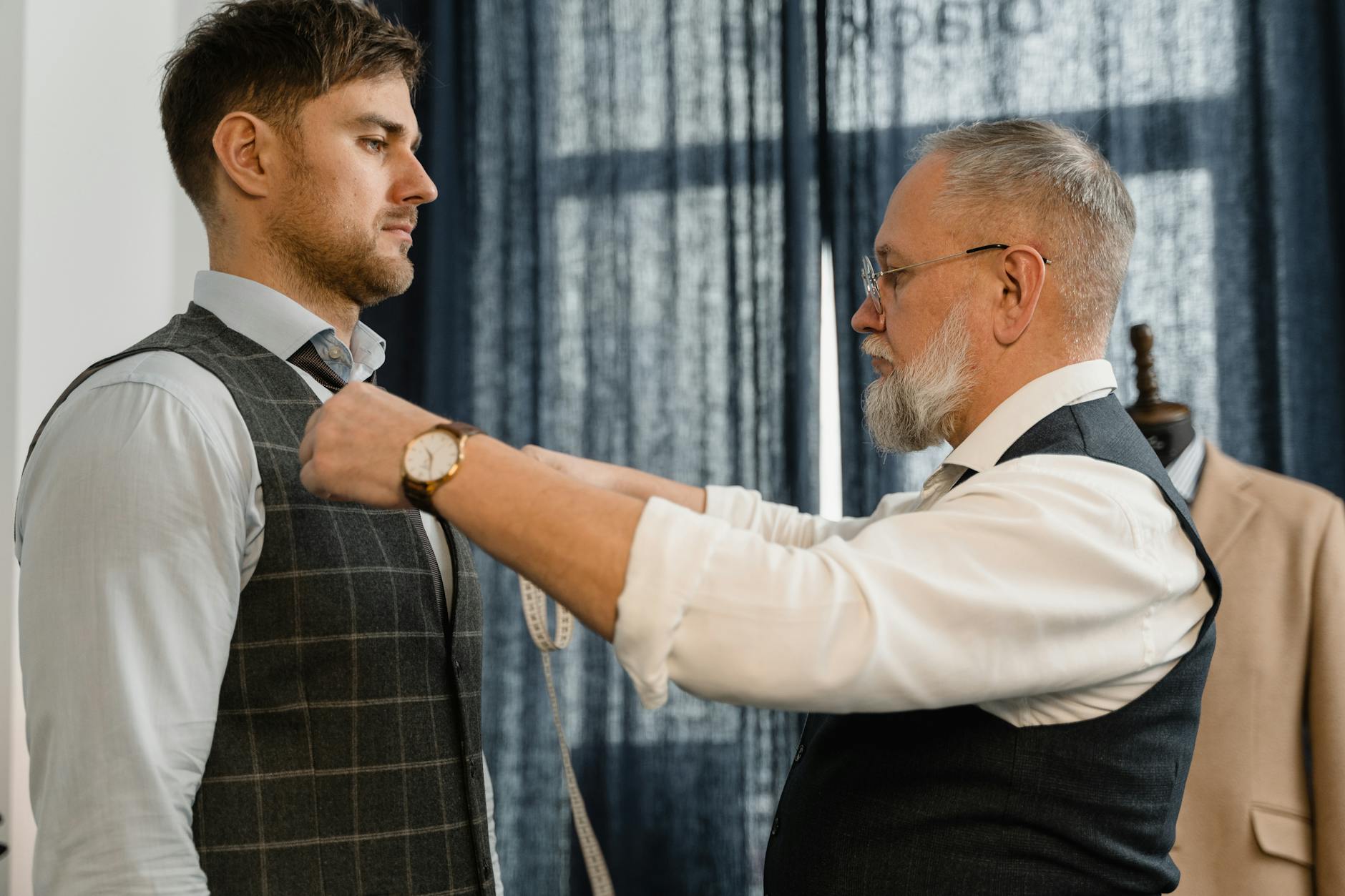
The phrase “quiet luxury” got overused to the point of meaninglessness somewhere around 2023, mostly applied to women’s fashion – the slouchy trousers, the cashmere, the lack of visible logos. But on men, the concept translates differently, and more specifically: it lives almost entirely in the suit. The quality of the wool, the precision of the chest suppression, the way a collar sits without pressure. These details are invisible to a casual eye and unmistakable to anyone who knows what they’re looking at.
Pascal’s suits work because they prioritize proportion above everything else. His jacket lengths tend to sit at the hip rather than extending below it, which keeps the silhouette modern without borrowing from streetwear. His trouser breaks are minimal – just enough fabric touching the shoe to avoid looking cropped – which reads as clean rather than fashion-forward. The result is clothing that looks like it belongs to the person wearing it, not clothing worn to signal effort.
The houses he gravitates toward – which have included Armani and Saint Laurent in recent appearances – have long been the standard-bearers for exactly this kind of restrained tailoring. Neither house relies on ornamentation. Both have built entire identities around the idea that a suit’s power comes from what’s removed, not what’s added. Pascal wearing them feels less like a brand deal and more like a genuine alignment of aesthetic values.
Why This Moment Is Landing Now
Fashion cycles have a logic to them, even when they feel arbitrary. After years of celebrity men arriving on red carpets in gender-fluid gowns, paint-splattered denim, and sculptural pieces that required their own press releases to explain, there’s a visible appetite for something quieter. Not conservative – quiet luxury and conservatism are not the same thing. Conservative dressing is about safety. Quiet luxury is about confidence: the belief that you don’t need to explain yourself.
Pascal fits that mood precisely because his public persona doesn’t require peacocking. His appeal is warm and approachable rather than aspirational and remote. A sheer blouse or a dramatic cape would feel like a costume on him. The suits feel like the actual person – or at least the version of the person that red carpets are built to project. That coherence between image and garment is rarer than it sounds.
A growing number of stylists working with male clients are pointing back to the clean Italian and French tailoring traditions that Pascal’s wardrobe draws from, partly because those traditions photograph beautifully and partly because social media has made over-dressing look desperate. When everyone’s trying to go viral in their outfit, not trying becomes the sharpest move available.
The Tailoring Revival Happening Off the Red Carpet Too
Pascal’s influence isn’t happening in isolation. Custom and made-to-measure tailoring has been seeing renewed demand from younger male clients who grew up in athleisure and are now, in their 30s and 40s, looking for something that doesn’t read as either corporate or casual. They want suiting that works at a dinner and a film premiere and a Sunday afternoon without requiring a full costume change of identity. Pascal in a suit accomplishes exactly that – he looks like he could have come from anywhere and be going anywhere.
The suits that are driving this renewed interest aren’t the structured, padded-shoulder pieces from earlier decades. They’re softer – unlined or lightly lined, with shoulders that follow the body’s natural slope rather than extending beyond it. The construction is less rigid, which means they move differently and pack differently, and they age better because they’re not fighting the wearer’s posture. This is tailoring built for actual life, not tailoring built for a boardroom in 1987.

What Pascal has done, more than anything, is remind a certain audience that a suit can be the absence of a statement just as much as the presence of one – and that sometimes the absence hits harder. His awards season run this year has produced some of the most-discussed menswear moments without a single rhinestone in sight, which is its own kind of argument. The next question is whether the stylists and designers paying attention will hold the line when the inevitable swing back toward maximalism arrives, or whether quiet luxury in menswear turns out to be a moment rather than a return.