



The Hat That Started an Argument
Jacquemus has never been shy about scale. Since Simon Porte Jacquemus sent absurdly tiny bags down his runway in 2018, the brand has built its identity around proportion as provocation – making things either so small or so large that the piece itself becomes the conversation. The oversized straw and felt hats that have been circulating through street style photography over the past two seasons follow the same logic, except this time the conversation has turned genuinely contentious.
What started as a runway statement has moved into real wardrobes, real sidewalks, and real disagreement. The hats – wide-brimmed, dramatically domed, often in undyed natural straw or structured black felt – photograph beautifully and wear awkwardly, which is precisely why street style purists are arguing about whether they belong in the category at all. Street style, at its core, is supposed to be wearable. These hats are testing that assumption.

What Makes a Jacquemus Hat Different
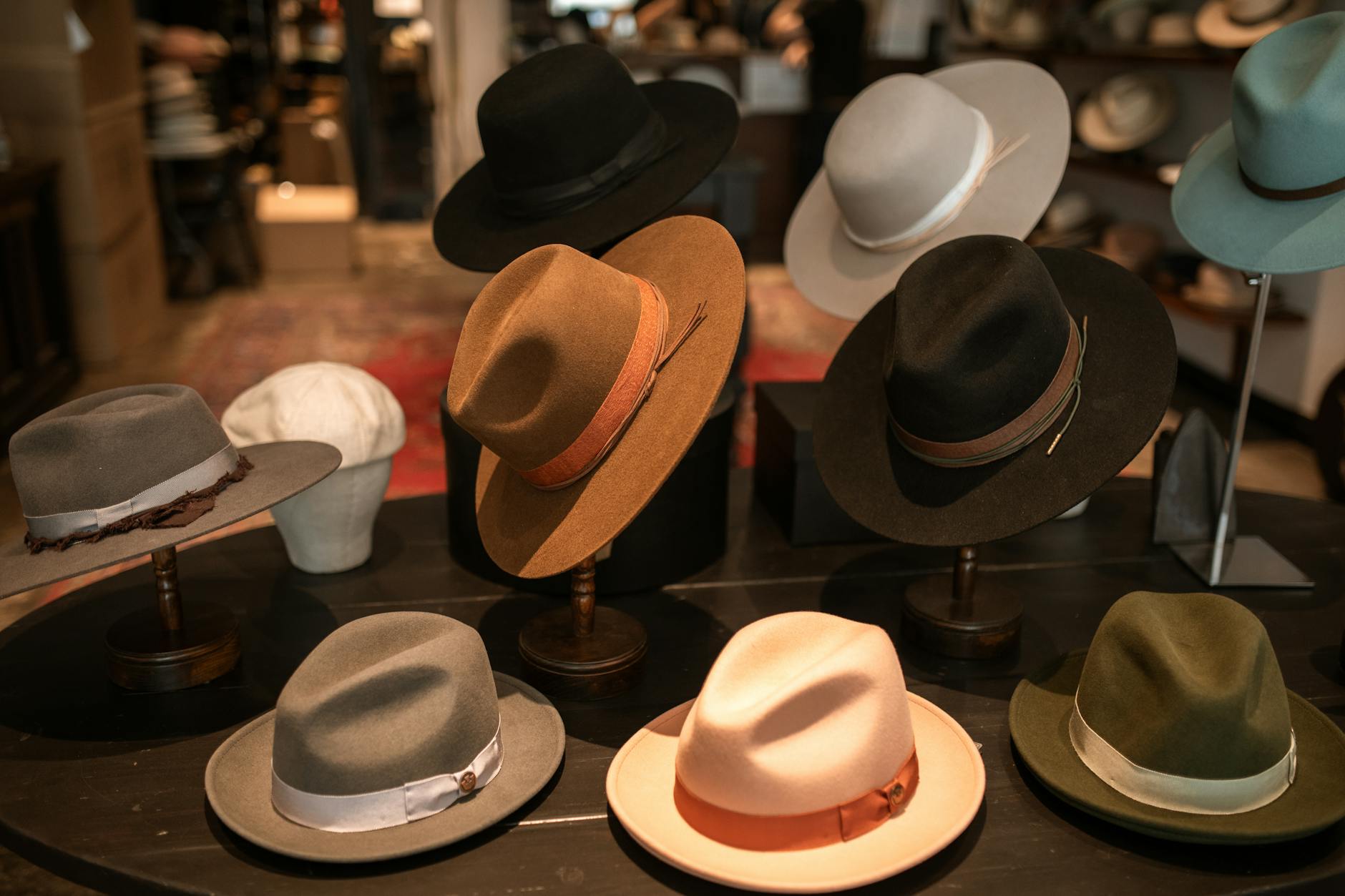
The proportions are the point. A standard wide-brim hat sits maybe three to four inches beyond the shoulder line. The Jacquemus versions extend dramatically further, creating a silhouette that reads more like architecture than accessory. The brims curve, dip, and tilt in ways that interact with whatever else is being worn – a fitted tank, a linen co-ord, even a plain white shirt – and suddenly the entire outfit becomes secondary to the hat. That is either the appeal or the problem, depending on who you ask.
The construction matters too. These are not novelty hats or costume pieces. The straw versions use densely woven natural fibers with structured inner bands that hold the brim’s shape across a full day of wear. The felt editions have a weight and rigidity that resists wind in a way cheaper equivalents cannot. Jacquemus has priced them accordingly, which has had the secondary effect of making them a visible luxury signal – you are not just wearing a big hat, you are wearing a specific big hat that anyone following fashion recognizes immediately.

The Street Style Debate
The objections from street style traditionalists come in a few distinct forms. The most straightforward complaint is practical: an oversized brim makes navigating crowded spaces genuinely difficult. It catches on door frames. It blocks sightlines in restaurants. It requires constant adjustment in anything beyond a light breeze. Street style photography captures people moving through cities, and these hats impose a kind of staging on the wearer – you can not fully commit to them without slowing down.
A more nuanced criticism is that the hats are essentially runway pieces wearing the costume of everyday fashion. Street style has always had a complicated relationship with runway trickle-down, and some practitioners argue there is a meaningful difference between being inspired by a collection and simply transporting a show look onto a public sidewalk. When a piece requires this much effort to wear – the posture adjustments, the spatial awareness, the deliberate slowing of pace – it starts to read as performance rather than personal style.
The counter-argument is equally sharp. Fashion has never been purely functional, and the idea that street style should be limited to pieces that make daily life easier is its own kind of conservatism. High heels, corseted bodices, heavily structured tailoring – none of these prioritize convenience, and all of them have deep histories within street style photography. The Jacquemus hat is just the current iteration of that tradition, and the discomfort some feel looking at it might say more about proportion fatigue than any genuine style principle.
What makes this argument particularly interesting is that the brand’s smaller accessories faced almost no equivalent pushback. The micro-bags were widely understood as playful rather than precious, absurd in a way that invited participation rather than demanding it. The oversized hats carry a different energy – more imposing, more unavoidable, harder to read as self-deprecating. They ask something of the viewer as well as the wearer, which is a more aggressive proposition.
Who Is Actually Wearing Them
The street style context matters here. These hats appear most consistently in fashion week photography – Paris, Milan, Copenhagen – where the entire atmosphere encourages more theatrical dressing. Outside that context, sightings are rarer, clustered around beach destinations and warm-weather cities where the hat’s impracticality is partially offset by its genuine sun-blocking function. A Jacquemus straw hat in Positano reads differently than the same hat in a subway station.
The wearers skew toward people who have already internalized the brand’s visual language – buyers, editors, and fashion content creators who understand the hat as part of a specific conversation rather than an isolated piece. That is both its strength and its limitation. When an accessory requires fluency in a particular brand’s aesthetic vocabulary to land correctly, it functions more like a niche reference than a street style statement. The best street style pieces tend to communicate across contexts. These hats are still working that out.
Where the Trend Goes From Here
Proportion-based fashion tends to resolve in one of two ways: the extreme gets absorbed and normalized through enough repetition that it stops reading as extreme, or it stays permanently associated with a specific moment and never fully crosses into everyday dress. The micro-bag followed the first path. It took roughly three seasons before tiny bags stopped requiring explanation and simply existed as an option among other options. The oversized hat may be earlier in that same arc.
There is also the question of what Jacquemus does next. The brand has shown a consistent willingness to shift its signature pieces season by season rather than repeating the same visual hook indefinitely. The hats may have a limited runway as a flagship statement before the label moves on to the next proportion experiment – which would leave early adopters holding a piece defined by its moment rather than its longevity.
For street style purists, the deeper irritation may not be about the hats at all. It is about the speed at which runway concepts now reach sidewalks, the compression of the gap between fashion as art and fashion as personal expression. When a hat that appeared on a catwalk six months ago is already being photographed outside the shows as though it emerged organically from someone’s wardrobe, the category of “street style” starts to feel less like documentation and more like an extension of the show itself. Whether that is corruption or evolution is the argument that will outlast any single accessory.