



The Medusa Is Back, and She Means Business
Versace’s Medusa head is not a subtle symbol. Gold, fierce, and loaded with mythology, it has always announced itself – which is precisely why its return to celebrity wardrobes feels so deliberate. After years of fashion culture swinging toward minimalism and logo-aversion, the Medusa motif is showing up again on red carpets, at airport arrivals, and across editorial shoots with a frequency that is hard to ignore.
This is not a quiet revival. Celebrities reaching for Versace’s signature icon are making a conscious choice to wear something loud, something with history, and something that sits at the opposite end of the spectrum from the subdued, logo-free dressing that dominated the early 2020s. The Medusa does not blend in, and right now, a growing number of celebrity clients appear to be perfectly fine with that.
Where the Motif Is Showing Up
The resurgence is visible across multiple categories. Versace’s Medusa head has been appearing on chain-link belts, on the clasps of evening bags, embossed into leather accessories, and printed across the bodies of satin slip dresses. The motif is not confined to one product category or one type of event – it is moving across formal and casual contexts simultaneously, which is a sign of genuine momentum rather than a one-season spike.
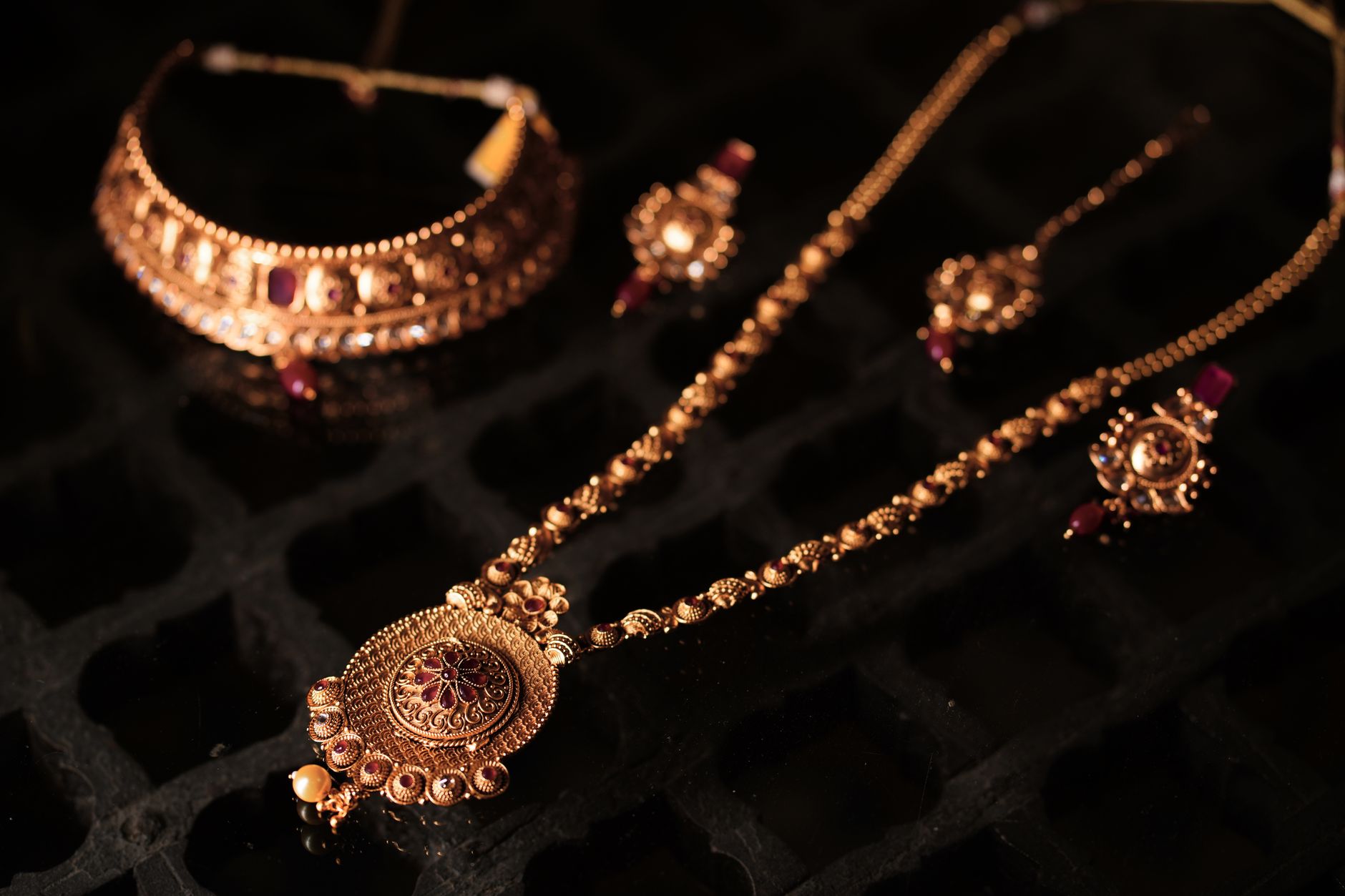
Hardware has been a particularly strong vehicle for the comeback. Chunky gold Medusa earrings and layered necklaces bearing the face have been spotted on performers, actors, and influencers at promotional events and music releases. When a motif migrates from apparel into jewelry and accessories without losing its visual coherence, it tends to stay around longer than trend-cycle logic would predict.

Why Now
The timing is not accidental. After a prolonged stretch of quiet luxury – where the goal was to look expensive without looking branded – appetite for maximalism has been building steadily. The Medusa fits neatly into that appetite because it is not just a logo. It carries classical reference, mythological weight, and a certain theatricality that logos built purely around initials or wordmarks cannot replicate.
Versace has also been consistent in keeping the motif in rotation across collections rather than letting it fade to archival status. Donatella Versace has leaned into the house’s maximalist identity at moments when other luxury brands were quietly dialing back their signatures. That consistency has kept the symbol legible to a new generation of buyers who were not dressing in the 1990s when the Medusa first peaked culturally.
There is also a nostalgia factor at work that goes beyond simple retro appeal. The 1990s Versace moment – the gold safety pins, the baroque prints, the unflinching excess – has been filtered through years of cultural retrospective. It now reads as both vintage cool and high fashion in a way that makes current celebrity clients feel like they are tapping into something with credibility rather than just trend-chasing. That is a different kind of purchase logic, and it sustains visibility longer.
The broader fashion context matters too. Right now, texture and signature detailing are spreading beyond their original categories across multiple luxury houses – and Versace is benefiting from that same appetite for recognizable craft and visual identity. The Medusa is Versace’s most readable shorthand, and in a moment when audiences are hungry for house signatures rather than anonymity, that shorthand is worth more than it was three years ago.
The Celebrity Effect
Celebrity adoption is doing real work here. When high-profile figures wear the Medusa in contexts that are not strictly formal – on a talk show appearance, getting off a flight, at a low-key industry dinner – it signals that the motif has moved past occasion-wear status and into everyday luxury rotation. That transition is what separates a symbol with cultural staying power from one that only appears at galas.
The styling choices around the motif have also evolved. Rather than full head-to-toe Versace maximalism, the current approach tends to isolate the Medusa as a single focal point against a cleaner background. One gold Medusa chain against a simple black blazer. A Medusa-clasp bag worn with otherwise understated separates. This edited approach makes the symbol feel considered rather than costume-like, which extends its wearability and its appeal to a wider range of celebrity aesthetics.

What Versace Gains From This Moment
For the house itself, a celebrity-driven motif resurgence is valuable for reasons beyond immediate sales. Visibility on this scale – across red carpets, social media, and editorial coverage simultaneously – reinforces brand identity at a moment when Versace is operating under the Capri Holdings umbrella and navigating questions about its long-term positioning in the luxury hierarchy. The Medusa appearing consistently on influential figures keeps the house’s aesthetic in active cultural conversation rather than nostalgic memory.
The motif also functions as a litmus test for the house’s relevance with younger luxury consumers. Gen Z’s relationship with logomania is complicated – rejection of conspicuous branding sits alongside genuine enthusiasm for heritage symbols with strong visual identities. The Medusa lands on the acceptable side of that line for many young buyers because it reads as mythology and house code rather than status-signaling in the most obvious sense.
The question the house has not yet fully answered is how long that distinction holds. As the motif becomes more visible and more widely worn, the gap between “iconic symbol” and “oversaturated logo” narrows quickly. Versace built its identity on boldness, so pulling back to protect exclusivity would require a very different strategic posture than the one that made the Medusa famous in the first place.