



Red on red carpet has always carried a certain audacity to it – the choice to wear the color of the carpet itself, to disappear into the backdrop or dare to own it entirely. For the past two seasons, Valentino’s signature monochromatic red looks have been quietly resurging across awards ceremonies and film premieres, worn by actresses and models who seem less interested in standing out through contrast and more interested in making a statement through total commitment to a single hue.
The house’s relationship with red runs deeper than trend cycles. Under Pierpaolo Piccioli’s tenure, the so-called “Valentino Red” – a specific, proprietary shade registered as PP Red – became shorthand for a particular kind of Italian maximalism. Since his departure in 2024, the question has been whether that chromatic identity would survive under new creative direction. Based on what’s appearing on red carpets now, it clearly has staying power independent of any one designer’s vision.
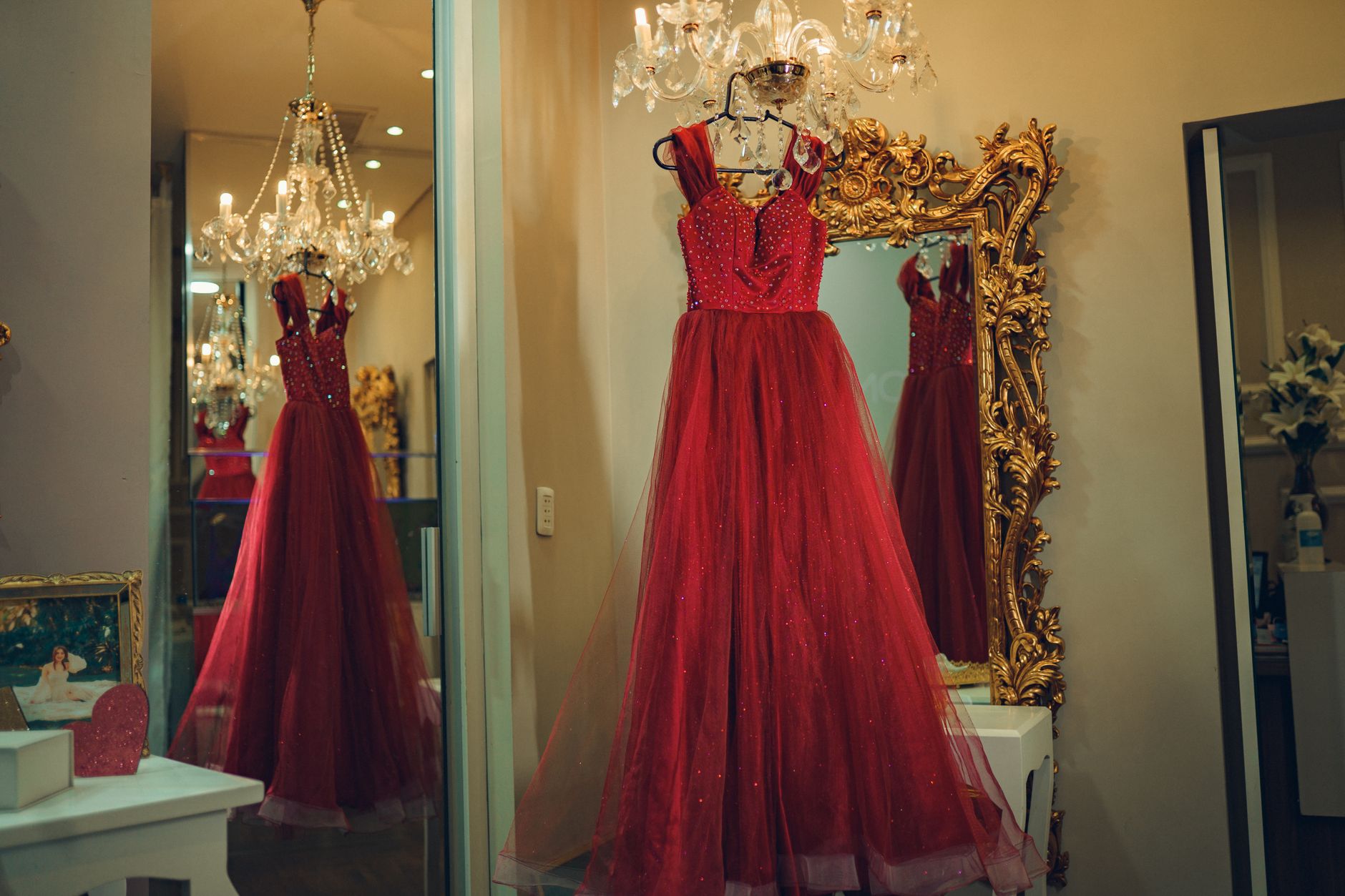
The Return of Total Dressing
What’s notable about the current wave of Valentino red looks isn’t just the color – it’s the commitment to head-to-toe immersion. Gowns matched with gloves. Coats worn over red suiting. Even accessories pulled into the same tonal register, so the overall effect reads less like an outfit and more like a visual declaration. This approach to dressing – sometimes called “total dressing” or monochromatic blocking – has been cycling through high fashion for years, but Valentino’s version of it carries specific weight because the red itself is so saturated, so unambiguous.
The approach works on camera in a particular way. Red in that intensity photographs with an almost painterly quality, collapsing fabric texture into color field. On a red carpet, where dozens of looks compete for attention in a single frame, a total-red Valentino tends to organize itself visually in a way that other looks – even more elaborately constructed ones – don’t quite manage. It commands the eye without requiring ornamentation to do the heavy lifting.
Why This Moment Is Different From the 2022 Peak
Valentino’s PP Red moment peaked around the spring 2022 runway show, which sent out models in that specific shade from head to foot against a fuchsia-pink backdrop – a show that generated enormous attention and sparked a wider conversation about maximalist color in luxury fashion. The celebrity adoption that followed was swift: the color appeared on magazine covers, at the Met Gala, and across the awards circuit throughout 2022 and into 2023.
What followed was a predictable cooling. As the look became widely referenced, it started to feel like a reference to itself, a citation of a cultural moment rather than a fresh choice. Stylists moved toward other directions – quiet luxury, dark romanticism, sculptural minimalism. The red receded, not because it stopped working visually, but because it had become too associated with a specific time and a specific creative personality.
The resurgence now feels different in context. Piccioli is no longer at the house, which means the red is no longer his red in the same biographical sense. It belongs to the archive, to the brand’s identity as an institution rather than to one designer’s singular vision. That slight distance has made it available again in a way it wasn’t when it was actively being produced as a statement – wearers now reach for it as a house signature rather than an endorsement of a particular aesthetic argument.
There’s also a broader shift in red carpet dressing worth observing. After several years of minimalist suiting and quiet, tonal neutrals dominating the awards circuit, there’s visible appetite for color again – not pastels or muted earth tones, but genuinely loud, committed color. Valentino’s red happens to be exactly the kind of color that satisfies that appetite without requiring any explanation.
The Role of Stylists in the Revival
Celebrity stylists have been central to moving the look back into rotation. Several high-profile red carpet appearances over the past two seasons have involved archival pulls alongside current-season pieces, which means the total-red look is being reconstructed from existing wardrobe resources rather than waiting for new runway output. That kind of active revival – stylists choosing to revisit a signature rather than waiting for the house to reissue it – signals something about how the look is being perceived: as a reliable tool rather than a fashionable risk.
The practical advantage is real. A total-red Valentino on a red carpet generates immediate recognition among fashion audiences without requiring explanation or context. For a client navigating an awards season circuit where each appearance will be analyzed and ranked, that kind of legible, conversation-ready choice has obvious value. The look arrives with its own history already attached.
What Comes Next for the Signature
Alessandro Michele, who took over as creative director at Valentino in late 2023, has shown some willingness to engage with the house’s established codes while layering in his own maximalist sensibility – a combination that could either amplify the red legacy or complicate it. His first full collections for the house have drawn heavily on archival references, suggesting that PP Red isn’t going anywhere as a brand touchstone, but that it may appear in contexts that feel less austere than Piccioli’s approach.
A Michele-inflected Valentino red could look quite different from what’s currently resurfacing on red carpets – more layered, more referential, more concerned with costume and character than with the clean visual impact of a single saturated hue. Whether that version of the red will translate as well to the awards circuit is genuinely uncertain. The simplicity of Piccioli’s total-red looks – their refusal to compete with themselves – was a large part of what made them work so effectively outside the runway context.
For now, what’s circulating on red carpets is largely Piccioli-era, either archival or from collections produced during his final seasons. The looks are being worn with a confidence that suggests they haven’t aged, which is a reasonable assessment – the color doesn’t expire the way trends do. The more interesting question is whether Michele’s version will generate the same kind of celebrity traction, or whether the red carpet will hold onto this specific iteration of the red long after the house has moved on from it.
Frequently Asked Questions
What is Valentino’s signature red called?
The house registered a specific shade called PP Red, named after former creative director Pierpaolo Piccioli, which became the defining color of his tenure at the brand.
Who is the current creative director of Valentino?
Alessandro Michele took over as Valentino’s creative director in late 2023 after Pierpaolo Piccioli’s departure following more than two decades at the house.