

The minaudière had a long run. For decades, the rigid evening clutch – all hard-shell metal and geometric precision – was the default answer to the question of what to carry on a formal night out. It was practical enough for a lipstick and a card, decorative enough to function as jewelry, and socially legible as a signal of dressed-up intention. Then raffia arrived at the dinner table, and the conversation changed.
What makes this shift interesting is that raffia is not new. The plant fiber has been woven into baskets, hats, and casual summer bags for generations. What is new is its presence at events where the minaudière used to reign unchallenged – cocktail parties, gallery openings, wedding receptions, and evenings at the kind of restaurant where the menu has no prices. The raffia clutch did not storm the occasion. It walked in quietly and sat down like it belonged there.

The Texture Argument
Fashion operates in reaction cycles, and the minaudière’s dominant era – shiny, structured, cold to the touch – set up the conditions for its own displacement. When everything on a red carpet gleams, the thing that does not gleam becomes notable. Raffia carries natural variation in its weave, a warmth that catches low light without reflecting it, and an organic irregularity that reads as considered rather than careless. It is the visual opposite of the patent leather minaudière, and that contrast is doing significant work right now.
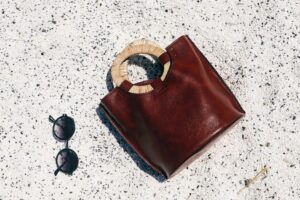
Texture has become a primary way designers signal quality in an era when surface finishes are easy to replicate. A well-woven raffia clutch communicates craft in a way that a mass-produced metal box simply cannot. The tightness of the weave, the finishing of the edges, the choice of closure – all of these details are immediately visible because there is no lacquer or metallic sheen covering them up. The bag shows its construction, and that transparency is increasingly desirable.
Silhouette also plays a role. Minaudières tend toward the architectural – rectangles, ovals, hard fan shapes. Raffia clutches more often come in softly rounded forms, envelope shapes with gentle structure, or slightly irregular ovals that suggest handwork. Against the sharp tailoring that currently dominates eveningwear, that softness provides counterbalance. A rigid bag against a sharp blazer is redundant. A woven clutch against the same blazer creates tension, and tension is what makes an outfit interesting.
Where It Is Showing Up
The early signal came not from major fashion weeks but from the kind of street style that circulates around them – the images taken outside the venues rather than inside, where guests style themselves rather than sit in gifted looks. Raffia clutches began appearing in these images held against silk slip dresses, against tailored shorts suits, against anything that would have previously called for a small leather bag or a beaded minaudière. That pairing pattern spread quickly into editorial shoots and then into the buying decisions of multi-brand retailers.
Resort collections accelerated the adoption. The resort category, with its emphasis on warm-weather dressing and travel-ready pieces, has long been comfortable with natural fibers, and raffia featured heavily in recent resort presentations from several European and American houses. But the styling choice that moved the trend forward was pairing those bags with evening-adjacent looks rather than strictly beach or lunch outfits. Once a raffia clutch appeared in a look that included heels and a cocktail silhouette, the formal permission was effectively granted.
What the Minaudière Is Losing
The minaudière’s core selling proposition was always dual-purpose functionality: it worked as both bag and accessory, eliminating the need to coordinate jewelry with a clutch when the clutch was itself a jewel-like object. That logic still holds, but it requires a specific kind of dressing to activate. The highly embellished, maximally formal evening look – the territory where the minaudière thrives – is appearing less frequently as a mode that younger dressers actually engage with. Formality has loosened across the board, and the minaudière loosened with it.
There is also a weight argument. Metal evening bags are heavier than they look, and the current aesthetic preference for ease and apparent effortlessness works against anything that announces itself as precious cargo. A raffia clutch, despite being an accessory, carries an air of nonchalance that a bedazzled hard case simply cannot project. The message it sends is not “I dressed for this occasion” but rather “this is simply how I dress,” which is a social distinction that a particular type of dresser finds extremely valuable.
The price architecture of the two categories is also diverging in revealing ways. A well-made raffia clutch from an independent artisan or a smaller brand sits at a price point that feels accessible without being disposable, while the most coveted minaudières from heritage houses have climbed into ranges that restrict them to a narrow market. The raffia bag occupies a space where quality and approachability coexist, and that space is attracting buyers who might previously have stretched toward a metal box but found the investment increasingly hard to justify for an item used a handful of times per year.
None of this means the minaudière is disappearing. Hard-shell evening bags in precious or semi-precious materials will always find buyers, and the format carries a specific kind of occasion-dressing history that genuine formal events still call for. But the definition of what counts as a formal event has blurred considerably, and in that blurred space – the dinner party that is dressed but not gowned, the opening that is chic but not black-tie – the raffia clutch is winning. It is winning because it works in the ambiguous middle ground that most evening occasions now actually occupy.

The question worth sitting with is whether raffia will hold this position once the next natural-material cycle arrives – because seagrass, abaca, and banana fiber are all already appearing in bags at the trade show level, each carrying its own weave pattern and regional craft story. The raffia clutch may be edging out the minaudière now, but something is already being woven to edge out the raffia.
Frequently Asked Questions
Can a raffia clutch work for a formal evening event?
Yes. Raffia clutches now appear regularly at cocktail parties, gallery openings, and wedding receptions, particularly when paired with silk or tailored silhouettes.
Why is the minaudière losing ground to raffia bags?
The shift comes down to texture preference, the loosening of formal dress codes, and a growing interest in bags that signal craft and ease over precious embellishment.