



The Shift Away from Maximalism
Statement jewelry had a long run. Chunky chains, oversized hoops, layered necklaces piled three inches deep – the aesthetic dominated fashion feeds for the better part of five years. Now something quieter is taking over, and it is moving so gradually that many people do not notice it happening until they look down at their own hands.
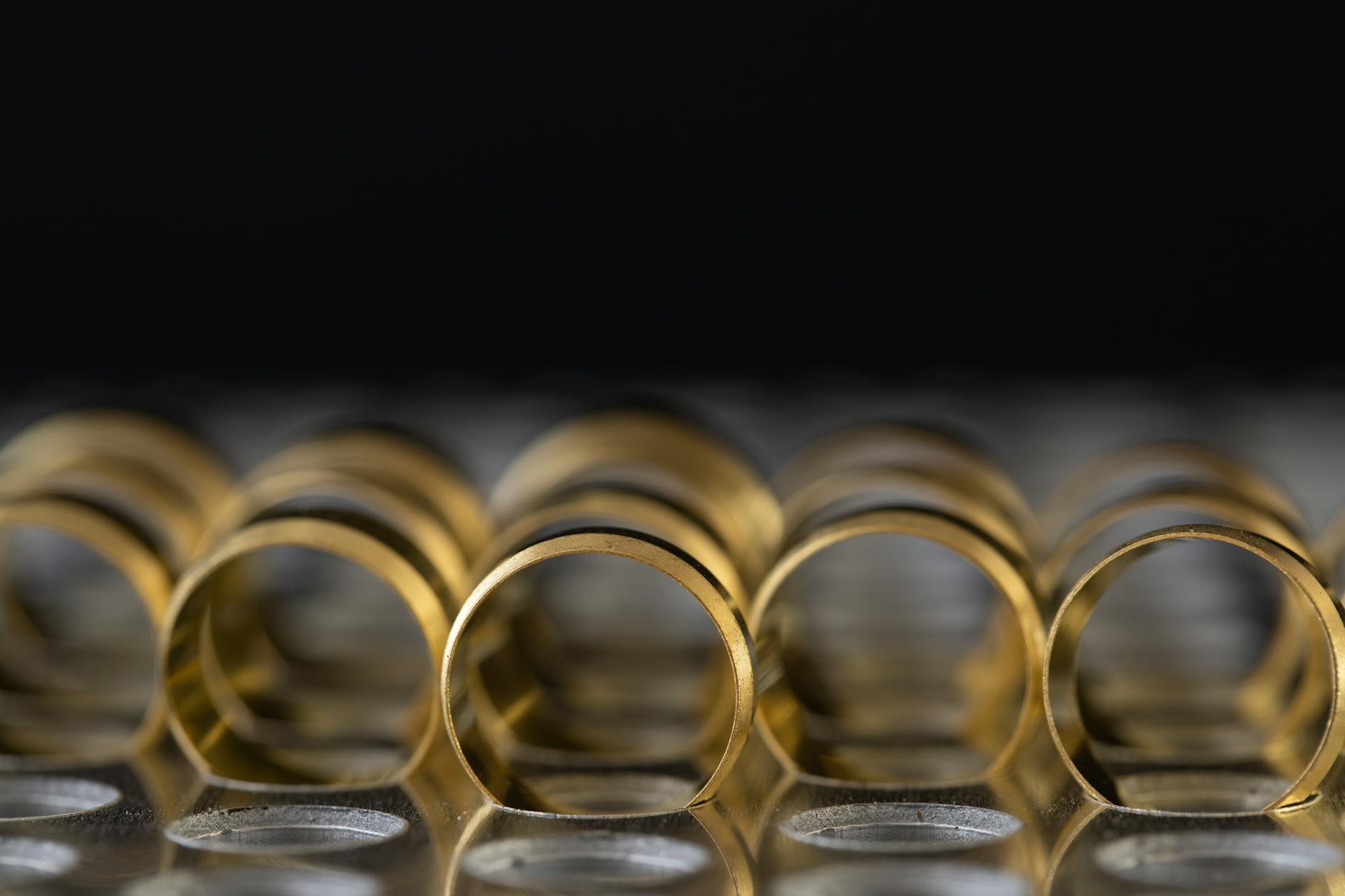
Thin gold rings – sometimes called “stacking rings” or worn in what stylists are calling “quiet stacking” – are displacing louder pieces as the default jewelry choice. Not one bold cocktail ring. Not a statement cuff. Instead, four to seven barely-there bands worn across multiple fingers, mixing textures and finishes so subtly that the effect reads as effortless rather than deliberate.
The look is built on restraint.
Why Thin Rings Are Winning Right Now
The appeal is partly practical. A thin 14-karat gold band at 1.5mm wide costs a fraction of a heavier piece but photographs well, wears comfortably all day, and does not visually compete with clothing. For women dressing in the current minimalist wardrobe trend – clean tailoring, neutral tones, quiet luxury basics – a stack of delicate rings completes a look without overwhelming it. The jewelry becomes part of the silhouette rather than the focal point.
There is also a collecting dimension to it. Buying one heavy statement ring is a single transaction. Building a ring stack over months or years, adding a birthstone band here, a twisted wire ring there, a plain dome ring from a trip abroad, creates a personal archive. Each piece carries context. The stack tells a story that a single bold ring rarely can. This gradual accumulation model suits a consumer appetite for jewelry that feels meaningful rather than purely decorative – which is part of why signet rings have seen similar momentum, offering that same sense of permanence and personal significance.
Independent jewelers and small-batch designers have moved fastest on this. A thin hammered gold band priced between $80 and $200 sits at an accessible price point that encourages repeat purchasing. Shoppers who might buy one designer necklace a year are instead buying three or four rings across different occasions – a birthday, a solo travel souvenir, a personal milestone. The category rewards frequent buying in a way that maximalist jewelry never did.
How the Stack Actually Works
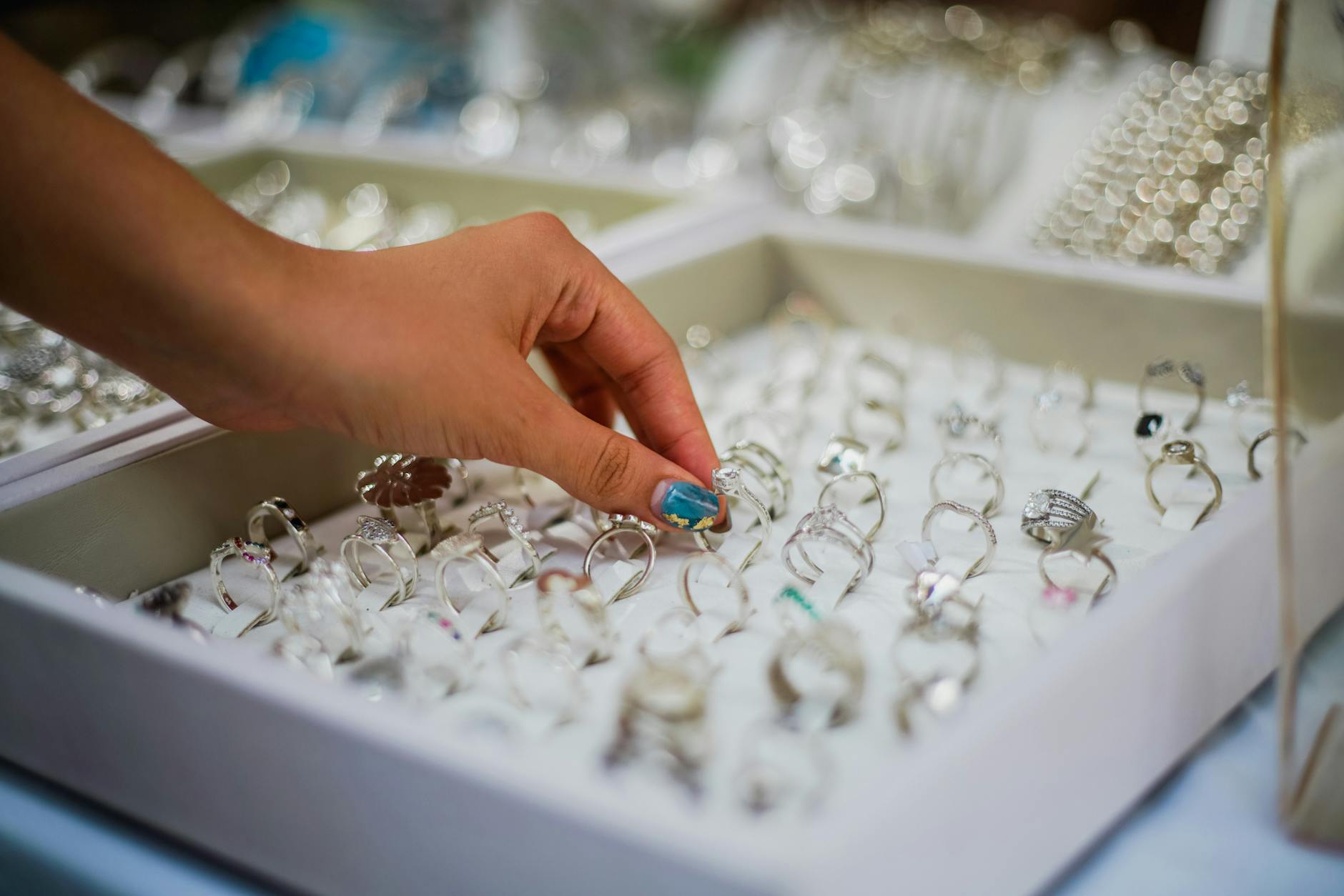
The mechanics of a well-built ring stack are more considered than they appear. Most people mixing thin bands work with an odd number of rings – three, five, or seven – distributed unevenly across the hand. Wearing two rings on one finger and none on adjacent ones creates visual rhythm. Mixing a plain band with a milgrain-edged ring or a tiny bezel-set stone introduces texture variation without noise. The goal is never matching – matchy stacks read as costume jewelry – but rather cohesion through metal tone and scale.
Yellow gold dominates right now, which tracks with the broader return of warm-toned metals across accessories. Rose gold, which peaked several years ago, has largely dropped out of new stacks. White gold and platinum appear occasionally, but the warm richness of yellow gold photographs better against skin tones and pairs more easily with the earthy color palettes that have dominated ready-to-wear. A stack built entirely in 14k yellow gold, even with wildly different band profiles, holds together visually.
Wearing rings across all five fingers – or even extending onto the thumb – is now common. The thumb ring in particular has moved out of its subcultural associations and into mainstream styling, worn as a slightly wider band to anchor the visual weight of thinner rings on other fingers. It acts as a quiet counterbalance rather than a statement of its own, which is very much the philosophy driving the whole trend.
What This Means for the Jewelry Market
Fine jewelry brands built on signature heavy pieces are watching this closely. The consumer spending pattern has shifted away from one significant annual purchase toward multiple smaller ones spread across the year. That changes how brands need to think about their product assortment, their price laddering, and their marketing cadence. A brand that releases one major collection per season is not built for a customer who wants to add a single new band every few months.
Direct-to-consumer jewelry brands have structured themselves around exactly this behavior. Subscription-style collections, “build your stack” product pages, and ring size guides designed for multi-finger styling are becoming standard features. The buying experience itself has been redesigned around the idea of accumulation rather than singular acquisition. Some brands have introduced services to resize or replate older rings, folding sentimental pieces from a customer’s past into a current stack – a move that extends brand loyalty in a category where it is traditionally hard to build.
What the quiet stacking trend ultimately reveals is how thoroughly the definition of “investment jewelry” has been rewritten. Where “investment” once meant one expensive, timeless statement piece bought carefully and worn forever, it now means building something over time – adding rings the way you add books to a shelf or stamps to a passport. The stack is never finished, which means the category never closes. For anyone who still associates thin gold rings with the costume jewelry of their teen years, the price tags on today’s stacking rings – many running well past $300 for a single 2mm band in solid gold – tend to end that conversation quickly.